
Current Members of the San Antonio Sports Hall of Fame
Class of 1995
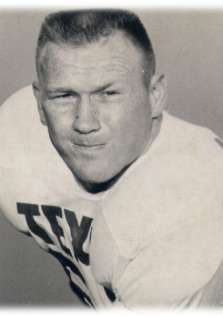
Tommy Nobis
Class of 1995
Tommy Nobis
Considered one of the greatest linebackers to ever play football, Tommy Nobis began his career at San Antonio’s Jefferson High School where he won acclaim as one of the top players in the state. At the University of Texas, Nobis helped lead the 1963 Longhorns to a National Championship, a perfect 11-0 record and a Cotton Bowl win over Navy. A two-way star for Texas, he was an All-America selection in both 1964 and 1965 and was the 1965 recipient of the Outland Trophy as the best interior lineman in the country and the Maxwell Award as the nation’s top player.
Nobis averaged over 20 tackles a game in his 1965 senior session and Sports Illustrated Magazine named him the best defender in college football. He was selected to the magazine’s All-Century Team in 1969 and was inducted into the National Football Foundation Hall of Fame in 1981.
Nobis joined the professional ranks in 1966 when the Atlanta Falcons made him the National Football League’s top draft pick and he received the Bert Bell Award as the league’s Rookie of the Year. He was chosen for the NFL Pro Bowl five times, led the Falcons in tackles in nine of his 11 seasons and was selected to the NFL’s All-1960’s team. He is a member of the State of Texas All-Time Professional Football Team and has been inducted into the Sports Hall of Fame of both Texas and Georgia.
Class of 1995
Bob Coleman
Class of 1995
Bob Coleman
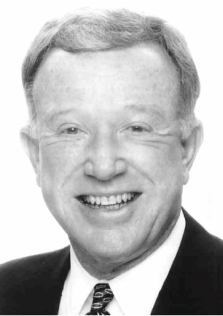
Through his leadership roles in local sports organizations, Bob Coleman was a catalyst in San Antonio’s emergence on the national sports scene. Coleman’s work with the San Antonio Sports Foundation, the San Antonio Bowl Association, Oak Hills Country Club and the San Antonio Spurs brought prestigious national sporting events to the Alamo City.
As co-chairman of the Final Four local organizing committee, Coleman was instrumental in bringing the 1998 NCAA Final Four to San Antonio. He served as chairman of the Sports Foundation for more than six years, leading the effort which brought the U.S. Olympic Festival-’93 to the city. A leader of the Alamodome project, he served on the Advisory Committee and was chair of the Design Subcommittee.
Coleman graduated from the University of Oklahoma in 1957 and moved to San Antonio in 1968.He began his career in the sports business in 1979 when he purchased the Ray Cook Corp., a manufacturer of golf putters and specialty golf clubs. He bought Texace Corp. in 1984 and developed that company into the nation’s leading manufacturer of golf headwear.
Class of 1995
Kyle Rote
Class of 1995
Kyle Rote
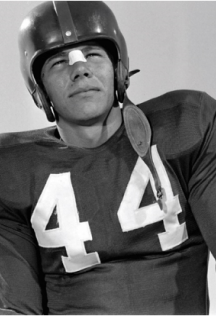
An outstanding all-around athlete, Kyle Rote starred as a football wide receiver and halfback in high school and college before his professional career with the New York Giants of the National Football League. The San Antonio Jefferson High School graduate was an All-State selection in football and basketball and led the Mustangs to state finals in both sports.
Rote was a 1950 All-American performer at Southern Methodist University and was twice selected to the All-Southwest Conference Team. In 1949 he led the Conference in punting and rushing and helped the Mustangs defeat Oregon in the Cotton Bowl. He played perhaps his greatest game as a collegian that year against eventual National Champion Notre Dame when he rushed for 115 yards, passed for 146 yards and scored all 20 SMU points in a 27-20 loss. He was named to the National Football Foundation Hall of Fame in 1964.
Rote was New York’s top pick in the 1951 NFL draft and played 11 seasons with the Giants. He was a member of the Giants 1956 NFL Champions and played in the famous 1958 title game against the Baltimore Colts, often referred to as the “greatest game ever played”. Rote finished his pro career with 301 passes caught for 4909 yards and 52 touchdowns. Following his retirement in 1961 he became an assistant coach with New York and then went on to a successful network-broadcasting career, which included Super Bowls III and V.
Class of 1995
George Gervin
Class of 1995
George Gervin
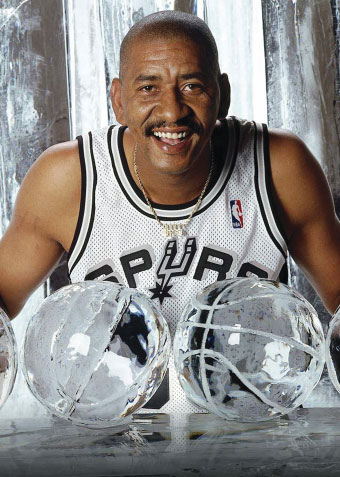
One of the greatest scorers in the history of the National Basketball Association, George Gervin played 14 seasons of professional basketball with the San Antonio Spurs and with the Virginia Squires of the American Basketball Association.
Known as “The Iceman” during his career, he was a nine-time NBA All-Star and a five time first-team All-NBA selection. He won his first of four NBA scoring titles in 1978, averaging 27.3 points per game and setting a number of league and club records. Gervin repeated as NBA scoring champion in 1979 and 1980 and won the Conference finals. His accomplishments include a Spurs record of 407 straight games in double figures, an NBA record 33 points in one quarter in 1978 and current rankings in a number of All-Time NBA and NBA-ABA scoring categories.
Gervin scored 26,595 in his pro career, 23,602 points in his 12 San Antonio seasons and held more than 50 club records when he left the Spurs after the 1984-85 season. His #44 was retired by the Spurs on December 5, 1987. Gervin is a native of Detroit and played at Eastern Michigan University before turning pro in 1972. In 1991 he founded the George Gervin youth center in San Antonio to assist low-income youth in finding job opportunities.
Class of 1996
Angelo Drossos
Class of 1996
Angelo Drossos
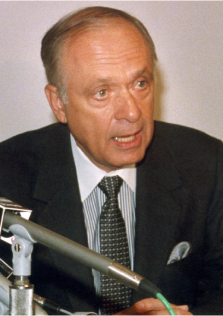
It was the efforts of Angelo Drossos that brought professional basketball to San Antonio. In 1973 he was Secretary-Treasurer of Professional Sports, Inc., a group of businessmen which leased the Dallas Chaparrals of the American Basketball Association, moved them into the HemisFair Arena and, at season’s end, purchased the team outright. Drossos was the majority owner and served as team President until he sold the club to Red McCombs in 1988.
Drossos pushed innovative projects for both the Spurs and the league, foremost of which was the 1976 merger in which the Spurs and three other ABA teams joined the National Basketball Association. Other notable items were the three-point basket, revenue sharing, salary cap, player contract bonus incentives, computerized ticketing, and raising the Arena roof for additional seating. He was NBA Executive of the Year in 1978 and served on the league’s prestigious Advisory Committee.
He is responsible for bringing two franchise players to San Antonio, purchasing George Gervin’s contract from the ABA Virginia Squires in 1974 and signing the U.S. Naval Academy’s David Robinson in 1987. Drossos is a native of San Antonio and a graduate of St. Mary’s University.
Class of 1996
Dan Cook
Class of 1996
Dan Cook
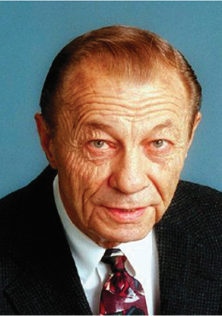
A fixture on the San Antonio sports scene for five decades, Dan Cook is recognized as one of the most prominent sports columnists in the country and one of the top television personalities in South.
Cook joined the San Antonio Express-News newspaper in 1952 as a sports reporter and copy editor, and five years later became a sports columnist. Also in 1957 he started his career as a sportscaster with KENS-TV when he was named Sports Editor for the Evening-News. In 1960 he was promoted to Executive Sports Editor of the Express-News. He has covered virtually every major sporting event, but his most memorable are 26 Super Bowl Games and 10 World Heavyweight Championship boxing matches. His most memorable interviews were with sport legends Babe Ruth, Jack Dempsey, Arnold Palmer and A.J. Foyt.
Cook twice served as President of the Texas Sportswriters Association and of the San Antonio Press Club. He twice received national awards for his columns and he has been honored by the Associated Press for his writing in five different decades.
Class of 1996
Tommy Kramer
Class of 1996
Tommy Kramer
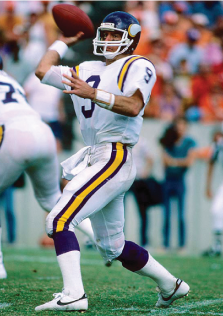
Tommy Kramer made his football reputation throwing the ball both accurately and often. It began with the Robert E. Lee High School Volunteers in 1971, continued with record-setting seasons at Rice University and culminated with 13 seasons of National Football League play with the Minnesota Vikings.
He directed an underdog Lee team to the Texas State Championship in 1971, passing for 257 yards and 3 touchdowns in the 28-27 win over Wichita Falls. In 1972 he led Lee to the state semi-finals and was named Texas State Player of the Year. In two seasons he had thrown for 5489 yards and 54 touchdowns. At Rice, Kramer led the NCAA in passing in 1976 with 3,317 yards and was the NCAA total offense leader with 297 yards per game. He still holds school records for 409 single game passing yards and for career total offense yards. with 6,336.
Kramer was named MVP in both the Blue-Gray and Senior Bowl games before being the Vikings’ first draft pick in 1977. He became Minnesota’s second most productive passer in team history with 24,775 yards and 159 touchdowns. His 490 single game yards are still a club record and four times he passed for more than 400 yards. He surpassed 3,000 season yards five times. He finished his career with the New Orleans Saints, retiring in 1990.
Class of 1996
Weldon Humble
Class of 1996
Weldon Humble
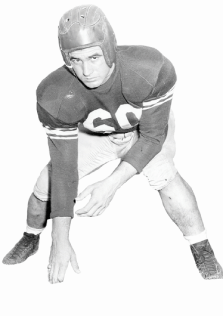
Weldon Humble is one of the most honored linemen in collegiate football and a decorated Marine of World War II. He played for the Brackenridge Eagles before enrolling at Rice University where he was an outstanding two-way player in 1941, 1942 and 1946. Humble was the Owls’ MVP and an All-Southwest Conference selection in 1942 before joining the Marine Corps. He was awarded the Bronze Star for distinguished combat service on Okinawa. He returned to Rice in 1946 and was the team’s MVP, selected Outstanding Lineman of the SWC and named to both the All-SWC and All-American Teams.
Humble played four seasons with the Cleveland Browns from 1947 to 1950, during which time the team’s record was 45-4-3 and 6-0 post-season play. He was a guard and middle linebacker on the teams which won three All-American Conference titles and then the NFL Championship in 1950. He played in the first NFL’s Pro Bowl game in 1950.
Humble has been inducted into the National Football Foundation Hall of Fame, the Texas Sports Hall of Fame, the South Texas Hall of Fame, and the Rice University Athletic Hall of Fame, and was named to the 50th Anniversary All-Time Southwest Conference Team for 1919-1968 and to the Orange Bowl Hall of Honor.
Class of 1997
Cliff Gustafson
Class of 1997
Cliff Gustafson
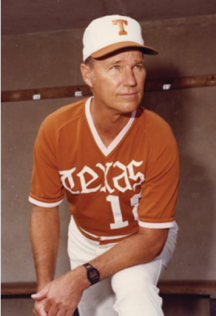
When Cliff Gustafson left the Texas high school coaching ranks as one of the most successful men ever at that level, his South San Antonio High School baseball team had chalked up seven state championships and 344 victories in 13 years.
In 1968, he took over the helm of The University of Texas baseball program. During his 28-year tenure there, he led the Longhorns to two national championships in 1975 and 1983, and 22 Southwest Conference titles. In addition, his Longhorns won the SWC postseason tournament 11 times, participated in the NCAA Playoffs 26 times and competed in the college World Series 17 times.
Gustafson’s overall mark of 1427-353-2, made him the winningest coach in the history of NCAA Division I baseball. He has coached 32 first-team all-Americans and well over 200 of his players have gone into professional baseball. He has been honored with inductions into the American Baseball Coaches Hall of Fame and the Texas Sports Hall of Fame.
Class of 1997
James Silas
Class of 1997
James Silas
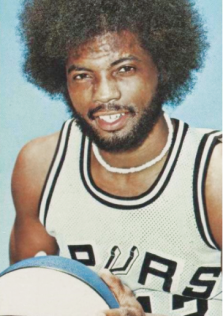
Spurs fans in the 1970’s often noted that guard James Silas played an instrumental role in the early years of his team. Earning a reputation as the team’s best clutch player, Silas, as team captain, won several games by hitting the last shot in the closing seconds. Thus, his nickname “Captain Late”.
He played 10 years professionally, nine of them in San Antonio. Silas enjoyed his best years as a pro in the American Basketball Association where he as an ABA All-Star twice, in 1975 and 1976, leading the Spurs in scoring with a 23.8 average. Knee injuries sidelined Silas the following two seasons, limiting him to 59 games total in those years. However, he regained his starting job in ’78-’79 and helped the Spurs reach the NBA Eastern Conference finals.
Following his trade to the Cleveland Cavaliers in June of 1981, the Spurs announced that Silas’ No. 13 would not be worn again. The Spurs honored Silas by making him the first player in franchise history to have his jersey retired.
Class of 1997
Nemo Herrera
Class of 1997
Nemo Herrera
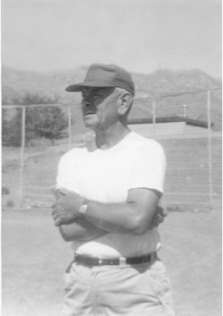
William C. “Nemo” Herrera’s legacy of building championship basketball teams lives on long after his death. As coach at Lanier High School in the 1930’s and 40’s, Herrera took the Voks to the state basketball tournament five times and won state titles in 1943 and 1945.
Herrera later coached at Bowie High School in El Paso, where he led the 1948-49 team to the state championship. His record reflected more than 1,000 career victories and earned him inductions into the El Paso Hall of Fame and the Texas High School Coaches Hall of Honor.
Following his retirement from coaching after more than 40 years, he could not stay out of the gym. Herrera became civilian recreation director at Kelly AFB and was on the advisory board of the San Antonio Parks and Recreation Department. He retired from Kelly in 1982, where a youth center is named in his honor.
Class of 1997
Betty Jameson
Class of 1997
Betty Jameson
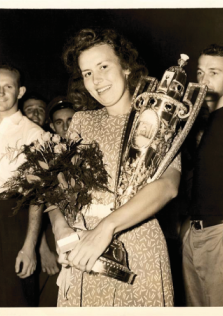
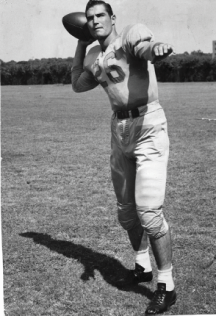
A pioneer in women’s golf, Betty Jameson began her career by winning the Texas Publinx at the age of 13 and the Southern Amateur at 15. Her impressive lists of wins include four straight years as the Texas State Women’s Amateur champion from 1935-38.
Jameson followed her graduation from Thomas Jefferson High School in 1937 with wins in the USGA Women’s Amateur Championship in 1939 and 1940, the USGA Women’s Open Championship in 1947, the 1949 Texas Open Championship and the 1952 World Championship.
With a charter membership in the LPGA Hall of Fame in 1951, she was also the second female named to both the Texas Sports Hall of Fame and the Texas Golf Hall of Fame. Jameson conceived the idea of awarding a trophy to the woman on the LPGA tour with the lowest season average and donated the first trophy in the name of her childhood golf hero, Glenna Collett Vare.
Class of 1997
Tobin Rote
Class of 1997
Tobin Rote
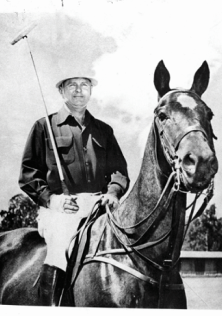
Considering the impressive stats he piled up in professional football, former Harlandale High School quarterback, Tobin Rote, is one of the best all-round quarterbacks to ever come out of San Antonio.
Rote, who played at Rice from 1946 through 1949, was an All-Southwest Conference pick after leading the Owls to a 10-1 mark and a 27-13 victory over North Carolina in the 1950 Cotton Bowl. His professional career included 10 years in the National Football League with Green Bay and Detroit, and three years in the American Football League with San Diego and Denver. Additionally, he played in the Canadian Football League for three years with Toronto.
During his career, Rote had 18,850 passing yards in the NFL and AFL, and 9,872 yards in the CFL. He was the Detroit Lions’ starting quarterback when he led his team to a 59-14 victory over the Cleveland Browns to win the NFL championship in 1957.
Class of 1997
Cecil Smith
Class of 1997
Cecil Smith
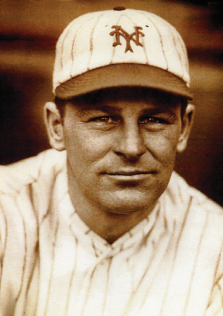
In polo, the highest honor a player can achieve is a 10-goal rating. Cecil Smith, the “Texas Cowpoke”, was rated at 10 goals for 25 consecutive years, from 1938 through 1962, an achievement that has never been matched.
Smith, the best polo player in the history of the game, began his career when he got an old broom handle, added a mallet head and began knocking cans around a ranch in Oxford in 1924. Power and grace were in that motion, a style that would eventually amaze royalty on palace grounds in England.
Early in his career, Smith trained horses and played matches in San Antonio. He later formed the Texas Rangers, a team that in 1938 swept England off its feet by winning every major polo title in the country, including the King’s Coronation Cup.
Class of 1998
Ross Youngs
Class of 1998
Ross Youngs
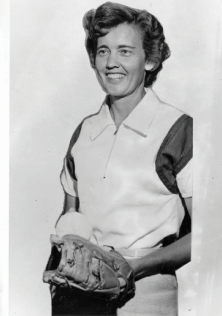
Ross Youngs was one of the greatest outfielders during baseball’s early years and San Antonio’s only native to be inducted into the Baseball Hall of Fame.
Youngs had a stellar high school record at West Texas Military Academy (now Texas Military Institute) and began his career in the minor league. He swiftly made the majors in 1917 where he was the right fielder for the New York Giants. Youngs led the team to four World Series appearances from 1921 to 1924. During an era where baseball was America’s most followed sport, Youngs was a superstar. He batted .322 for his career and was one of the most popular players of his time.
Youngs died in 1927 at the age of 30 of Bright’s disease. He was posthumously inducted into the Baseball Hall of Fame in 1972 and the Texas Sports Hall of Fame in 1983.
Class of 1998
Alva Jo Fisher
Class of 1998
Alva Jo Fisher
Beginning in her early teens with a recreational softball league in San Antonio, Fischer developed into a great hitter and a better pitcher. Her skills did not go unnoticed, as she was able to move from softball to professional baseball. Her legacy of greatness in San Antonio softball has left a permanent mark on the community.
Fischer was called to professional baseball in 1945, pitching the Rockford Peaches to the All-American Girls Baseball League championship. The following year, while playing for the Muskegon Lassies, Fischer won 16 games as a pitcher and led the team in hitting with a batting average of .310. In 1949, she left professional baseball and returned to the San Antonio softball set with record no-hitters and batting feats that led to many local and state championships.
Fischer lost her battle with leukemia in 1973. At the age of 47, following her death, the City of San Antonio dedicated the Alva Jo Fischer Softball Complex in her honor.
Class of 1998
Jerry Grote
Class of 1998
Jerry Grote
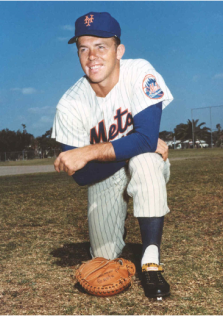
MacArthur High School graduate, Jerry Grote, was a legend behind the plate for the New York Mets. Lou Brock once said that “Grote was the toughest catcher in the league to steal against.”
Grote was behind the plate on his birthday when the Mets won their first pennant in 1969. He caught every game of the 1969 and 1973 league championship series and World Series, setting three World Series fielding records in 1973. He played in 1,421 games with Houston, the Mets, Los Angeles and Kansas City during 14 seasons in the majors, including the 1977 and 1978 World Series in a Dodgers uniform. Grote was named to All-Star teams in 1968 and 1974.
Grote had a .252 career batting average with 39 home runs and 404 RBIs. In 15 World Series games, Grote hit .240 with one RBI.
Class of 1998
Red McCombs
Class of 1998
Red McCombs
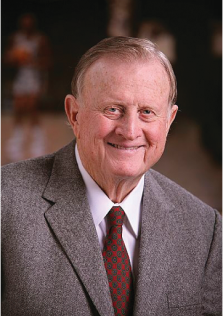
Born in Spur, Texas, McCombs became a legend in South Texas sports through his interests in auto racing, baseball, basketball and boxing.
As a key figure in luring the Dallas Chaparrals of the former American Basketball Association to San Antonio in 1973, McCombs served as the first president of the new San Antonio Spur franchise. He continued to be the team’s driving force for most of its first 25 years. McCombs purchased the Denver Nuggets in 1982 and revitalized the franchise during his three-year ownership before selling in 1985.
With a vast automobile empire in Texas, McCombs continues to provide leadership and philanthropic support to sports. His $3 million contribution to The University of Texas women’s athletics program is the largest donation made to women’s collegiate sports. In 2000, his $50 million gift to UT’s business school became the largest single donation in the history of the school. As a result, the McCombs School of Business was named in his honor.
Class of 1999
Ralph Bender
Class of 1999
Ralph Bender
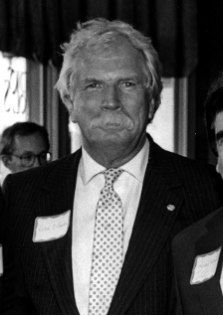
Ralph Bender has been instrumental in forging San Antonio’s sports growth through the past two decades. He has been a leader and major spokesman for the promotion of the San Antonio Metropolitan Area as a major center for amateur sports.
Inspired by the Olympic movement in 1984, Bender suggested to then San Antonio Mayor Henry Cisneros, that Olympic sports would be good for San Antonio and that this city would be an ideal place for the growth of amateur sports. Chairing an original ad hoc sports committee formed in late 1984, the initiative quickly led to the creation of the San Antonio Sports Foundation. Ralph Bender was the founding chair.
During the past decade, Bender has served in such positions as Tri-Chair of the 1989 AAU Junior Olympics, Opening Ceremonies Chair for the 1993 U.S. Olympic Festival, and Co-Chair of the 1995 U.S. National Senior Sports Classic. Ralph has been a long-time member of the U.S. Modern Pentathlon Association and has served as its National Treasurer, Trustee of the USMP Trust, and was a former member of the Board of Directors. Bender is founder and CEO of Bender Associates, an architectural consulting firm.
Class of 1999
Gary Green
Class of 1999
Gary Green
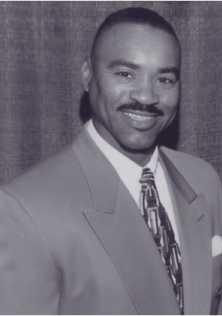
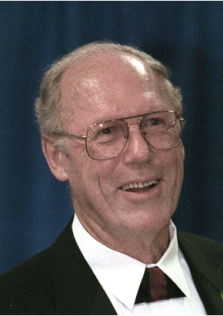
Gary Green has one of the most notable professional sports careers of any San Antonio athlete. For nine seasons, he was regarded as one of the best defensive backs in the National Football League, making the All-Pro Team seven times and playing in four Pro Bowls. He was the number one pick of the Kansas City Chiefs in 1977 and played every game for seven seasons. He earned team MVP honors in 1982.
Green graduated from Sam Houston High School in 1973 and signed a football scholarship from Baylor University where he was named a consensus All-American in his senior year. He was inducted into the Baylor University Football Hall of Fame in 1989. He spent two seasons with the Los Angeles Rams before retiring in 1985 after a neck injury.
Following his professional career, he toured the nation presenting motivational speeches to youth of all ages, and in 1994 returned to football as a coach in the San Antonio public high school system.
Class of 1999
Pat Knight
Class of 1999
Pat Knight
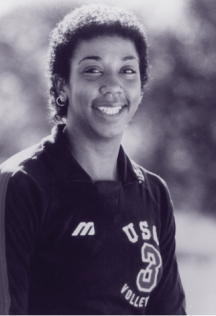
Jefferson High School graduate Pat Knight has both played and officiated high school, college and professional football. Knight lettered in football and basketball at Jefferson and played in the North-South High School All-Star game in 1948. He attended Southern Methodist University where he was named to the All-Southwest Conference football team for two years.
Knight played in the National Football League (NFL) as a linebacker for the New York Giants for three years in 1952, 1954 and 1955. His playing career was cut short by a knee injury, but his desire to remain involved in football led him to become referee. Knight returned to the football field as a Southwest Conference official from 1963-1972. He refereed two Cotton Bowl games.
In 1973, Knight became an NFL official. During his eleven-year career, he officiated eleven playoff games including Super Bowl XIII between the Dallas Cowboys and Pittsburgh Steelers in 1979.
Class of 1999
Rita Buck-Crockett
Class of 1999
Rita Buck-Crockett
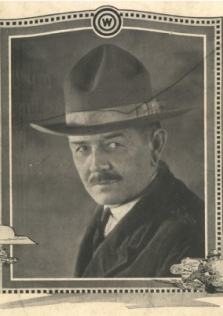
Rita Crockett was considered one of the best all-around volleyball players in the world. Sports Illustrated in 1984 touted her as the world’s best athlete and nicknamed her “The Rocket” because of her 42-inch vertical leap and 100 mile-per-hour kills. She was selected for the All-World Team in 1981.
After earning All-City honors at Marshall High School, she played two years at San Antonio College before transferring to the University of Houston where she was AIAW All-American. Crockett was on the USA National Team from 1978-84 and a member of the 1980 and 1984 (silver medal) U.S. Olympic Volleyball Teams. She was so popular in Japan, where she played from 1982-86, an athletic shoe- “The Crockett Flier”-was named after her.
Some of Crockett’s other notable accomplishments include selection as MVP in 1986 of the Women’s Professional Association Tour and winning the World Beach Volleyball Championship in 1989. She played and coached in the U.S., Japan, Italy and Switzerland for 16 years and was selected in 1998 to be head volleyball coach at the University of Iowa. She was a coach for the Hawkeyes until 2004, when she took an associate job at Florida State University, where she stayed for a year. Crockett was named to USA Volleyball’s Women’s All-Era Team for 1978 to 2003. She established the Rita Crockett Academy in 2005 and serves as the director and head court trainer for the North Florida Volleyball Academy.
Class of 1999
Ad Toepperwein
Class of 1999
Ad Toepperwein
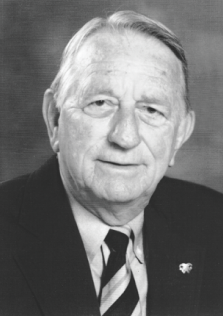
Ad Toepperwein is considered the greatest marksman of his time and, perhaps, the best trick shot gunman ever.
Toepperwein set 14 world records during the 36 years he toured the nation with this .22 caliber rifle. He became famous for the marathon exhibition held in 1907 at the Old San Antonio Exposition and Fair Grounds. Using three Winchester rifles, Toepperwein shot seven hours a day for ten consecutive days at 72,500 two-inch wooding blocks, each pitched to a height of 25 to 30 feet from a firing distance of 25 feet. Not knowing exactly how many blocks he would need for the occasion, he had only 50,000 blocks made, so his last 22,500 shots were at pieces of the original blocks! In ten days of shooting, he missed just nine times.
Toepperwein retired from shooting performances in 1945 but did not give up shooting until he was in his eighties. He died March 4, 1962, in San Antonio at age 92. Ad Toepperwein is a member of the Texas Sports Hall of Fame.
Class of 2000
Jimmy Littleton
Class of 2000
Jimmy Littleton
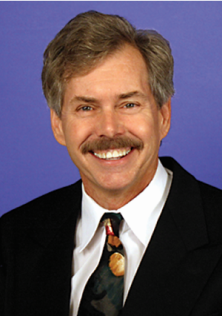
Jimmy Littleton is a coaching legend in the annals of San Antonio basketball history. In 43 years of coaching at the high school and collegiate levels, he achieved a record of 459 wins and 151 losses.
After graduating from South San Antonio High School and Southwest Texas State University, Littleton coached at five Texas schools before returning to his high school alma mater. During the 1960’s, Littleton coached the South San Bobcats to the Texas State tournament seven consecutive years and won the Class 3A State Title in 1961. In 1969, Littleton was hired as head basketball coach at Trinity University, where he remained for three years. Following his time at Trinity, he became Athletic Director for the Northeast Independent School District, a position he held for 14 years until his retirement in 1989.
He was inducted into the first Southwest Texas State University Hall of Honor in 1977, the Texas high School Coaches Association Hall of Honor in 1987, and in 1993, the Texas High School Athletic Directors Association Presidents Hall of Honor. Littleton Gymnasium at Blossom Athletic Center is named after him.
Class of 2000
Bob Nieman
Class of 2000
Bob Nieman
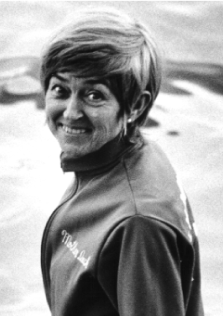
Bob Nieman is considered one of the greatest U.S. pentathletes ever. He became the first American in history to win a World Championship in Modern Pentathlon when he captured the title in Budapest in 1979. Nieman also headed the U.S. Team that won America’s first World Team Gold that same year.
Nieman’s record of accomplishment is long and impressive. He was a three-time Olympic Team member in Modern Pentathlon in 1976, 1980, and 1988 and a member of the U.S. Olympic Fencing Team in 1980. Nieman won a Silver Medal in Team Fencing at the 1983 Pan American Games and was 40 years old when he competed in the 1988 Olympics in Seoul, Korea. He was voted co-captain of the entire 1980 Summer Olympic Team and won the U.S. Modern Pentathlon National Championship in 1976, 1982, and 1988.
Nieman set a world record in the Pentathlon swimming event in 1976 and led his team to six U.S. Fencing Team titles from 1979-1983, and again in 1990. The Air Force Academy and Notre Dame graduate was a Sullivan Award Top 10 finalist in 1980 and 1981 and served as a Modern Pentathlon Judge during the 1992 Summer Olympic Games in Barcelona.
Class of 2000
Margaret Swan Forbes
Class of 2000
Margaret Swan Forbes
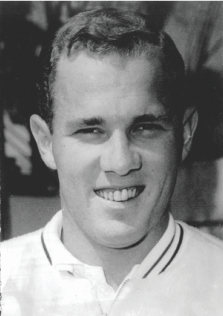
Margaret Swan Forbes introduced synchronized swimming to San Antonio and is recognized throughout the world as one of the developers of the sport. As founder and coach of the San Antonio Cygnets Synchro Swim Team, she led them to several national and international championships from the mid-sixties to the mid-seventies.
Forbes was Pan American Games team manager in 1971, coach of the U.S. Olympic Festival South Team in 1978, 1979, and 1987 and coach of the Women’s Army Corps Synchronized Swim Team in 1972 and 1973. She wrote the recognized textbook for teaching and coaching synchronized swimming as well as the rules for Aerobic Dance Competition. She has long been a national and international judge in the sport and has traveled extensively, conducting clinics, workshops and demonstrations throughout the world for the purpose of promoting interest and participation in Synchronized Swimming.
Other selected honors include Athletic Foundation Hall of Fame, 1972; San Antonio Express-News Sportswoman of the Year, 1973; San Antonio Women’s Hall of Fame in 1978; the Texas Women’s Hall of Fame in 1990 and the South Zone Contributor’s Award in 1994.
Class of 2000
Chuck McKinley
Class of 2000
Chuck McKinley
While playing tennis at San Antonio’s Trinity University from 1960-1963, Chuck McKinley was almost unbeatable. During his four-year career, McKinley posted a 48-2 record.
He finished his career by winning 25 straight matches in dual matches during the 1962-63 season. McKinley and teammate Butch Newman were the first All-Americans in school history. McKinley was a three-time All-American. The St. Louis, Missouri native won eight singles championships in the 1962-63 season and 16 titles during his collegiate career.
McKinley claimed the Wimbledon singles championship in 1963 and was the number one ranked player in the world. He was a member of the United States Davis Cup Team from 1960-1965. He was inducted into the Intercollegiate Tennis Association Men’s Tennis Hall of Fame and the International Tennis Hall of Fame. Chuck McKinley died in August 1986.
Class of 2000
Joe Williams
Class of 2000
Joe Williams
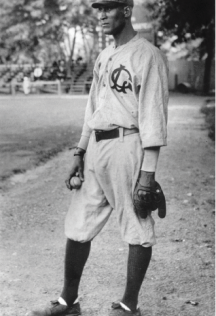
Joe Williams is recognized as one of the greatest pitchers in the Negro League. He was to that league, experts, say, what Nolan Ryan or Walter Johnson were to Major League Baseball. Major League star Ty Cobb saw Williams pitch several times and said that he would be a 30-game winner each season had he been able to play in the majors.
Williams started his career with the San Antonio Bronchos, playing in San Antonio for five seasons, from 1905 – 1909. Other teams he played with included the Chicago Giants, Homestead Grays and the Detroit Wolves. Selected highlights of his career include striking out 27 batters in a 12 inning, one-hit victory over the Kansas City Monarchs, a 1914 season won-loss record of 41-3 and a 20 strike-out no hitter against the New York Giants in 1917.
Joe Williams was voted the top pitcher in Negro League history in a 1952 poll and was inducted into the National Baseball Hall of Fame in 1999. Williams died in March 1946.
Class of 2001
Clarissa Davis-Wrightsil
Class of 2001
Clarissa Davis-Wrightsil
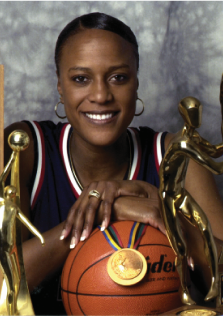
After completing a record-setting basketball career at John Jay High School in 1985, Davis-Wrightsil led The University of Texas Longhorns to the 1986 NCAA championship with a 34-0 record and earned MVP honors during the Final Four. She was a two-time Naismith Player of the Year and three-time All American during her collegiate career and took home the Wade Trophy as a senior. She was also named the 1980’s Southwest Conference Player of the Decade and is an inductee in the UT Hall of Honor.
As the second-leading scorer on the 1992 bronze medal-winning U.S. Olympic women’s basketball team in Barcelona, Spain, Davis-Wrightsil averaged 13 points per game and set the team record for 3-point shooting.
She played seven seasons of professional basketball in Turkey, Japan and Italy prior to playing two seasons in the American Basketball League where she was an ABL All Star and set a league record by scoring 35 points in the finals. She finished her career in the WNBA with the Phoenix Mercury.
Class of 2001
Clarence Mabry
Class of 2001
Clarence Mabry
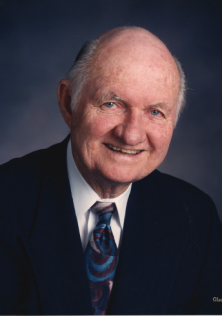
As a nationally-ranked tennis player and state champion, Mabry won the Southwest Conference singles and doubles titles while at The University of Texas in 1946, reaching the NCAA doubles semi-finals in 1946-47.
Following his success as a player, Mabry established the Trinity University men’s tennis team in 1955 and quickly developed a nationally recognized program that ranked in the top four NCAA teams for 18 of his 19 years as coach. Mabry led the Tigers to the NCAA championship in 1972 with a 27-0 record and has coached three Wimbledon champions. His overall dual match record stands at 319 wins and 36 losses.
Mabry coached the 1986 San Antonio Racquets to the city’s first professional national team championship and is co-founder and chairman emeritus of the John Newcombe Tennis Ranch. He has been honored as an inductee into the NCAA Tennis Hall of Fame, the Texas Tennis Hall of Fame and the UT Longhorn Hall of Honor.
Class of 2001
Pat Shannon
Class of 2001
Pat Shannon
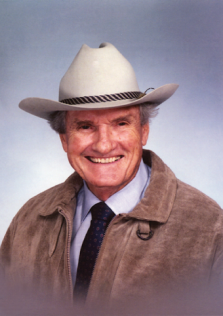
Having coached more athletes who played in the Texas High School Coaches All-Star Football Game than any other coach in San Antonio, Pat Shannon began his career in 1943 at Emerson Junior High School, winning the City Junior High football Championship. Within two years, his illustrious career as a high school football coach began in the San Antonio School District – first at San Antonio Tech, then at Edison High School.
From 1951 to 1955 at Edison, Shannon’s teams compiled the best 3A record in Texas, including two undefeated 10-0 seasons. His success followed him to Jefferson High School in 1956 where his teams were state contenders for the remainder of the decade and into the early 60s. During his nine seasons at Jefferson, Shannon produced 72 athletes who earned college scholarships. Four of his athletes played on the 1963 Longhorn team that won the national championship, prompting a letter of thanks to Shannon from the University of Texas coach, Darrell Royal.
In 1969, Shannon was honored with the Henry Frnka Distinguished Service Award for his contributions to high school coaching. His induction into the Texas High School Coaches Association Hall of Honor followed in 1972. Shannon retired in 1990 after 50 years in education and high school athletics.
Class of 2001
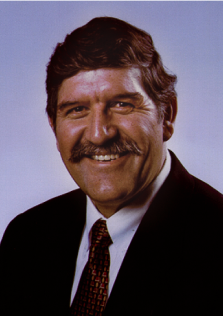
Davey Johnson
Class of 2001
Davey Johnson
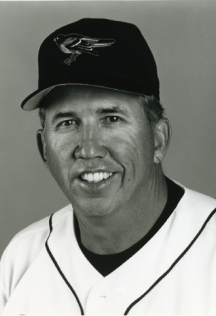
In 13 seasons in the Major Leagues, Johnson played 1,435 games and had a career batting average of .261 with 136 home runs and 609 RBIs. The Alamo Heights graduate played for the Baltimore Orioles, Atlanta Braves, Philadelphia Phillies and the Chicago Cubs. He played in four World Series with the Orioles; earned three Gold Glove honors; and was selected to four All-Star Teams.
Johnson’s best season at the plate was in 1973 with the Braves. The second baseman hit 45 home runs and had 99 RBIs and was named the National League “Comeback Player of the Year” by Sporting News. In 1975, he moved to Japan’s Yomiuri Giants for two seasons before returning to the majors in 1978 with the Phillies, where he tied a major league single season record with two pinch-hit grand slams.
As phenomenal as he was as a player, Johnson is perhaps most notable for his time as a manager. Following his playing career, he became manager for the New York Mets, where he earned one World Series title, five division championships, one wild-card berth and four second place finishes in 14 seasons. He guided the Mets to a World Series in victory over Boston in 1986 and remains the organization’s winningest manager in history. In 2010, he was inducted into the Mets Hall of Fame. After a stint as manager for the Cincinatti Reds, Johnson returned to Baltimore, this time as manager. As the Orioles’ manager, he was selected “Manager of the Year” in 1997. He then managed the Los Angeles Dodgers for a short time, before finishing his career with the Washington Nationals. Johnson also participated in two summer Olympics, one as a bench coach for Team Netherlands in 2004, and one as manager for Team USA in 2008. Johnson finished his managerial career with 1,372 wins and just 1,072 losses, placing him tenth all time in winning percentage among managers with more than 1,000 wins.
Class of 2002
Ricardo Romo
Class of 2002
Ricardo Romo
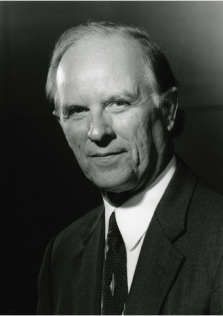
Dr. Ricardo (Richard) Romo drew national attention as one of Texas finest mile runners. Romo first gained fame while competing for Fox Tech High School’s track and field and cross-country teams. He won the mile run at the University Interscholastic League Class 4A state meet in both his junior and senior seasons, 1961 and ’62. He was also the UIL state cross-country champion in 1961. In addition to his daily team practices, Romo ran to and from school every day.
At the University of Texas, he became the first Texan to run the mile under four minutes, clocking a time of 3 minutes, 58.8 seconds. Romo won Southwest Conference mile titles in 1964 and ’66; the SWC 3-mile title; and the individual and team cross-country titles in ‘64. He finished third in the NCAA Championships mile and earned All-American honors in 1966.
Romo earned a bronze medal in the mile for the U.S. Track and Field Team at the Commonwealth Games. A back injury in 1967 ended Romo’s athletic career and dashed his hopes for running in the 1968 Olympic Games. Romo became President of the University of Texas at San Antonio in 1999. He has been inducted into the Longhorn Hall of Honor and the National Hispanic Sports Hall of Fame.
Class of 2002
Nelson Wolff
Class of 2002
Nelson Wolff
Nelson Wolff has been involved in the building of four major stadiums in San Antonio. As a founding member of the San Antonio Sports Association in 1968, he helped bring professional baseball back to the city through construction of the St. Mary’s baseball stadium. As a City Councilman he supported the Alamodome effort and as Mayor he completed the dome and presided at its opening in May 1993.
Mayor Wolff led the efforts to build a new home for the AA San Antonio Missions of the Texas League. The ballpark opened April 18, 1994, and the Missions and the stadium set new team and league attendance records that season as well as ranking 12th of the 172 minor league teams. The stadium was named Nelson W. Wolff Municipal Stadium on May 25, 1995.
Wolff played baseball at Bellaire High School, Texas Southmost Jr. College, the Spanish-American League, and later the Men’s Senior Hardball League. He is the author of “Baseball for Real Men”, a book about men playing ball in their senior years. Wolff has served publicly as both a State Representative and Senator, City Councilman and City Mayor. As County Judge he helped build the SBC Center (now the Frost Bank Center), home of the San Antonio Spurs.
Class of 2002
Robert Quiroga
Class of 2002
Robert Quiroga
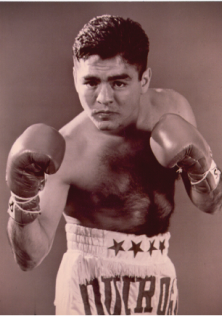
Robert Quiroga became San Antonio’s first professional world boxing champion when he captured the International Boxing Federation junior bantamweight championship in 1990. He successfully defended his title five times, which set a record for his weight division. His overall professional record was 20-2.
A graduate of Memorial High School, Quiroga began boxing with trainer Joe Lopez at the age of 10. He fought four years in the AAU Junior Olympic program and one year in Golden Gloves. He won 69 of 79 amateur fights before turning pro in 1987 when he was 17 years old. Quiroga’s first professional championship was in 1989 when he won the WBC Continental Americas title over Joey Olivo. He then won the U.S. Boxing Association title in 1989 when he outpointed Ray Medel at Freeman Coliseum.
Ring Magazine listed his 1991 title fight with Kid Akeem Anifowoshe as one of its top bouts of the 1990’s. Quiroga outlasted Akeem in a 12-round slugfest at HemisFair Arena. He was selected as the Express-News Sportsman of the Year for 1991.
Class of 2002
Charley Parker
Class of 2002
Charley Parker
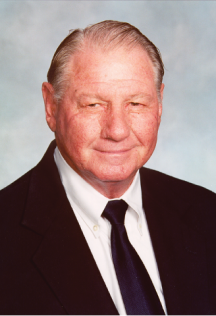
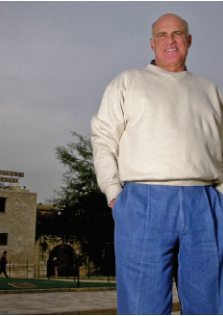
Charley Parker was one of the greatest sprinters in the history of Texas track and field. As a student at Jefferson High School, he won state championships for three consecutive years, 1942-44, in both the 100 and 220-yard dashes. He led Jefferson to two team titles during that time. In 1943 he set a new state record time of 9.5 seconds in the 100-yard dash, a record that held up for 18 years. At the age of 18 he won the AAU National Championship in the 220 dash, one of the few times that a junior age athlete had won a senior level event.
In 1946 he ran an unsanctioned, world record-tying time of 10.2 seconds for 100 meters while serving with the U.S. Army in Japan. Parker ran at the University of Texas from 1947 to 1950, winning the Southwest Conference 220-yard dash title four straight years; the 100y title in 1950; and twice receiving All-America honors. In 1950 he won the NCAA 220y in 21.5 and ran lifetime personal bests of 9.4 and 20.0 in the 100y and 220y, respectively, at the Border Olympics Meet. He was inducted into the Longhorn Hall of Honor in 1975.
Parker narrowly missed qualifying for the 1948 U.S. Olympic Team in the 200-meter event. He finished fourth in the Olympic Trials behind runners who would place 1-2-5 at the Olympic Games.
Class of 2002
Rudy Davalos
Class of 2002
Rudy Davalos
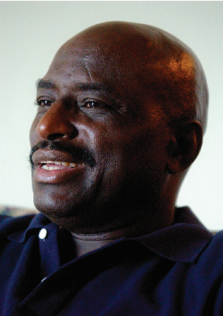
Rudy Davalos has compiled a long list of outstanding accomplishments as an athlete, coach and athletics’ administrator. As a basketball player at Edison High School, he was an All-District, All-City and All-State Selection, and was captain of Southwest Texas State’s 1960 NAIA National Championship team. He received Conference, Tournament and All-NAIA honors, and was invited to the 1960 U.S. Olympic Team Trials.
Davalos turned to basketball coaching in 1961 with positions at Georgetown College, Kentucky, Auburn and University of the South. In 1973 he became Assistant Coach and Director of Player Personnel for the San Antonio Spurs. Davalos moved into collegiate administration in 1976 when he became the first Director of Athletics for the newly established University of Texas at San Antonio. In nine years, he built the Roadrunners athletic program to eight men’s and five women’s sports, creating songs, a mascot and uniform colors.
Davalos was Director of Athletics at the University of Houston from 1987-92 where he made significant financial, facility and competitive improvements, to include a Heisman Trophy winner. In 1993 he assumed the same position at the University of New Mexico. He served two terms on the NCAA Men’s Basketball Committee. His Hall of Fame inductions include Latin American International Sports, NAIA, Southwest Texas State University and Texas High School Basketball and he is a Distinguished Alumni Award recipient at SWT.
Class of 2003
Warren McVea
Class of 2003
Warren McVea
The infamous 1963 Lee-Brackenridge high school football game, not only featured Linus Baer from Lee, but also football star Warren McVea from Brackenridge. McVea was one of the best Texas high school running backs of the 1960’s and arguably one of the best in state history. He is considered by many to be the football player with the most natural ability to ever come out of San Antonio.
In his senior year at Brackenridge, McVea rushed for 1,332 yards on 127 carries, an average of 10.4 yards a carry, and was the most prolific scorer of his time. He scored 315 points as a senior in 1963, setting a big-school state record. McVea also set a career scoring record with 591 points. After his successful high school football career, McVea broke the color barrier at the University of Houston. In 1964, he became the first black player in the school’s history to sign an athletic scholarship.
After college, McVea entered the NFL draft and was quickly picked up by the Cincinnati Bengals in 1968. In ’69, McVea was acquired by the Kansas City Chiefs. Soon after, in 1970, McVea earned the highly coveted Super Bowl ring with the Chiefs. McVea continued playing professional football until 1973.
Class of 2003
John "Mule" Miles
Class of 2003
John "Mule" Miles
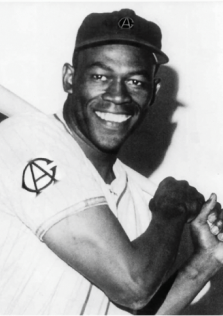
John Miles was a power-hitting baseball player in the Negro League from 1946 through 1949. He began playing baseball in 1940 while a student at Wheatley High School and starred with local teams such as the San Antonio Black Missions, San Antonio Indians and Kelly Field Brown Bombers.
Handpicked by a scout in 1946, Mules signed with the Chicago American Giants of the Negro League where he hit more than 70 home runs in four seasons. He was an excellent outfielder with a strong arm, and his best season was 1947 when he hit 27 home runs. He hit eleven home runs in eleven straight games, a feat that would still be a major league record today. He earned his nickname after his manager commented that he hit as hard as a mule kicks. In 1951, Miles played with the Laredo Apaches of the Gulf Coast league after which he returned to San Antonio to work at Kelly AFB and play on local teams.
Miles was recognized by the Baseball Hall of Fame in 1991 as one of the Living Legends of Negro League Baseball. He was inducted into the Texas Black Sports Hall of Fame in 2000 and has made numerous appearances on behalf of baseball and the Negro League.
Class of 2003
Linus Baer
Class of 2003
Linus Baer
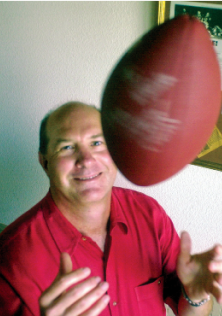
Linus Baer and Warren McVea became San Antonio football legends for their roles in “The Game”, the 1963 bi-district playoff game between Lee and Brackenridge high schools, considered “The Game of the Century” for Texas High School Football. Lee’s Baer scored 37 points and gained 339 total yards in the 55-48 Lee win.
Baer was an all-around high school athlete with All-City honors in football, basketball and baseball, but it was his ’63 football season that stands out. As a halfback he gained 1614 yards for an 8.7 rushing average, with a game-high of 270 yards. He scored 33 touchdowns rushing, passed for two more and scored 226 total points, an average of almost 19 points per game. He also had a 41.4 yard punting average. He was an All-State and Scholastic Magazine All-America selection, received the Thom McAn Award as the best player in San Antonio and the Amarillo Chamber of Commerce Texas High School Outstanding Football Player Award.
Baer went on to play football at the University of Texas, playing three seasons and serving as a team captain in his senior year in 1967. Primarily a blocking back, his career totals were 1064 total yards with an average of 6.4 yards per play. He received the UT Sportsmanship Award, the Team Leadership Award and the D.X. Bible Scholarship Award, all in 1967.
Class of 2003
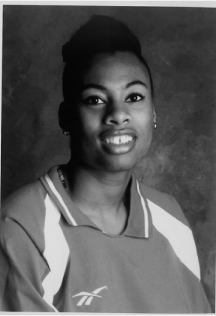
Demetria Sance
Class of 2003
Demetria Sance
Demetria Sance began her volleyball career at John Jay High School and led her team to the state tournament all four years. Jay won the state championship in 1991, Sance’s freshman year. She was a four-year High School All-America selection, named San Antonio High School Player of the Year four times and was selected to play in the 1994 Mizuno All-American All-Star game for the nation’s top high school players.
Sance continued to excel at the University of Texas, becoming only the eighth women’s volleyball player to earn All-America honors for four consecutive seasons. She is the Longhorns’ all-time leader in kills, attacks, and digs. In 1997, she helped the USA win the silver medal at the World University Games.
Sance played and trained full-time for two years with the USA National Team. Her international competitions include a bronze medal at the 1999 Pan American Games, the NORCECA Championship, the 1999 World Cup and the 2000 NIKE Americas’ Volleyball Challenge. She helped the USA to a fourth-place finish at the 2000 Summer Olympic Games in Sydney.
Class of 2003
Johnny Moore
Class of 2003
Johnny Moore
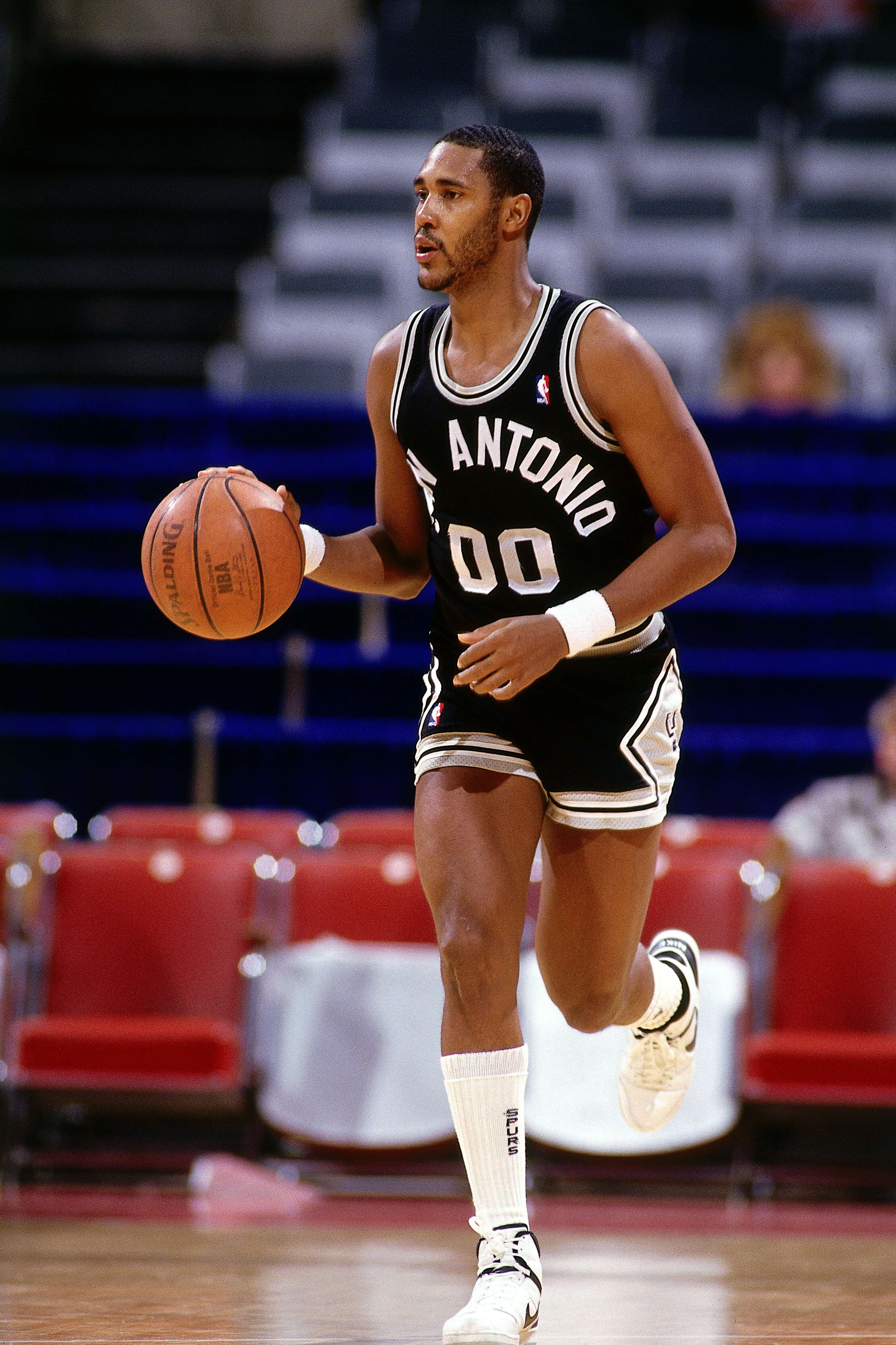
Johnny Moore played nine seasons in the National Basketball Association from 1980 to 1990, all of them with the San Antonio Spurs. He held the team record for assists with 3,685 and led the NBA in assists for the 1981-82 season with an average of 9.6 per game. He had his best season in 1984-85 when he averaged 12.8 points, 10 assists and 2.79 steals in 82 games.
Moore was diagnosed with Desert Fever, a late form of meningitis, in 1986. He returned to the Spurs and the NBA as a role model of determination and played for three additional seasons. In 1998, the Spurs retired Moore’s “00”, only the third number to be retired in Spurs history.
Moore also had an outstanding collegiate career at the University of Texas where he started every game in his four seasons. He led the Longhorns to the 1978 NIT championship, was team MVP and All-Southwest Conference in both 1978 and 1979 and set many game and career marks for assists.
Class of 2004
Robert Zamora
Class of 2004
Robert Zamora
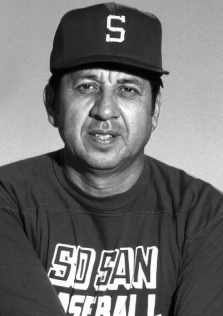
From athlete to superintendent, Robert C. Zamora made a huge impact in the South San Antonio School District. He played on sports teams at South San Antonio High School that won three state baseball titles and one state basketball crown. He was selected to the All-State Tournament Team in both baseball and basketball for two seasons.
South San Antonio achieved a rare feat in 1961 by winning the State Class 3A basketball and baseball championships. Zamora led all scorers with 32 points in the Bobcats’ 67-54 victory in the basketball title game. He made 17 free throws in that game, tying a record that still stands. During the 1960 regular season he scored 51 points to set what was then a city record for single game scoring.
After graduating from Baylor University, Zamora returned to South San Antonio to coach baseball. During his ten years as coach, South San won eight consecutive district titles and four city championships. The Bobcats finished second in the state tournament in 1975 and 1976. In 1976 the Texas Baseball Coaches Association honored Zamora as the Coach of the Year, and in 1997 he entered the TBCA Hall of Fame. Zamora served as the school district’s superintendent from 1998 to 2000.
Class of 2004
Gary Bell
Class of 2004
Gary Bell
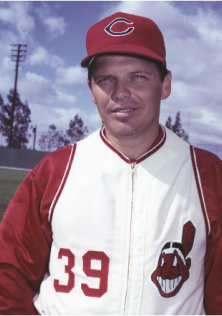
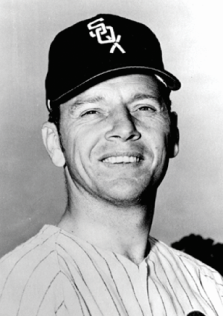
Gary Bell played 12 seasons of Major League Baseball, pitching for the Cleveland Indians, Boston Red Sox, Seattle Pilots and Chicago White Sox.
A graduate of Burbank High School, Bell played YMCA and American Legion baseball in San Antonio before winning 12 games in his first pro season with Cleveland in 1958. His professional career earned run average was 3.68 in 519 games with 121 wins. His two best seasons were 16 wins in 1959 and 14 wins in 1966. In a 1959 win he made four base hits in four at-bats, and in 1962 he led the American League with nine wins in relief.
Bell was selected for the All-Star Game in 1960, 1966 and 1968. A career highlight was his 1967 season with the Red Sox when he won 12 games and pitched in the World Series against the St. Louis Cardinals. In 1969 he won the home opener for the expansion Seattle Pilots with a shutout over Chicago, the team with which he ended his major league career. Bell pitched nine full seasons with Cleveland and was named as one of the All-Time Top 100 players for the organization. He is a member of the Redding, PA Baseball Hall of Fame.
Class of 2004
Joel Horlen
Class of 2004
Joel Horlen
Joel Horlen is the only baseball player to have won a Pony League World Series, a College World Series, and a professional World Series. At the age of 14, Horlen was the star pitcher in the first Pony League World Series in 1952. He led Oklahoma State University to the College World Series title in 1959 and earned his Major League Baseball World Series ring with the Oakland Athletics in 1972.
The Burbank High School graduate played YMCA, American Legion and Pony League baseball in San Antonio before pitching 12 professional seasons with the Chicago White Sox and Oakland Athletics. He earned 116 major league wins with a lifetime earned run average of 3.11 in 361 games. For six straight seasons he started every fourth game, twice leading the American League in ERA and twice finishing second.
Horlen’s best season was with Chicago in 1967 when he went 19-7, led the league with a 2.06 ERA and six shutouts, pitched a no-hitter, was selected for the All-Star Game, placed second in Cy Young Award voting and was fourth in the league MVP voting. He is a member of the Oklahoma State University Hall of Fame.
Class of 2004
Betty Dodd
Class of 2004
Betty Dodd
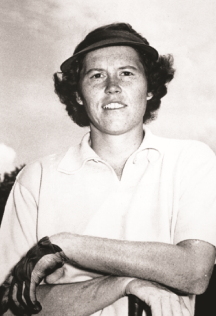
Betty Dodd was the first San Antonio golfer to play on the Ladies Professional Golf Association tour. She joined the LPGA Tournament Division in 1952 and became known as much for her singing and guitar playing off the course as for her long drives and competitive golf on it.
A graduate of Incarnate Word High School, Dodd won the Oak Hills Club Championship in 1949, the Brackenridge Club Championship in 1950 and 1951, and the San Antonio Women’s City Championship in 1950 and 1951. Dodd won two professional tournaments: the Lawton Open in 1956 and the Colonial Open in 1957. Her most successful year was in 1957 when she placed in the top five in six events and was the tour’s 8th leading money winner.
Dodd retired from the tour in 1960 but continued her involvement as a teaching professional. Several of her students have been prominent on the tour, and in 1980 she was recognized as the national LPGA Teacher of the Year. The Betty Dodd Scholarship Committee awards a college scholarship in her name, and the San Antonio Junior Golf Association annually presents the Betty Dodd Volunteer of the Year Award.
Class of 2004
David Robinson
Class of 2004
David Robinson
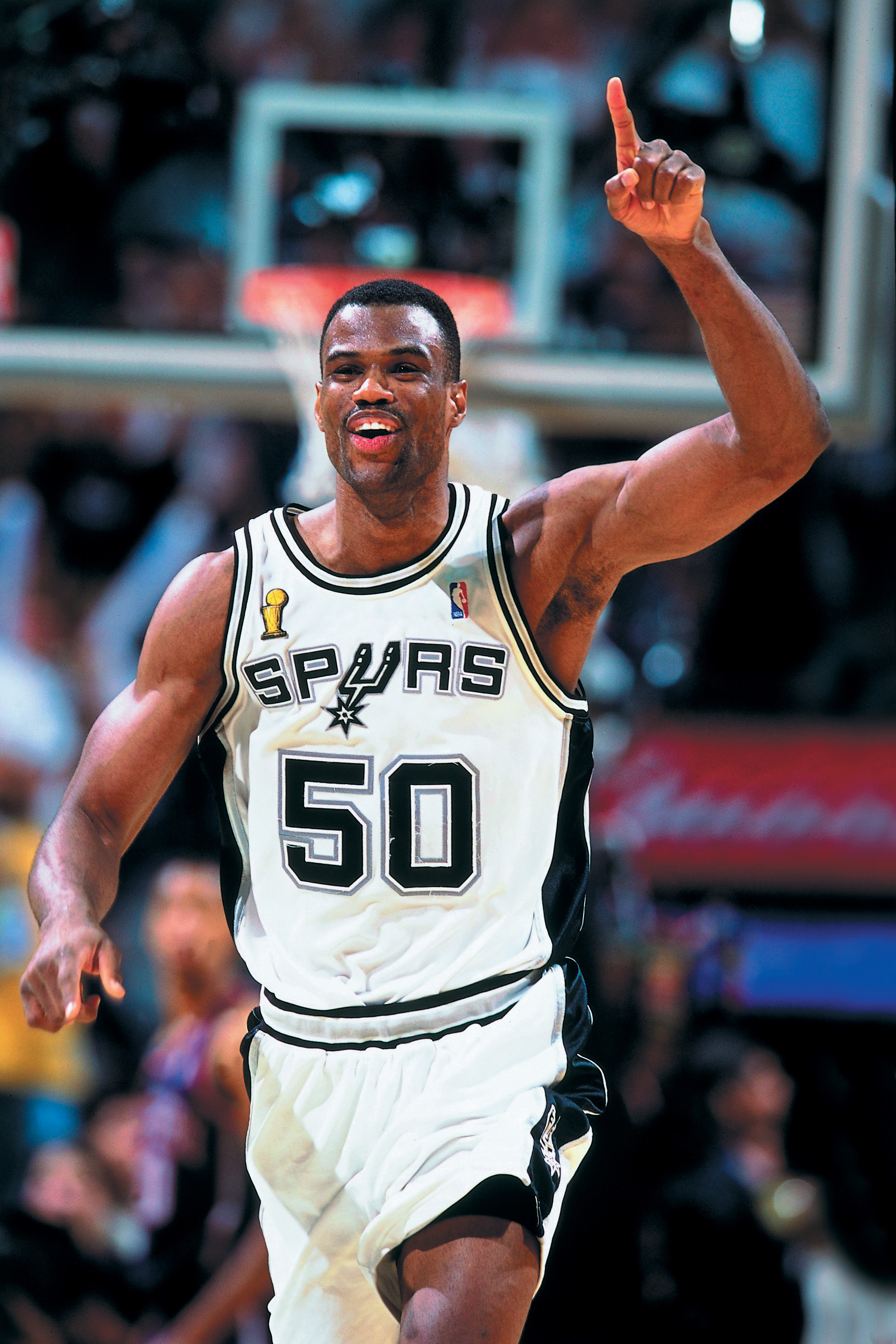
David Robinson is one of the greatest players in the history of basketball. During his career, he earned three Olympic medals, two National Basketball Association championships and an NBA Most Valuable Player award. Robinson won gold medals at the Atlanta Olympic Games in 1996 and the Barcelona Games in 1992, and a bronze medal at the 1988 Seoul Olympic Games. He is the USA’s all-time Olympic Games leader in points, rebounds, and blocked shots and is the only male player to participate in three Olympic basketball tournaments. He also played in the 1987 Pan American Games and the 1986 World Championships.
Robinson played his entire 14-year professional career with the San Antonio Spurs and helped lead them to NBA titles in 1999 and 2003. He is one of two players in NBA history who has earned a team championship, an individual scoring title, Defensive Player of the Year award, Most Valuable Player award, Rookie of the Year award and an Olympic gold medal. He was selected to ten NBA All-Star Games and is on the list of the NBA’s 50 Greatest Players of All-Time.
Off the court, he is a member of the World Sports Humanitarian Hall of Fame and the Texas Sports Hall of Fame. His multi-million-dollar contribution as founder of The Carver Academy is the largest contribution to a single charity ever made by a professional athlete.
Class of 2005
Reuben Reina
Class of 2005
Reuben Reina
Reuben Reina has represented the United States at all levels of distance running and is the most accomplished runner in San Antonio history. The John Jay High School graduate dominated local and state 1600 and 3200-meter races for three years, winning both events at the state championships in 1984, 1985 and 1986. This feat has never been duplicated. He was also state cross-country champion in 1985. He was the Greater San Antonio Sportsman of the Year in 1985 and 1986.
Reina ran collegiately at the University of Arkansas where he was a two-time NCAA 3000m indoor champion, an eight-time All-American in track and cross-country, and winner of seven individual Southwest Conference titles. He ran on Razorback teams that won six NCAA team championships and eleven Southwest Conference titles. Reina ran the 5000-meter event at the 1992 Olympic Games in Barcelona where he finished fifth in the qualifying round. He is a two-time USA Cross Country Champion, in 1994 and 1996. He has represented the USA in five world championship track and cross-country events, two Goodwill Games, and numerous international competitions.
His personal best times include 3:40.81 at 1500 meters, 3:57.08 for the mile, 7:43.02 in the 3000 meters, and 13:24.78 in the 5000 meters. He has been inducted into the Arkansas Sports Hall of Fame, the University of Arkansas Hall of Honor, the Arkansas Track & Field Hall of Fame and the Hispanic National Hall of Fame.
Class of 2005
Gabe Rivera
Class of 2005
Gabe Rivera
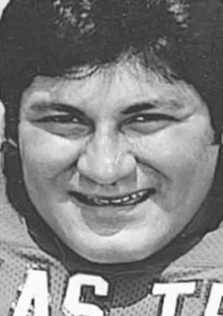
Gabe Rivera was an outstanding high school and college football player who also played professionally for the Pittsburgh Steelers. An all-around athlete, Rivera was a three-year letterman in football, basketball, baseball and track at Thomas Jefferson High School. He immediately became recognized in football where he played tight end and linebacker, being selected All-District at both positions. He was named a Parade Magazine All-American in 1978, his senior year. He also qualified for the state track meet in the discus, throwing over 170 feet.
Rivera became a defensive lineman at Texas Tech University, and earned a starting position in the fifth game of his freshman year. He became nationally known as “Señor Sack.” His collegiate career produced 321 tackles, and he was the team’s leading interior tackler for four consecutive years. Rivera was an All-Southwest Conference selection his junior and senior years and an Associated Press and Kodak All-American pick his senior year, 1982, when he was named Southwest Conference Defensive Player of the Year. He played in the Blue-Gray All-Star game that same year.
His outstanding senior season made him the number one draft pick of the National Football League’s Pittsburgh Steelers. His professional career ended early in October 1983, when he was involved in a head-on automobile accident in Pittsburgh. Rivera has been inducted into the Texas Tech Athletic Hall of Fame, the Latin American International Hall of Fame and The Latino in Action Sports Association Hall of Fame.
Class of 2005
Jim Wacker
Class of 2005
Jim Wacker
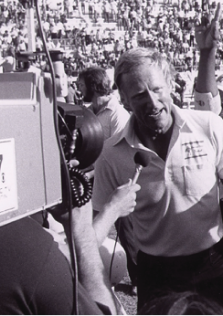
Jim Wacker earned a reputation for an eternally positive view of life throughout his 37-year coaching career, which produced national championships and high academic achievement.
His football coaching experience began in 1960 as a high school coach in Oregon, but it was his record in Texas that moved him up the coaching ladder. He was the head coach at Texas Lutheran College from 1971 to 1975 where the Bulldogs won the NAIA Division II national championship in 1974 and 1975. After three seasons, two conference championships and two semifinal playoff appearances at North Dakota State, he became head coach at Southwest Texas State where he led the Bobcats to NCAA Division II championships in 1981 and 1982. The 1982 team had a perfect 14-0 season and Wacker was named College Division Coach of the Year. His four-year record at SWT was 42-8.
Wacker moved into the Southwest Conference in 1983 where he coached nine seasons at Texas Christian University. Three organizations honored him as National Coach of the Year in 1984 when he led the 8-3 Horned Frogs to the Bluebonnet Bowl. In 1992, he became the head coach at the University of Minnesota in the Big Ten Conference. In each of his five years at Minnesota, the Gophers led the conference in graduation rates and all-academic selections. He retired from coaching with a 160-130-3 record, and in 1998 became the Athletic Director at Southwest Texas State where he served until 2002.
Class of 2005
Ross Davis
Class of 2005
Ross Davis
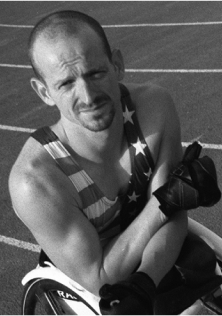
Ross Davis was a multiple medal winner in three Paralympic Games and set numerous national and world records in wheelchair track events. Born with a disability, he started participating in wheelchair sports in 1987 while a student at Texas Tech University. In 1989 he became focused on track events and, after three months of training, won his first 100-meter national championship. In 12 years of racing, he set U.S. national records in the 100m, 200m, 400m, 800m and 1500m events, and held world records in the 100m, 400m and 1500m distances.
Davis won nine medals in three Paralympic Games, starting with four silver medals at the 1992 Barcelona Games. In Atlanta in 1996, he won the gold medal in the 100 meters in world record time and took bronze in the 400 meters. He won gold again at the 2000 Sydney Games with a Paralympic record time in the 100 meters and won bronze medals in the 200 and 400-meter events. At the 1995 Pan American Games in Argentina, Davis won every track event from 100 meters to 5000 meters, earning six gold medals overall. He also earned five silver medals at the 1999 Southern Cross Games in Sydney.
In 2000, Davis was selected as the Express-News Sportsman of the Year and recognized in the Top 100 Texas Panhandle Sports Legends of the Century. He represented disabled sports on the U.S. Olympic Committee board of directors from 2002 to 2004. After a long career as director of marketing at San Antonio Sports, Davis currently holds the same position with the Texas Regional Parasport Games.
Class of 2005
Bill Rogers
Class of 2005
Bill Rogers
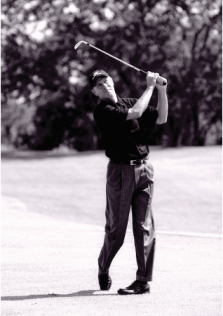
Bill Rogers has represented the United States as both an amateur and a professional golfer and has won 13 professional golf tournaments. Rogers began playing golf at the age of nine. He was an NCAA First Team All-American at the University of Houston and was a member of the victorious 1973 Walker Cup team. In 1975 he joined the Professional Golf Association Tour and won six Tour events between 1978 and 1983. He also won seven tournaments outside the Tour, including the 1981 Australian Open.
Rogers was named PGA Player of the Year in 1981, his best season on the tour. His Tour victories included the British Open Championship, World Series of Golf and the Texas Open. He played in the 1981 Ryder Cup and contributed one and one-half points to the USA victory over Europe. He was an assistant to captain Ben Crenshaw for the 1999 Ryder Cup Team which staged the dramatic comeback win in Brookline.
Rogers has been inducted into the Texas Golf Hall of Fame and has been a board member of Golf San Antonio. He is an avid supporter of the First Tee Program and helped bring the American Junior Golf Association to San Antonio.

Class of 2005
Stacey Johnson
Class of 2005
Stacey Johnson
As a foil fencer, Stacey Johnson was an Olympian, a national champion and a collegiate champion. A graduate of Robert E. Lee High School, Johnson began fencing at age eleven. She was a four-time All-America selection at San Jose State University where she established the current collegiate win/loss record of 305-1. She helped the Spartans to four NCAA team championships and was the NCAA individual champion in 1976 and 1978.
In U.S. National Championship competition, Johnson won team titles in 1974, 1976 and 1977, and was an individual finalist five times between 1974 and 1982. She represented the USA at three Fencing World Championships, was a member of the U.S. World University Games team in 1977 and 1979 and was the gold medalist at the 1982 U.S. Olympic Sports Festival. Johnson was a member of the 1980 U.S. Olympic Fencing Team. She was appointed to the U.S. Olympic Committee board of directors from 1996-2008 and served on its executive committee from 2003-2004. She was elected President of the U.S. Fencing Association from 2000-2004 and was a nominee for the International Olympic Committee’s Annual Women and Sport Trophy, the highest Olympic award for women.
Johnson founded the San Antonio Sports Foundation’s Dreams For Youth program, an Olympic sport program that developed training centers in disadvantaged neighborhoods. She has served as a member of the San Antonio Sports Foundation board of directors for 18 years. She has been inducted into the San Jose State Hall of Fame and the San Antonio Women’s Hall of Fame. She was named by the NCAA as a distinguished 2004 NCAA Silver Anniversary Award winner, recognizing her outstanding contributions to sport since her competitive college days.
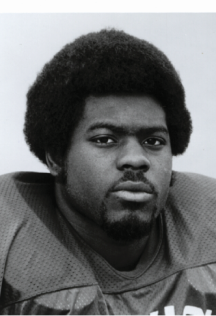
Class of 2006
Thomas Lott
Class of 2006
Thomas Lott
Thomas Lott excelled in high school and college football as a running back and a rushing quarterback. He rushed for over 1000 yards in both his junior and senior seasons at John Jay High School, was twice named All-District quarterback and All-City running back and quarterback. He was rated the number two quarterback in Texas his senior year when he was also honored as a Parade Magazine All-American.
Lott took his rushing talents to the University of Oklahoma where Coach Barry Switzer called him “the greatest wishbone quarterback in Oklahoma history”. From 1976 to 1978 he played on Sooner teams that compiled a 30-5-1 record and won three Big Eight titles. The 1977 team was ranked sixth in the nation with a 10-1 record and Lott lead that team in rushing with 856 yards and in touchdowns with 12.
He was selected to the All-Big Eight team in both 1977 and 1978 and in 1979 was drafted by the St. Louis Cardinals of the National Football League. As a professional, Lott played one season in St. Louis, three seasons in the Canadian Football League and two seasons in the United States Football League.
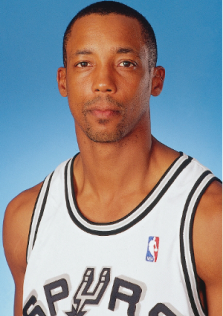
Class of 2006
Sean Elliott
Class of 2006
Sean Elliott
Sean Elliott played 12 seasons in the National Basketball Association, 11 of those with the San Antonio Spurs where he is still a household name among fans. He was a first-round draft pick in 1989 and played in 742 NBA games before he retired in 2001.
He was a member of the Spurs first NBA championship team in 1999 and will be remembered for his Memorial Day Miracle, a three-point game-winning shot against Portland in Game 2 of the Western Conference Finals. Following that season, he revealed that he had been playing with a progressively debilitating kidney disease. He received a kidney from his brother and seven months later became the first pro athlete to return to active play after an organ transplant.
Elliott is the only player in Spurs history to rank in the team’s top ten in games played (third with 669), points (fourth with 9659), rebounds (sixth with 2941), assists (seventh with 1,700), steals (eighth with 522) and blocks (ninth with 257). He was also the Spurs’ record holder in three-pointers, with 563, until recently. His NBA regular season averages were 14.2 points, 4.3 rebounds and 2.6 assists per game. He was twice selected to the NBA All-Star Team, in 1993 and 1996, and his number 32 jersey was retired by the Spurs in 2005.
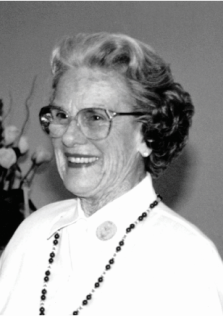
Class of 2006
Mary Nan West
Class of 2006
Mary Nan West
Mary Nan West, a South Texas rancher, civic leader and philanthropist created the San Antonio Livestock Exposition Scholarship Fund, which has provided millions of dollars in educational opportunities for agricultural students.
The Saint Mary’s Hall graduate joined the S.A.L.E. Board of Directors in 1971 when she served on the Auction Sales Committee. She became President in 1984 and Chairman of the Board in 1985, a position she held until just before her death in 2001. In 1984, West helped establish the scholarship program that has since disbursed over $68 million in financial support, including more than 3200 full-time four-year scholarships at 75 Texas colleges and universities.
Under her leadership, the San Antonio Rodeo became one of the top five rodeos in the United States in terms of participants, prize money and attendance. She played a major role in the development of the SBC Center which became the new home of the rodeo in 2003. Her volunteer service and monetary support resulted in many honors and recognitions in San Antonio and Texas. She has been inducted into the San Antonio Women’s Hall of Fame, the Texas Women’s Hall of Fame, the San Antonio Business Hall of Fame and the National Cowgirl Museum Hall of Fame.
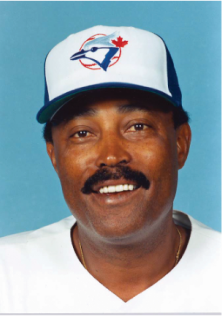
Class of 2006
“Cito” Gaston
Class of 2006
“Cito” Gaston
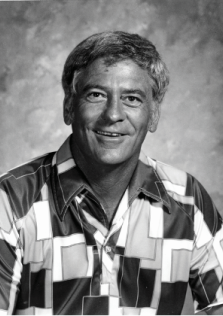
Clarence “Cito” Gaston played professional baseball for 16 years and won two World Series titles as a manager. Born in San Antonio and raised in Corpus Christi, he moved back to San Antonio in 1961. He was playing amateur baseball with the Cardona Welders, a traveling team that often dominated games in the small towns surrounding San Antonio, when he was noticed by a local professional scout.
Primarily an outfielder, he made his major league debut with the Atlanta Braves in 1967 but moved to the San Diego Padres in their expansion draft, playing there for six years. His best season was in 1970 when he hit .318 with 29 homers and 93 RBIs and was voted to the All-Star Team. He played four seasons in Atlanta and ended his playing career with a .256 batting average, 91 homers and 387 RBIs.
Gaston was a minor league hitting coach for Atlanta in 1981 before joining the Toronto Blue Jays as hitting coach in 1982. He became the manager of the Blue Jays in 1989 and held the position through 1997. Toronto won World Series championships in 1992 and 1993 and four American League East titles under his leadership. In 2002, he was inducted into the Canadian Baseball Hall of Fame.
Class of 2006
Bob Bass
Class of 2006
Bob Bass
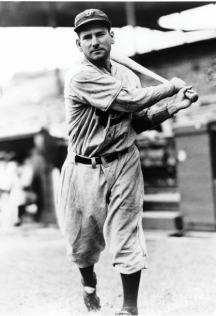
Bob Bass had a 50-year career in basketball as a collegiate championship coach, a professional coach in two leagues and an award-winning front office executive.
He coached for 15 years at NAIA Oklahoma Baptist University, leading the Bisons to six conference titles, six post-season tournaments, three tournament championship games and one NAIA championship title. Bass has been inducted into the NAIA Hall of Fame. With two more seasons at Texas Tech, he compiled a 297-158 collegiate record and an NAIA Coach of the Year award.
Bass spent 30 years in coaching and management positions in the American Basketball Association and the National Basketball Association. He started as head coach of the ABA Denver Nuggets in 1967 followed by seasons in Miami and Memphis. His 20 years with the San Antonio Spurs began in 1974. With the ABA and NBA Spurs he served as Coach, General Manager, Vice-President of Basketball Operations and Assistant to the Chairman and earned the first of two honors as NBA Executive of the Year. His collegiate and professional coaching career produced 609 wins, to include a 144-108 record with the Spurs. Bass retired in 2005 after nine seasons with the NBA Charlotte/New Orleans Hornets, with whom he earned his second Executive of the Year award.
Class of 2006
“Pinkey” Whitney
Class of 2006
“Pinkey” Whitney
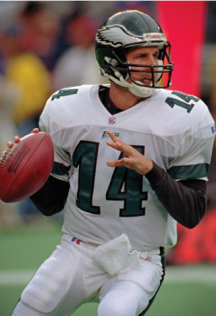
Arthur Carter “Pinkey” Whitney played 15 seasons of professional baseball from 1925 through 1939. He was an All-City selection in three sports at Brackenridge High School before playing three seasons of minor league baseball with teams affiliated with the Cleveland Indians.
He hit .301 in his first Major League season with the Philadelphia Phillies in 1928. In each of the following two seasons he collected 200 or more hits, batted over .300, and established himself as one of the best third basemen in the National League. In 12 seasons with the Phillies and Boston Braves he played in 1539 games and had a lifetime batting average of .295. He hit over .300 in four seasons and his two best were .341 and .342. His .982 fielding percentage in 1937 is still a Phillies record.
In 1936, Whitney was voted by fans to be the National League’s starting third baseman for the Fourth All-Star Game. He had a hit and a run-batted-in to help his team win their first victory in the series. He was one of the first athletes to be pictured on a Wheaties cereal box and was inducted into the Texas Sports Hall of Fame in 1982.
Class of 2007
Ty Detmer
Class of 2007
Ty Detmer
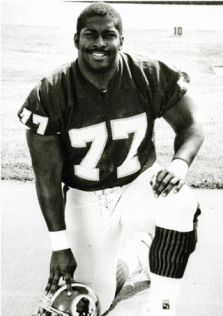
Heisman award winner and NFL veteran, Ty Detmer began his career as a record-setting quarterback at Southwest High School. There, he set state records, since broken, for most passing yards in a season (3,551) and career (8,005). His senior year at Southwest, he led the nation in passing yards (3,357) in 10 games, including 557 yards against Pleasanton – still ranked fourth on the all-time state list.
He went on to play at BYU where he won the Davey O’Brien Award twice, the Maxwell Trophy and the coveted Heisman Trophy. He was also a consensus All-American two years in a row. He is the only San Antonian to have won the Heisman. While at BYU, Detmer set 59 NCAA passing records from 1988-1991. His number 14 has since been retired at BYU.
Detmer was selected in the ninth round of the NFL Draft by the Green Bay Packers. Over his 14-year career, he spent time with the Packers, Philadelphia Eagles, San Francisco 49ers, Detroit Lions, Cleveland Browns and Atlanta Falcons. Following his playing career, he became the head coach at St. Andrews Episcopal School in Austin, before becoming BYU’s offensive coordinator and quarterbacks coach in 2015. He held the position until 2017. In 2021, he came head coach at the American Leadership Academy in Arizona. In 2022, his team won the 4A state championship.
Class of 2007
Darryl Grant
Class of 2007
Darryl Grant
Darryl Grant was one of the most dominant football players in San Antonio history and wears two Super Bowl Championship rings today.
Grant started his career as a menace on local high school fields, starring as a two-way lineman at Highlands High School. He later became a star offensive lineman at Rice University before being drafted by the Washington Redskins in 1981 in the 9th round of the NFL Draft.
Upon being drafted by the Redskins, Grant switched sides of the football, converting his dominance to the defensive line. He spent ten seasons in Washington, where he helped win two Super Bowls, in 1982 and 1987. In 1990, he joined the Tampa Bay Buccaneers, where he spent one season before retiring from football in 1991. In 2002, he was selected by the Redskins’ organization as one of the 70 Greatest Players of the team’s history.
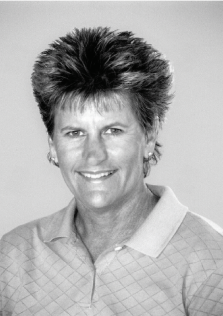
Class of 2007
Shirley Furlong
Class of 2007
Shirley Furlong
An East Central High School and Texas A&M graduate, Shirley Furlong enjoyed a 15-year career on the LPGA Tour.
Furlong was a U.S. amateur sectional medalist in 1979 and 1980 and a three-time San Antonio city women’s champion as an amateur in 1979, 1981, and 1982. She also held two-time All-America honors in 1982 and 1983 while playing at Texas A&M. In 1984, she was the leading money-winner on the WPG Tour and had four tournament victories. Furlong won the LPGA Lady Keystone Open in 1988 and has had numerous Top 5 and Top 10 finishes on tour.
Furlong currently Co-hosts a charity pro-am with Red Steagall for Bluebonnet Youth Ranch, a home for abused children in Yoakum, Texas. In 1996, she won the Budget Service Award for her work with the organization. In 1990, Furlong was inducted into the Texas A&M Athletics Hall of Fame.
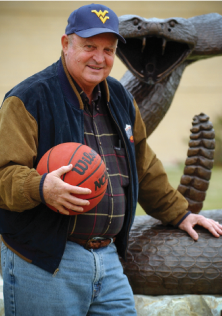
Class of 2007
Buddy Meyer
Class of 2007
Buddy Meyer
Buddy Meyer coached the St. Mary’s University men’s basketball team for 27 seasons, winning more than 500 games and one NAIA national title.
Meyer started his legendary relationship with St. Mary’s as a player from 1961-64, where he became the first St. Mary’s player named all-conference all four years. In his collegiate career Meyer scored 1,581 points, which is the fifth all-time in school history. In 2003, his number 44 jersey was retired by the Rattlers.
Meyer was an assistant coach at St. Mary’s from 1968 until 1978, when he took over the head-coaching job. During his tenure, he oversaw the school’s transition from the NAIA to the NCAA Division II. As head coach he compiled a 530-252 record, with one national championship, 16 conference titles and 15 trips to national tournaments. In 1989, he led the Rattlers to the national championship, where they won a nail-biter against East Central University. That year, he was named NAIA National Coach of the Year. Meyer spent 21 years as athletic director at St. Mary’s and retired in 2005. Meyer was recognized as a St. Mary’s Distinguished Alumnus in 1983 and the “Buddy and Anna Meyer Courts” within the Bill Greehey Arena were named in his honor in 2007. In 2009, Meyer was inducted into the NAIA Hall of Fame.
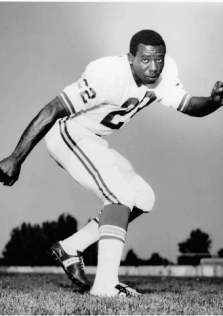
Class of 2007
Willie Mitchell
Class of 2007
Willie Mitchell
Born in San Antonio in 1940, Willie Mitchell is one of the Top 50 high school football players in San Antonio history. He played for Wheatley High School when it was part of the Prairie View Interscholastic League before integration. In 2000, he was named to the San Antonio Express-News All-Time high school Top 50 team.
Mitchell played college football at Tennessee State before playing in the NFL for the Kansas City Chiefs and Houston Oilers. He joined Kansas City in 1964, where he found immediate success. In 1966, he helped them win the final AFL League Championship before the inception of the AFL-NFL World Championship Game, now permanently the Super Bowl. The next year, Mitchell had an interception in Kansas City’s 35-10 loss to the Green Bay Packers in Super Bowl I in 1967. Three years later, in 1970, Mitchell got his taste of Super Bowl victory in the Super Bowl IV game against the heavily favored Minnesota Vikings. After eight seasons with the Chiefs, he was traded to the Oilers, where he had career ending knee surgery, forcing him to retire.
Mitchell is currently the board chairman of San Antonio Fighting Back – a United Way organization whose mission is to make the community healthy and safe.
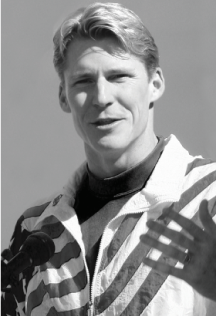
Class of 2008
Josh Davis
Class of 2008
Josh Davis
Josh Davis is a fifth generation San Antonian and the most accomplished swimmer in city history as he set city, state and American records on his way to winning five medals in the Olympic Games. Coached by Al Marks at Winston Churchill High School, Davis was the state champion in the 200-yard freestyle in 1988 and 1989 and helped the Chargers win four straight state team titles. He was a member of the 1989 4×100-yard freestyle relay team that set a national public high school record that stood for over 20 years.
Davis continued to excel at the University of Texas where he won 23 All-American awards under Coach Eddie Reese. He helped the Longhorns win the 1991 NCAA team championship, won the 1993 NCAA 200-yard freestyle title and was a member of the 1994 NCAA champion and American record setting 400-yard freestyle relay. At the 1996 Centennial Olympic Games in Atlanta, he was the only male athlete to win three gold medals when the USA won the relay events of the 800-meter freestyle, the 400-meter freestyle and the 400-meter medley. Davis was the oldest man on the 2000 USA Olympic Swim Team when he swam on the silver medal-winning 800- and 400-meter relay teams in Sydney. He broke the American 200-meter freestyle record three times at the Games.
He has been inducted into the University of Texas Hall of Honor and a North East School District swim center is named Josh Davis Natatorium.
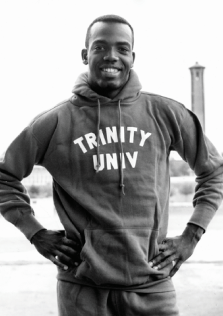
Class of 2008
Clyde Glosson
Class of 2008
Clyde Glosson
Clyde Glosson was a record-setting nationally-ranked sprinter and one of San Antonio’s premier track athletes. The track speed and football skills he developed at Phillis Wheatley High School would eventually lead him into the National Football League.
At age 15 he set a national Junior Olympic record of 9.6 in the 100-yard dash. In 1964 he helped the Wheatley 440-yard relay team set a national high school record of 41.5 seconds and that relay also was the PVIL state champion. Individually he set a national record of 20.6 seconds in the 220-yard dash. From 1963 through 1965 he won three state titles in the 220-yd dash and two titles in the 100. The Lions won the 1965 state track and field championship. Glosson then ran at Trinity University where he won the NCAA Division II 100 and 200-meter dash titles. In 1968 he was the fifth ranked 100-meter sprinter in the world and was an alternate for the 1968 US Olympic Team. His career bests were: 100m—10.1, 100yd—9.2, 200yd—20.6 and 200m—20.1, which was a national collegiate record.
In 1970 he was drafted by the NFL’s Kansas City Chiefs. He played for the Buffalo Bills from 1970 through 1972 finished his professional football career with the Detroit Wheels in the World Football League in 1974. He has been inducted into the Prairie View Interscholastic League Hall of Fame and Border Olympics Track and Field Hall of Fame.
Class of 2008
Jerry Comalander
Class of 2008
Jerry Comalander
Jerry Comalander served San Antonio’s Northeast Independent School District as a state champion football coach and an award-winning Athletic Director.
His coaching career began in Devine in 1961 where he was an assistant in football and head coach in basketball. He coached for six years at Uvalde High School where, as an assistant, the 1972 football team was undefeated in winning the state championship. Comalander came to Winston Churchill High School in 1973 as an assistant football coach and became the head coach in 1975, a position he held for 13 seasons. The Chargers were 9-1 his first season and followed with a perfect 15-0 State Championship season in 1976. The Texas Sportswriter’s Association then selected him Coach of the Year.
His 13 seasons produced a 125-28-3 record, eight playoff appearances, four District Championships, three state semi-finalists and a state title. He is a Hall of Honor inductee for the Texas High School Coaches Association and has served as a Director and President of the Association. In 1988 he became the Executive Director of Athletics for the NEISD, helping produce numerous state championships for district high schools. He has been a Director and the President of the Texas High School Athletic Directors Association and received a Distinguished Service Award from the National Interscholastic Athletic Administrators Association. The NEISD football stadium is named Jerry Comalander Stadium in his honor.
Class of 2008
Cliff Johnson
Class of 2008
Cliff Johnson
Cliff Johnson played 20 seasons of professional baseball to include 15 in the major leagues where he won two World Series Championships.
At Phillis Wheatley High School he was an all-around athlete, playing football, basketball, baseball and track, and he helped the Lions’ track and field team win the PVIL state championship in 1965. Upon his graduation from Wheatley in 1966 he was drafted by the National League Houston Astros. He spent five seasons in the minor leagues before making his major league debut in 1972. Johnson played with the Astros from 1972 through half of the 1977 season before joining the New York Yankees for two straight championships. From 1979 through 1986 he played for the Cleveland Indians, Chicago Cubs, Oakland Athletics, Toronto Blue Jays and Texas Rangers.
Johnson still holds the major league record for pinch-hit home runs with 20 including a Houston Astros team record of five during the 1973 season. While playing for the Yankees he hit three home runs in a game, including two in one inning. His career batting average was .258, hitting 196 home runs and producing 699 runs batted in. His World Series championships in 1977 and 1978 were especially gratifying as the Yankees defeated the Los Angeles Dodgers four games to two both times.
Class of 2008
Lyle Blackwood
Class of 2008
Lyle Blackwood
Lyle Blackwood’s professional football career featured two Conference Championships and two Super Bowl games in his 14 seasons in the National Football League. He played four seasons of football at Winston Churchill High School, but his success as a defensive back began at Blinn Junior College during the 1969 and 1970 seasons. Blackwood transferred to Texas Christian University, where he played two seasons and was named Team Captain while winning All-Southwest Conference honors in 1971 and 1972. He was named an Honorable Mention All-American selection, named as a Kern Tipps nominee and was selected to play in the 1973 North-South Shrine All-Star Game.
In 1973 he was drafted by the NFL’s Denver Broncos and traded to the Cincinnati Bengals that pre-season. His 14 seasons included three with the Bengals, one with the Seattle Seahawks, four with the Baltimore Colts and six with the Miami Dolphins. He played 176 games, made 35 career interceptions and returned two for touchdowns. He led the NFL with 10 interceptions during his 1977-78 season in Baltimore and was selected to the All-NFL Team as a safety.
Blackwood’s seasons with Miami were highlighted by American Conference Championships in 1983 and 1985 and his play in Super Bowls XVII and XIX alongside his brother Glenn as part of the Bruise Brothers and Killer B’s defense, which was the top-ranked NFL defense in 1983. He has been inducted into the Winston Churchill Hall of honor, National Junior College Hall of Fame, the TCU Hall of Fame and was presented with the TCU Frog of Fame Award.
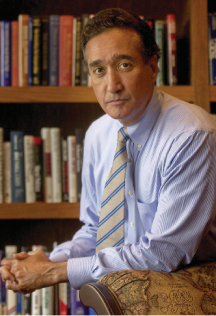
Class of 2009
Henry Cisneros
Class of 2009
Henry Cisneros
Former Mayor Henry Cisneros was the driving force behind the formation of the San Antonio Sports Foundation and the effort to fund and build the Alamodome, the 65,000-seat multi-purpose facility in downtown San Antonio. Cisneros was the chairman of the advisory committee on the construction of the Alamodome. His plan to fund the dome was passed by voters in 1990 and the facility was completely paid for less than 10 years after it opened.
When completed in 1993, the Alamodome changed the city’s sports landscape forever. The Alamodome has attracted major national and international events — like the NBA All-Star Game and the NCAA Final Four — pouring hundreds of millions of dollars into the San Antonio economy and boosting the city’s image around the world. The Sports Foundation has worked to generate over $250 million in direct visitor expenditures for the city from attracting and hosting premier sporting events. The building’s first major tenant was the San Antonio Spurs from 1993-2002. The Canadian Football League’s San Antonio Texans made their home at the Alamodome in 1995, and the NFL’s New Orleans Saints called the Alamodome home during the 2005 NFL season. The facility also hosts the annual Alamo Bowl, which features college football teams from the Big 12 and Big Ten and has hosted numerous high school state championship games. Other major events at the Alamodome include the 1996 NBA All-Star Game; the NCAA men’s Final Four in 1998, 2004, 2008 and 2018; the NCAA women’s Final Four in 2002, 2010 and 2021; and Dallas Cowboys training camp in 2002, 2003 and 2007. The Alamodome is the physical home for the San Antonio Sports Hall of Fame.
Henry is also the founder of Sports For Life, a program that provides year-round training and coaching at 22 facilities for citizens over the age of 50.
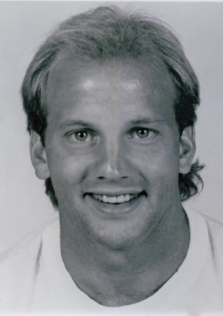
Class of 2009
Cody Carlson
Class of 2009
Cody Carlson
Regarded as one of the top schoolboy quarterbacks in San Antonio history at Winston Churchill High School, Carlson went on to a successful college career at Baylor followed by eight years in the NFL with the Houston Oilers. He guided the Chargers to a career 31-5 record (1979-83), a state semifinal appearance in 1982 and a bi-district playoff appearance in 1981.
Carlson played four years at Baylor (1983-87), where he ranks No. 3 in career passing yardage with 5,411 yards. He led the Bears to consecutive 9-3 seasons his junior and senior years and helped the team to a victory over LSU in 1985 Liberty Bowl as a junior. In 1986, he led the Southwest Conference in total offense with 2,640 yards. Carlson was selected to the All-Conference team in 1984 and 1986 and was an All-American Honorable Mention in 1986. He still holds Baylor passing records for most yards in a single season with 2,284 and touchdowns in a career with 32.
In 1987, Carlson was selected by the Houston Oilers in the third-round of the NFL Draft. He played eight seasons with the Oilers, where he threw 4,469 yards and 21 touchdowns. He was inducted into the Texas High School Football Hall of Fame in 1993 and the Baylor University Football Hall of Fame in 2000.
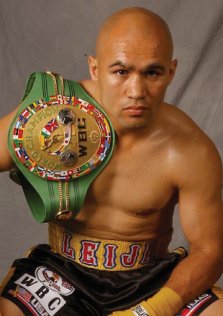
Class of 2009
James Leija
Class of 2009
James Leija
A native of San Antonio and a Harlandale High School graduate, Jesse James Leija took up the sport of boxing late – at the age of 19 but rose to become the most accomplished professional boxer in San Antonio history. Leija won the WBC World Super Featherweight title in 1994 and then captured the IBA World Lightweight Championship in 1998, becoming San Antonio’s only two-time World Champion. He enjoyed a distinguished, 17-year professional career, finishing with an outstanding 47-7-2 record, included 9 World title bouts.
Leija fought ring legend and Boxing Hall of Famer, Azumah Nelson, four times – winning the epic series 2-1-1 and defeating Nelson for both his World titles. After stopping Nelson’s 13-year reign as World Champion in 1994, he was rated in Boxing’s Top Ten, Pound-for-Pound ratings (includes all weight divisions) by Ring Magazine, the only San Antonio boxer to ever receive such honor. He became an undefeated, 3-time North American Champion. In each case, he gave up his title to compete for a World title. In addition to his four fights with Nelson, he fought boxing superstars Oscar De La Hoya, Shane Mosley, Kostya Tszyu, Gabe Ruelas and Arturo Gatti — all world champions and future Hall of Famers. He defeated 14 world-rated contenders, four world champions and three Olympians.
Leija was a house-hold name in boxing, having fought on national television over 50 times, including Pay-Per-View, HBO, Showtime, NBC, Univision, ESPN, USA Network, Telefutura, Sports Channel America, Madison Sq. Garden Network. He competed in the 1988 Olympic Trials as an amateur, losing in the semi-finals to amateur World Champion Kelsie Banks.
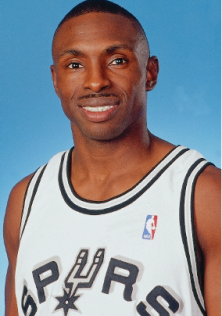
Class of 2009
Avery Johnson
Class of 2009
Avery Johnson
Initially, Avery Johnson won the hearts of Spurs fans with his work ethic and his upbeat personality. Johnson, nicknamed “the Little General,’’ later won additional acclaim as a reliable starting point guard, as a floor leader and as a player who hit the winning shot to clinch the 1999 NBA championship. All told, the 5-foot-11, 180-pound lefthander played 16 seasons in the NBA, including 10 of them in San Antonio with the Spurs.
Johnson grew up in New Orleans and played in college for Southern University in Baton Rouge, La. Twice he led the NCAA in assists for Southern and his record still stands. After college, he played summer ball with the minor-league Palm Beach Stingrays before winning his first NBA roster spot as an undrafted free agent with the Seattle Supersonics. Johnson moved from team to team in the first six seasons of his NBA career. Twice, he played for the Spurs, and twice he left town without a long-term contract. Signed by Spurs general manager Gregg Popovich in 1994, he finally found a home. Johnson would become the team’s starter for the next seven seasons. Popovich, his mentor, took over the team’s head coaching duties in December 1996.
Eventually Johnson would make his mark as one of the team’s steadiest performers. He ranks first on the Spurs’ all-time assists list with 4,474. He also is fifth in games played (644), fifth in steals (712) and eighth in scoring (6,486). In 1999, Johnson enjoyed the highlight moment of his career. He hit an 18-foot jumper out of the corner at Madison Square Garden to beat the New York Knicks in Game 5 of the NBA Finals. The shot clinched the Spurs’ first NBA championship. Johnson’s Spurs career came to an end in the summer of 2001 when he signed as a free agent with the Denver Nuggets. He retired as a player before the 2004-05 season to go into coaching with the Dallas Mavericks. The Spurs retired Johnson’s jersey in December 2007. His No. 6 hangs in the AT&T Center rafters alongside those of James Silas (13), George Gervin (44), Johnny Moore (00), David Robinson (50) and Sean Elliott (32).
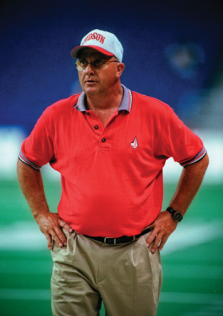
Class of 2009
D.W. Rutledge
Class of 2009
D.W. Rutledge
D.W. Rutledge grew up in Houston, but he always will be inextricably linked with Judson High School’s football tradition. Rutledge coached at Judson for 21 seasons, four as the Rockets’ defensive coordinator and the last 17 as head coach, before retiring in 2001 to take an executive position with the Texas High School Coaches Association. Rutledge guided Judson to four state championships and was defensive coordinator on the 1983 team that won the Rockets’ first state crown. Judson Stadium was renamed D.W. Rutledge Stadium in 2006.
Rutledge compiled a 198-31-5 record and led Judson to 16 playoff appearances during his 17-year tenure as head coach. Under him, the Rockets won state titles in 1988 (by forfeit), 1992, 1993 and 1995, and advanced to the state final in 1990, 1996 and 1998. His teams won 12 District titles and 10 Regional titles.
A Texas Lutheran graduate, Rutledge was the first coach Frank Arnold hired when he became Judson head coach in 1980. The Rockets advanced to the state semifinals for the first time two years later. Rutledge succeeded Arnold in 1984 and coached Judson through the 2000 season. Judson’s defenses consistently ranked among the best in the region under Rutledge, who was an All-America Rutledge began his coaching an assistant coach at San Marcos High School in 1975. He coached at San Marcos for one year before joining Jim Wacker, his college coach, at North Dakota State. He was also an assistant at Holmes High School and Southwest Texas State before going to Judson in 1980.
Rutledge was inducted into the Texas High School Coaches Hall of Honor in 2005, and was the Express-News Sportsman of the Year in 1998. He received the Tom Landry Award in 2000 as “a positive role model and a credit to the coaching profession,” and was inducted into the Texas High School Football Hall of Fame in 2003. Rutledge has been executive director of the Texas High School Coaches Association since 2004.
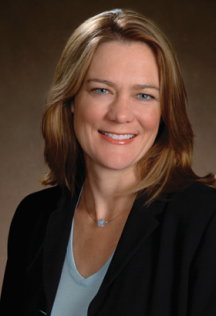
Class of 2010
Vanessa Richey Said
Class of 2010
Vanessa Richey Said
Vanessa Richey Said was a two-time national champion in Modern Pentathlon and a four-time NCAA champion and All-American in swimming. A swimmer since the age of five, she set Nebraska state age group records, was the 1981 U.S. Junior National Champion in the 400m Individual Medley and won the 1982 UIL State 200 IM title while at Lackland High School. A graduate of Winston Churchill H.S., she helped the Chargers secure their first UIL State Swimming Championship in 1984 by winning the 200 IM and the 500 Freestyle.
Richey qualified for the U.S. Olympic Team Swimming Trials in 1984 and 1988, placing fifth in the 400 IM in ’84. She swam at the University of Texas when the Longhorns won four straight NCAA team championships. She was a four-time NCAA All-America selection, a three-time NCAA Honorable Mention All-American and the 1986 Southwest Conference 400 IM champion.
She was the U.S. National Champion in Modern Pentathlon in 1993 and 1994 and represented the USA at the World Championships in ’91, ’93 and ’94 where she won the swimming event each year and posted the fastest run-swim combination in the world. She was also a two-time individual gold medalist at the Pan American Championships and the U.S. Olympic Festival. She was twice named the U.S. Modern Pentathlon Athlete of the Year and is a member of the San Antonio Women’s Hall of Fame.
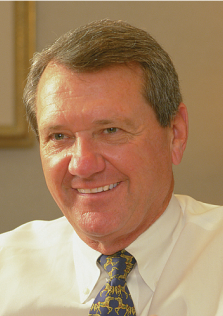
Class of 2010
Bill Greehey
Class of 2010
Bill Greehey
Bill Greehey, one of San Antonio’s foremost civic leaders, has greatly enhanced the city’s professional, collegiate and youth sports through his vision, leadership and financial support.
He chaired the Citizens for the Dome campaign that made the Alamodome a reality for the community, led the effort to keep the Spurs in San Antonio by helping form a local ownership group that purchased the franchise, and was a founding Board member of the Alamo Bowl, serving as President of the inaugural game in 1993 and Chairman in 1994. Greehey enabled the establishment of the San Antonio Sports Foundation and the development of the U.S. Modern Pentathlon Association by providing free office space as well as financial and administrative support for more than a decade. He was also instrumental in the foundation’s many successful collegiate and youth sports events.
In 2001, he saved the PGA TOUR’s Valero Texas Open by committing to the title sponsorship and took the tournament from the bottom of the PGA TOUR’s charity rankings to the very top. He also provided the lead gift to create the new First Tee youth golf facility. As a result of his fundraising efforts and major philanthropic gifts, the Arena and the School of Business at St. Mary’s University, his alma mater, are named in his honor. Greehey has also received many prestigious honors for his business, civic and philanthropic leadership, including the Horatio Alger Award, and induction into the Texas Business Hall of Fame and the American Academy of Achievement.
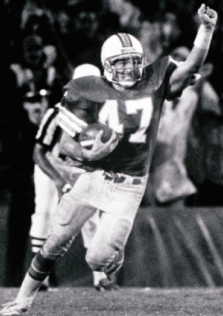
Class of 2010
Glenn Blackwood
Class of 2010
Glenn Blackwood
Glenn Blackwood had a very impressive football career that included regional high school championships, collegiate bowl wins and two Super Bowl games in his ten seasons in the National Football League. As a split end and safety at Winston Churchill High School., he helped the Chargers win a regional championship in 1974, which advanced them to the state quarterfinals. Churchill’s record for that season was 12-1. He has been inducted into the Winston Churchill Hall of Honor.
Blackwood was a three-year starter for the University of Texas and was Team Captain for the 1978 season. He played on Longhorn teams that were Southwest Conference Champions in 1975 and 1977 and that won the ‘75 Astro Bluebonnet Bowl and the ’78 Sun Bowl. He was drafted in the eighth round by the Miami Dolphins with whom he played ten seasons from 1979 through 1988. He played in 118 regular season games and his 29 career interceptions ranks fourth in team history. He was a Team Captain for six years, the Dolphins Most Valuable Defensive Back in 1981 and received an NFL Player of the Week honor in 1985.
Blackwood’s seasons with Miami were highlighted by American Conference Championships in 1983 and 1985 and his play in Super Bowls XVII and XIX alongside his brother Lyle as part of the Bruise Brothers and Killer B’s defense, which was the top-ranked NFL defense in 1983. He was Miami’s representative for NFL Man of the Year in 1986.
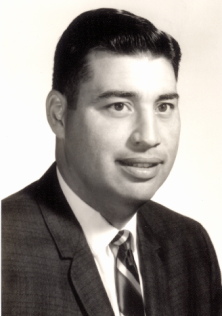
Class of 2010
Joe Cortez
Class of 2010
Joe Cortez
Joe Cortez’s victory total ranks number one in the history of San Antonio high school basketball. He coached for four years at Peacock Military Academy and 36 years at Central Catholic High School compiling an overall record of 823 wins and 443 losses.
A graduate of Central Catholic, he played on teams that won two TCIL state basketball titles and he was an All-City and All-State honoree. He was the first Hispanic basketball player at the University of Texas and graduated from St. Mary’s University. He later toured Europe and the Middle East with the Harlem Globetrotters’ opposition team. Cortez’s basketball teams at Central Catholic won 10 TCIL state championships and 23 district championships. The Buttons won City Championships in 1965, ’66 and ‘75. He also compiled a 300-210 record as head baseball coach at CCHS and as the football coach in 1961 he led the Buttons to a district title.
He also coached basketball at Trinity University, the professional league in Mexico, the Mexican National Team and the Spurs Basketball Camp. He has been inducted into the Latin American International Sports Hall of Fame, the Central Catholic Marianist President’s Alumni Hall of Fame and the National Hispanic Heritage Hall of Honor
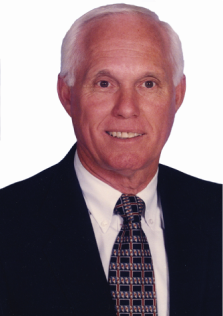
Class of 2010
Frank Arnold
Class of 2010
Frank Arnold
Frank Arnold was head football coach and athletic director over a 25-year period in which Judson High School became recognized as a state power in several boys’ and girls’ sports. He was a three-sport letterman at Burbank High School and lettered in football and baseball at Texas Lutheran College. His 41-year career as a coach, teacher and administrator included positions at six San Antonio schools and an overall football head coaching record of 101 wins, 42 losses and 2 ties.
Arnold became head football coach at Judson in 1980, compiling a 42-9 record over four seasons. His best season was in 1983 when he led the Rockets to their first ever Class 5A Texas State Championship. He became Judson’s athletic director in 1984, a position he held until his retirement in 2005. During this period Judson won five more football championships, went to the state finals in basketball and became a strong regional contender in track and field. He was named Texas Athletic Director of the Year in 1995.
The athletic facilities at Judson were named the Frank Arnold Athletic Center in his honor. He has been inducted into the Texas Lutheran College Hall of Honor, the Texas High School Athletic Directors Hall of Honor, the Texas High School Coaches Association Hall of Honor and the Greater San Antonio Football Coaches Foundation Hall of Fame.
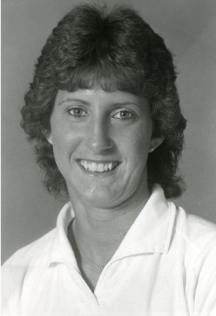
Class of 2011
Laura Neugebauer-Groff
Class of 2011
Laura Neugebauer-Groff
Laura Neugebauer-Groff has been an outstanding volleyball player at all levels, from high school to professional. She was a three-year varsity player at Jefferson High School where she helped the Mustangs win three District titles and a 1979 runner-up honor in the state championship. She was a three-time All-District selection, twice named to the All-City team, an Academic All-American, an Athletic All-American, and was an All-State honoree in her senior year. That same year she received the Tommy Nobis Award as the school’s top athlete. She is an inaugural selection to Jefferson’s Hall of Fame and Distinguished Alumni Class. In 2009 the UIL celebrated 100 years of high school volleyball and she was selected to the All-Century Volleyball Team.
Neugebauer-Groff was a four-year starter at the University of Texas from 1982-1985 where she helped the Longhorns win four Southwest Conference championships. She was an All-America selection in 1985, an All-Southwest Conference selection in ’83, ’84 and ’85, and was named to the Southwest Conference All-Decade team for the 1980s. While at UT, she played in USA Volleyball’s national team program in the U.S. Olympic Sports Festival and for the USA in the World University Games. As a professional, she played in Germany and then in Chicago with Major League Volleyball.
After her playing career, Neugebauer-Groff began a long career as a coach. She spent eight years as head coach at St. Mary’s University, three years at Hondo High School and three years as an assistant coach at Texas A&M before earning the head coaching job at UTSA. She spent 20 years with the Roadrunners before stepping down in 2021. She led the team to a Southland Conference Tournament championship, two Conference USA regular season titles and a 2013 Conference USA Tournament championship. Neugebauer-Groff also coached the team to two appearances in the NCAA postseason.
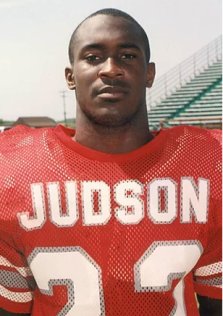
Class of 2011
Jerod Douglas
Class of 2011
Jerod Douglas
Jerod Douglas was one of San Antonio’s finest high school running backs. He led his team to two state championships and then excelled collegiately in the Southwest and Big 12 Conferences. At Judson High School he rushed for a state 5A record 6,189 yards and scored 85 touchdowns between 1991-1993. His best season was 1992 when he gained 2,967 yards, also a state record. He set the state championship game record at 238 yards when the Rockets won the 1992 title and set it again in 1993 when he gained 244 yards and Judson repeated as state champion.
Douglas set numerous rushing records at Baylor University between 1994 and 1997. He was named to the Bears’ All-Decade Team for the 1990s. His 2,811 career yards rank him the school’s second all-time leading rusher, and he’s also ranked second in single season yards with 1,114. His best game was a school-record 210 yards as a freshman in 1994. In the 1995 season, he had the third highest game rushing total in the Southwest Conference, 197 yards, the top kick-off return, 76 yards, and the most game kickoff return yards ,143. He was an All-Southwest Conference selection in 1995 and an Honorable Mention All-Big 12 honoree in 1997. He was Baylor’s leading rusher in the 1994 Alamo Bowl.
Douglas’ number 22 football jersey was retired by Judson in 1995, and in 2003 he was inducted into the Texas High School Hall of Fame.
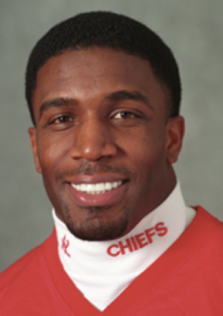
Class of 2011
Priest Holmes
Class of 2011
Priest Holmes
Priest Holmes was a record-setting running back in the National Football League following championship seasons in both high school and college. He was a three-year starter at John Marshall High School, helping the Rams into the playoffs all three years. In his 1991 senior season, he rushed for 2,031 yards, to include 853 yards and six touchdowns in the playoffs as they won the 5A Division II regional title and played in the state championship game.
At the University of Texas, he compiled 1,276 rushing yards to average 5.1 yards per carry and scored 20 touchdowns. He earned 1994 Sun Bowl MVP honors and was the game MVP in the first Big 12 Championship game in 1996. Holmes joined the NFL with the Baltimore Ravens in 1997, rushing for 2,102 yards and in four seasons. He earned a Super Bowl ring when the Ravens defeated the Giants in Super Bowl XXXV. His breakout success came after signing with the Kansas City Chiefs in 2001. He was a three-time All Pro, three-time Pro Bowl selection and was the 2002 NFL Offensive Player of the Year. He rushed for 27 touchdowns in 2003, an NFL single-season record. Upon his retirement in 2007, he held Chiefs records for career rushing attempts (1,275), career rushing yards (5,933), career rushing touchdowns (76), and total touchdowns (83).
Holmes has been inducted into the Missouri Sports Hall of Fame, the UT Longhorn Hall of Honor and the Texas High School Hall of Fame.
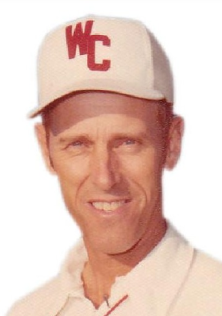
Class of 2011
Marvin Gustafson
Class of 2011
Marvin Gustafson
Marvin “Gus” Gustafson never had a losing season in his career of coaching high school football and basketball. He graduated from Harlandale High School where he played football, basketball and track, and from the University of Texas where he received a track scholarship. He began coaching in Odessa as an assistant, but he soon moved back to South Texas to begin his impressive coaching career that resulted in a football record of 136-31-4, and a basketball record of 216-51.
Gustafson’s 1959 Devine High School basketball team had a 33-1 record and placed third in the state championship tournament. His overall district record of 90-6 at Devine includes 74 consecutive wins which are still a school record. He coached the 1972 Uvalde Coyotes to the Class 3A state football championship, finishing the season 15-0. The next year he became the athletic coordinator and head football coach at Winston Churchill High School, where he led the Chargers to the state regional finals in each of the next two seasons.
In 1975 he moved from coaching to administration, first with the S.A. Independent School District and then at Northside ISD where, as Athletic Director, he spent 14 years. The original Northside football stadium is named in his honor. Gustafson served as President of the Texas High School Athletic Directors Association and has been inducted into the Hall of Honor for both the Athletic Directors Association and the Texas High School Coaches Association.
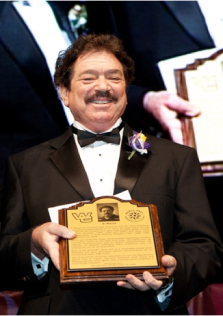
Class of 2011
Al Marks
Class of 2011
Al Marks
Al Marks led Churchill High School to nine UIL state swimming and diving championships in 31 years as head coach. During his tenure the Chargers won girls state championships in three different decades, 1984, 1999 and 2005, and boys state championships in three different decades, 1987, 1988, 1989, 1990, 2000 and 2008.
Marks was voted the Texas Interscholastic Swimming Coaches Association Coach of the year nine times. His teams won 38 regional championships and 51 district championships. He coached 16 different individual state champions and 118 different N.I.S.C.A. All-Americans. Most of his swimmers were part of a remarkable streak when Churchill won girls and boys district championships for 21 consecutive years 1980-2000.
Two of Marks’ former swimmers preceded him into the San Antonio Sports Hall of Fame: Two-time Olympian Josh Davis and Vanessa Richey Said. Since being inducted, another of his swimmers has made it into the Hall: Annie Chandler Grevers, a multiple-time NCAA champion.
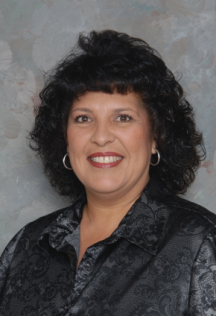
Class of 2012
Leticia Morales-Bissaro
Class of 2012
Leticia Morales-Bissaro
Leticia Morales-Bissaro was the driving force behind the St. Mary’s University softball team’s national championship in 1986. A product of St. Gerard High School, her deadly rise ball helped make her one of the greatest athletes to ever come out of San Antonio.
Morales-Bissaro was elite in all four years for the Rattlers. Between 1983 and 1986, she had 667 strikeouts and was the team’s MVP all four years. She was a first team All-American in 1985 and a second team All-American in 1986. During her career she threw four no hitters. Two of those were perfect games, something most pitchers never achieve once. In 1986, she led her team to the NAIA national championship. Over the three-day tournament she pitched eight complete games (an NAIA record), compiling an astonishing 0.48 ERA. Her 65 strikeouts in the tournament are also an NAIA record in the non-pool play format. For her dominance, she was named the tournament’s MVP.
Over her career, Morales-Bissaro’s opponents hit just .153 when facing her. She holds school records in career ERA, at 0.70, as well as single-game records for innings pitched and strikeouts, at 15 and 17, respectively. She was inducted into the St. Mary’s Athletics Hall of Fame in 1994. In 2000, she became the first woman athlete from St. Mary’s to be inducted into the NAIA Hall of Fame. Her number 24 was retired by the Rattlers in 2001. She currently works at her alma mater as associate director of the graduate admissions department as well as the softball team’s pitching coach, where her expertise has helped them to a national championship and nine league Pitcher of the Year awards.
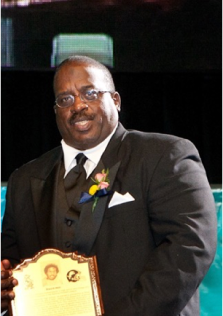
Class of 2012
David Hill
Class of 2012
David Hill
A San Antonio native, David Hill was an undiscovered gem at Highlands High School. He didn’t make it on the varsity team until his senior year, where he shined. So much so that after only one year at the varsity level, he was able to play college ball at Texas A&I University.
As a Javelina, Hill found massive success. There he was team captain and tight end on back-to-back undefeated national championship teams his last two years. While there, he was named to the AP’s Little All-America team, the NAIA All-America teams and the American Football Coaches Association All-American roster. In 1976, the Detroit Lions selected him in the second round of the NFL Draft.
Hill played seven seasons with the Lions before playing his final five with the Los Angeles Rams. A pass-catching specialist on the Lions, he made the Pro Bowl in 1979 and 1980. When he was traded to the Rams in 1983, he settled into more of a ground-oriented role, blocking for NFL legend Eric Dickerson when he set his single season rushing record. Hill was regarded as the best blocking tight end in football, with NFL legend Lawrence Taylor stating he “hated” to play against Hill. In 1987, Hill retired after 12 years in the NFL, 358 receptions, 4,212 yards and 28 TDs. Football has remained a part of his life after retirement. He works at Dickerson’s football camp annually and is the president of the Southern California chapter of the NFL Alumni Association.
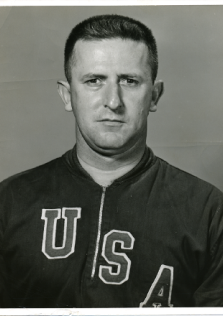
Class of 2012
John Russell
Class of 2012
John Russell
Colonel John W. Russell’s love for horses began on his family’s dairy farm in Pennsylvania. When he was 7, his father gifted him his own horse, a pony named Spot, which he rode everywhere. His journey towards the Olympics had already begun. In the years after World War II, he led U.S. efforts in recruiting riders and horses, and then as a competitor in the 1948 and 1952 Olympics.
Russell joined the U.S. Army in 1943, where he received numerous decorations, including the Purple Heart, the Soldier’s Medal and the Bronze Star Medal. As a member of a cavalry unit, horses remained a big part of his life. After the war he was put in command of a cavalry division based in northern Italy, where he was able to hone his equestrian skills with Army-owned horses. In 1947, he was Italy’s leading rider. In 1948, he was reassigned back home to Kansas, where he taught advanced horsemanship and became a member of the U.S. Equestrian Team. That same year, he earned a spot on the show jumping team for the 1948 Olympics in London. In 1952, he made the team again in Helsinki, where he won a bronze medal in show jumping. His other competition titles are too many to list. In 1956, Russell retired from competitive riding.
After retiring from competition, Russell became the head of the United States Modern Pentathlon Training Center at Fort Sam Houston in 1956, where he coached six U.S. Olympic modern pentathlon delegations and 22 World Championship teams over the next several decades. He organized the 1959 and 1977 World Modern Pentathlon Championships, the latter of which was held in San Antonio. He later owned and operated the Russell Equestrian Center in San Antonio, helping grow new generations of riders. Russell died in 2020 at the age of 100.
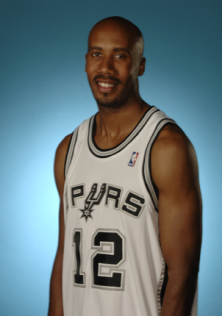
Class of 2012
Bruce Bowen
Class of 2012
Bruce Bowen
Bruce Bowen was heralded as one of the best defenders in the NBA. A three-time champion for the San Antonio Spurs, he was a key piece in their dominance of the 2010’s.
Bowen made many stops before landing in San Antonio. He played college ball at Cal State Fullerton, where he was named first-team all-conference his senior year. He still ranks in the top ten in career rebounds and blocked shots for the Titans. After going undrafted, Bowen played in Europe and Canada before short stints in Miami, Boston, Philadelphia and again in Miami. In 2001, he was signed by the Spurs, where he finally found a home.
In eight seasons with the Spurs, Bowen won NBA championships three times, in 2003, 2005 and 2007. He was named to the NBA All-Defensive first and second teams eight times. He is widely regarded as one of the best defenders in NBA history to never be named Defensive Player of the Year. A reliable force off the bench, Bowen played 500 consecutive games between 2002 and 2008. In 2009, he retired shortly after being traded to Milwaukee. In 2012, Bowen’s number 12 was retired by the Spurs. He was also inducted into the Cal State Fullerton Hall of Fame the year prior. After retiring, he became an NBA analyst for ESPN before taking a job as coach of Cornerstone Christian School. In 2021, he became the head coach for the Texas Military Insitute. Outside of basketball, he has long spoken out against child obesity, starting the “Get FIT with Bruce and Buddy” campaign to promote children’s nutrition and sports activities in 2004.
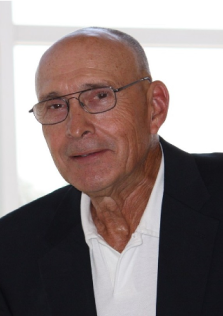
Class of 2012
Stan Bonewitz
Class of 2012
Stan Bonewitz
Stan Bonewitz changed the way East Central High School looked at the game of basketball. Before becoming a coach, however, Bonewitz was an exceptional athlete in San Antonio. After graduating from St. Gerard High School, he attended St. Mary’s University. There, he was a four-year player in both basketball and baseball.
Bonewitz coached first at St. Gerard for 12 seasons before becoming coach of East Central, where he became a local basketball great. During the 1980’s, thanks to a group of players dubbed the “Wild Bunch”, the Hornets began challenging the conventional basketball style, playing up-tempo and with fervor. Even after the group’s departure, the playing style stuck and became Bonewitz’s signature style.
In an era where slow, smash-mouth basketball was the norm, Bonewitz found success with his unconvential coaching style. Using aggressive, full-court defense to create quick offense, the Hornets were a scoring machine. Of his 24 seasons with the team, they led the city in scoring in half of them. In 1995, Bonewitz had his best season yet, and one of the best in San Antonio history. The team, led by his son, Stan Bonewitz Jr., finished 35-0 and won the state championship against Dallas Carter, 108-86. Despite their lack of size, the team’s fast pace allowed them to dominate, averaging a state record 108.8 points per game. Bonewitz retired from coaching after 24 seasons with the Hornets. Over his 36 years as a coach in, he held a record of 708-432. In 2011, the East Central basketball gym was renamed in his honor.
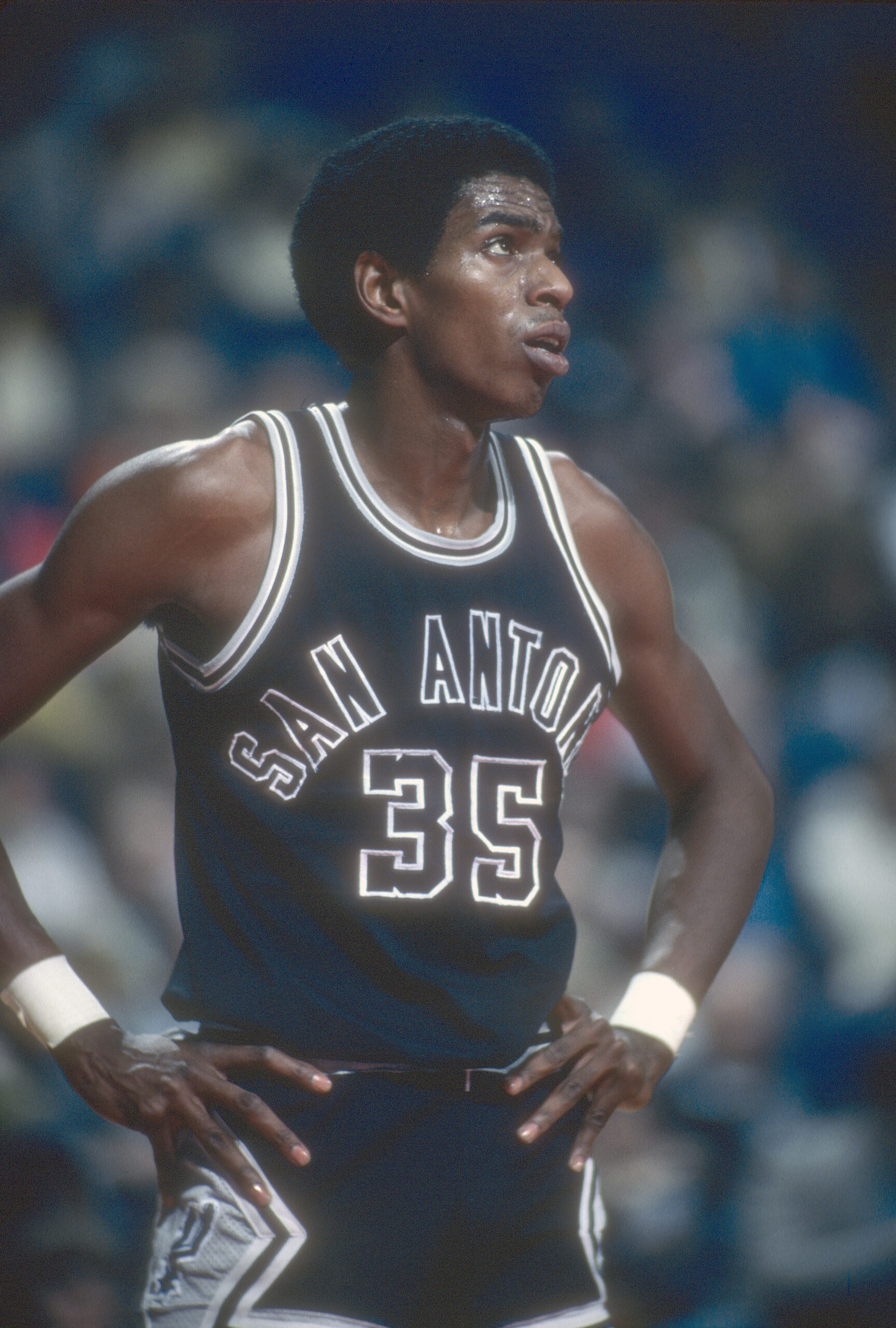
Class of 2013
Larry Kenon
Class of 2013
Larry Kenon
Larry Kenon, played five years with the San Antonio Spurs, averaging 21.2 points and 10.1 rebounds. He led the team in rebounds each season and was the top player in steals in 1979.
Kenon began his collegiate career at Amarillo College for a season, before transferring to Memphis State University. In his junior year, he averaged 20.1 points and almost 17 rebounds a game. That year, Kenon led the Tigers to the NCAA National Championship game. He decided to enter the draft after that season, being selected 15th overall by the Pistons in the NBA Draft. The New York Nets of the ABA. However, secured his draft rights. After two successful seasons alongside Julius Erving, in which he made the All-Rookie team, Kenon was traded to the Spurs where he continued his success. After that season, the Spurs moved to the NBA along with the Denver Nuggets and Indiana Pacers. In all three years playing in the ABA, he was selected to play in the All-Star game, and tacked on two more appearances while in the NBA.
In 1976, Kenon recorded a triple double that included 11 steals against the Kansas City Kings. This set a new NBA record for steals in a game, one which he now shares with Kendall Gill, and is still standing. In his final regular season game with the Spurs in 1980, he scored 51 points against the Pistons. Among Spurs players all time, Kenon ranks in the top 10 in scoring, steals, rebounds, and field goals made.
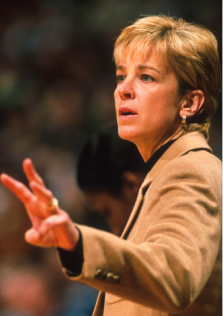
Class of 2013
Nell Fortner
Class of 2013
Nell Fortner
Nell Fortner was a standout high school athlete at New Braunfels and went on to play for a national championship team in volleyball at Texas. Later, she became one of the nation’s leading coaches in women’s basketball, guiding Team USA to the gold medal in the 2000 Olympics. Fortner was a 1977 graduate of New Braunfels High School. She made all-state in basketball and helped the volleyball team to the state finals in 1976.
Fortner attended the University of Texas, becoming one of the basketball program’s all-time scoring leaders and leading them to their first national ranking. She also won an AIAW volleyball title in 1981. After graduating, she worked four years as a graduate assistant for Stephen F. Austin, leading the Ladyjacks to an 87-12 record and three straight tournament appearances. She then worked five years as a basketball assistant coach under Leon Barmore at Louisiana Tech. She then got an opportunity at USA Basketball, where she worked under Tara VanDerveer on a team that ultimately won the 1996 Olympic gold medal in Atlanta. Taking over the USA program as head coach in the next quadrennial, she led the team to a World Championship in 1998 in Germany and then an Olympic gold in 2000 in Australia. Her record was 101-14. Fortner then moved to the WNBA where she coached the Indiana Fever from 2001-2003.
As a college head coach, Fortner was National Coach of the Year in her one and only season at Purdue in 1996-97. She recently completed her eighth season at Auburn, where she won 30 games and the SEC championship in 2008-09, which was the first time in 20 years. She was named SEC Coach of the Year for the 2008-2009 season as well as being named Basketball Times National Coach of the Year. In 2019, Fortner was hired as the head coach of Georgia Tech, where she has already led the Yellow Jackets to one Sweet Sixteen appearance. She was inducted to the Texas Sports Hall of Fame in 2001.
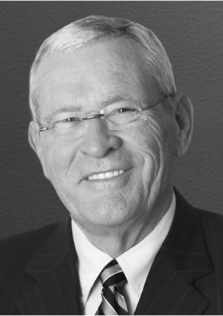
Class of 2013
Ed Whitacre Jr.
Class of 2013
Ed Whitacre Jr.
As a high schooler, Ed Whitacre Jr. was a first baseman and defensive end. He graduated from Texas Tech University as the first member of his family to attend college. Sports continued to have a lasting impact on his life, as in 1992, then Southwestern Bell Corporation CEO Whitacre moved the Fortune 500 company to San Antonio, resulting in a dramatic and long-lasting impact on the local sports scene. In 1993, he was part of a 22-piece ownership group that bought the Spurs in 1993 and pledged to keep the team in San Antonio.
In 1995, Whitacre ensured that San Antonio would be a significant annual stop on the PGA Champions Tour through title sponsorship of the Southwestern Bell Dominion. He and AT&T officers have been consistent, high-level supporters of the annual Alamo Bowl and related activities, providing a reliable revenue source for San Antonio’s bowl game. In 1999, Whitacre committed to totally finance the 2007 Pan American games domestic bid for the city of San Antonio. Due to his $1 million support, San Antonio Sports secured the domestic rights to be the sole U.S. bid city.
In 2000, Whitacre made good on his pledge, announcing that his company would be the naming rights sponsor for SBC/ATT Center. The $175 million state-of-the-art facility ensured that the Spurs would remain in San Antonio while boosting attendance and scholarships for the San Antonio Stock Show & Rodeo. In 2006, Whitacre signed on to sponsor the AT&T Corps Classic, which generated millions of dollars for the city through the 2006 nationally televised college football game between Army and Texas A&M. When negotiations for the PGA Tour’s planned TPC courses in San Antonio stalled, Whitacre came to the rescue to ensure that the plans would go forward. AT&T announced its intention to be the naming rights sponsor of the two world-class golf courses, which now hosts the AT&T Championship and the Valero Texas Open.
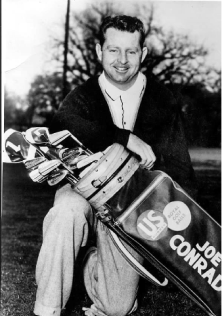
Class of 2013
Joe Conrad
Class of 2013
Joe Conrad
Joe Conrad was a golf icon in San Antonio. At the age of 13, he took up golf after a friend on the church softball team invited him for a round of golf at the Riverside Municipal Golf Course. There, he discovered his talent and love for the game. In 1947, he won the Riverside Golf Association Championship. Where his golf career had started, it began to take off. At the age of 17, he defeated Arnold Palmer in the National Junior Championship in Los Angeles. By the time he had graduated high school, he had a scholarship offer to Louisiana State University. After one year as a Tiger, he transferred to North Texas State University, where he enjoyed an illustrious career that included three national titles and only one total match loss.
Upon returning to San Antonio, Conrad set off on a win-filled career that cemented him as a prominent figure in the San Antonio golf community. He was the San Antonio City Amateur champion in 1950 and 1956. He took back-to-back Southern Amateur Championships (1953-1954), the Mexico Amateur Championship in 1951, and the Trans Mississippi Championship in 1953. He was on two United States America Cup teams (1954 in Toronto and 1956 in Mexico City) and the United States Walker Cup team (1955 in St. Andrews, Scotland). He was the United States Air Force Worldwide Champion in 1954. In 1957, he finished in the top 20 in the Colonial Nation Invitation tournament and participated in the Masters Tournament.
In 1979, Conrad was inducted into the Texas Golf Hall of Fame. Touted by friends and fellow golfers as a humble, stand-up guy, Conrad passed in December 2018 at the age of 88.
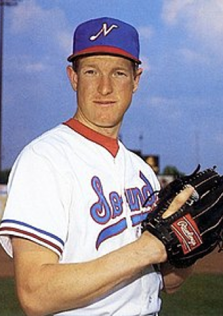
Class of 2013
Norm Charlton
Class of 2013
Norm Charlton
Charlton gained notoriety along with Rob Dibble and Randy Myers as a member of the Cincinnati Reds’ “Nasty Boys’’ bullpen during the Reds’ 1990 World Series championship season. Charlton pitched 13 seasons in Major League Baseball through 2001. A former player at Madison High School and Rice University, the left-hander went 51-54 in his career with a 3.71 earned run average, most of it as a reliever. He posted 97 career saves. Charlton was tough in the playoffs, sporting a 3-1 record with a 1.08 ERA.
Charlton played for the Reds, Philadelphia Phillies, Seattle Mariners, Baltimore Orioles, Atlanta Braves and Tampa Bay Devil Rays. His best years came in a five-year stretch from 1989-93, when his earned run average was never more than 2.99. He pitched one scoreless inning in the 1992 MLB All-Star game for the National League, representing the Reds, at San Diego’s Qualcomm Stadium. He played on four playoff teams and pitched in seven playoff series. In the 1990 postseason, he went 1-1 and allowed one earned run in six innings for the world champion Reds. In 1995, he went 1-0 and struck out nine in six innings to help the Mariners upset the New York Yankees in the AL Division Series.
Charlton’s career was almost ended in 1993 when he suffered a serious elbow injury, but he rebounded to play another seven seasons in the league. Nicknamed “The Sheriff,” he was inducted into the Rice University Athletic Hall of Fame in 1990, where he graduated with three degrees. After his playing career, Charlton enjoys hunting and fishing with his wife Nancy on their ranch in South Texas.
Class of 2014
2009 McAllister Little League All-Star Team
Class of 2014
2009 McAllister Little League All-Star Team
McAllister Park Little League’s 12 and 13-year-old baseball all-stars turned on the city in 2009 when they finished fourth at the Little League World Series in South Williamsport, Pa. With the tournament games televised on ESPN, fans in San Antonio watched as McAllister won three and then lost the next two to finish fourth in the world, and second in the United States. As the first team in city history to qualify for the 12-13 LLWS, players and coaches returned home to an airport welcome and a downtown river parade.
McAllister beat Peabody, Mass., Russellville, Ky., and Chula Vista, Calif., to open the tournament. With a berth in the LLWS title game riding on the second meeting against Chula Vista, more than 100,000 households in San Antonio tuned in to watch on television. In that game, the U.S. Championship Game, the all-stars lost 12-2 and set up a game against Reynosa, Mexico in the consolation game. By a slim margin of 5-4, they lost that game as well, and were out of the tournament. The team had reason to celebrate regardless, as the city of San Antonio heralded them as little league heroes.
The team’s head coach was Mike Shull. Making up the team were Drew Brooks, Steven Cardone, Travis Daves, Troy Montemayor, Zach Morrow, Kyle Pollard, Jacob Ramos, Tanner Scarborough, Jace Selsor, John Shull, Nick Smisek, and Wyatt Willis.
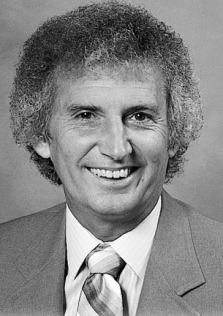
Class of 2014
Stan Albeck
Class of 2014
Stan Albeck
Stan Albeck spent 25 years as a head and assistant coach in the ABA and NBA. In the middle of his coaching career, from 1980 to 1983, Stan Albeck led the Spurs to three straight divisional championships. In that time, he was 153-93, and 13-14 in the playoffs. In 1981, he won the Sporting News Coach of the Year.
Albeck was the lead assistant to Lenny Wilkens for his last four seasons with the Atlanta Hawks, following one year as an assistant with the New Jersey Nets in 1995-96. Previously, he spent seven years as a head coach in the NBA, beginning with Cleveland (1979-80), then moving to San Antonio (1980-83), New Jersey (1983-85) and Chicago (1985-86), compiling a 307-265 (.535) record during that time. His greatest success came with the Spurs, leading them to three division titles in those three years, posting a 153-93 (.622) record.
After leaving the head coaching ranks, Albeck scouted pro and college games for several teams (San Antonio, Philadelphia, LA Lakers, Milwaukee) before returning to the Nets bench. Before his head coaching duties, he also served an assistant coach for nine seasons in the NBA and ABA under such notables as Jerry West, Hubie Brown, Wilt Chamberlain, K.C. Jones and Alex Hannum. Additionally, Albeck was head coach of the Denver Rockets (ABA) in 1970-71.
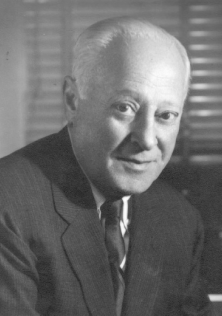
Class of 2014
Joe Straus, Sr.
Class of 2014
Joe Straus, Sr.
Joe R. Straus, Sr. was a champion athlete in his native San Antonio, an original investor in the San Antonio Spurs and a pioneer in Texas horse racing. Straus invested time and money as a lifelong advocate for sports in his community. Straus was one of the original investors responsible for bringing the Spurs basketball team to San Antonio. His commitment continued while he served as Chairman of the Board for the Spurs and personally funded operations to help put together the franchise in San Antonio.
Dan Cook once called Joe Straus “one of the toughest little fighters and best all-around athletes ever raised in this area.” As a young man, Straus was a two-sport standout athlete at San Antonio Main Avenue High School (which became Fox Technical High School in 1932). He was Captain of both the football and baseball teams at the University of Pennsylvania and was named an All-American Football Running Back in 1921. He was awarded All-Conference honors in baseball and played Semi-Professional Baseball in San Antonio until his early 40’s.
Straus was a successful thoroughbred owner who owned several horses that competed in countless Triple Crown races. At one time he owned at least a share in 250 racehorses. His most famous horse, No Le Hace, won the Arkansas and Louisiana Derbies and placed second in both the Kentucky Derby and Preakness in 1972. Many other champion horses came from his stables as well. In 2001, he was inducted into the Texas Horse Racing Hall of Fame. Straus’ lobbying and financial contributions were a driving force in the effort to get pari-mutual betting returned to Texas after his death in 1984. He was also an avid bowler, sponsoring the State Champion Women’s bowling team for many years. He was also the co-owner of Main Bowling Center. He is a member of the San Antonio Bowling Hall of Fame.
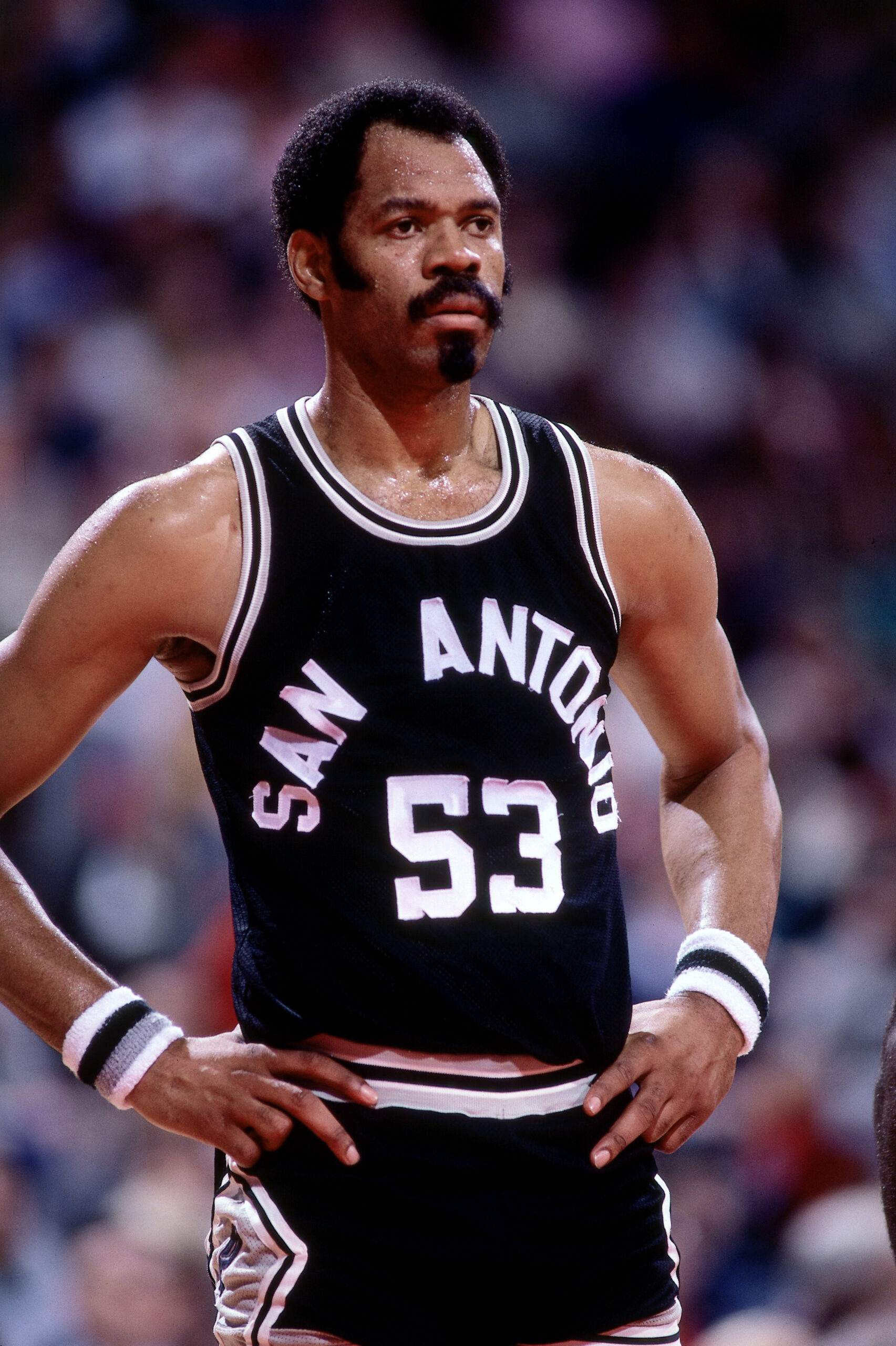
Class of 2014
Artis Gilmore
Class of 2014
Artis Gilmore
One of the great big men in NBA/ABA history, the defensive-minded Artis Gilmore was a fixture at center for the Spurs for five seasons. Standing at 7-foot-2, he was a threat to be reckoned with in the post. Gilmore played his entire ABA career with the Kentucky Colonels, helping them win the ABA title in 1975, when he was MVP of the league’s playoffs. When the Colonels were disbanded after the merger of the ABA into the NBA in 1976, Gilmore joined the Chicago Bulls. He was traded to the Spurs in July 1982. He amassed 3,671 rebounds and blocked 700 shots in five seasons (1982-87) with the Spurs, No. 3 all-time in the franchise’s NBA history in both categories.
Gilmore was an All-Star in 11 of his 17 years as a pro, his last selection coming at age 36. Scoring most of his more than 15,000 NBA points with dunks, finger-rolls and baby hook shots, the lefthanded Gilmore posted a career .599 field-goal percentage, the highest ever in the league. He shot .600 or better in six different seasons, and he led the NBA in field-goal percentage four times. His 1,747 NBA blocked shots rank him near the top in that category as well. Gilmore also earned All-ABA First Team honors in each of his five seasons with the Kentucky Colonels, and he was the league’s Most Valuable Player and Rookie of the Year in 1971-72.
After 909 regular-season games Gilmore left the NBA with 15,579 points (17.1 ppg), 9,161 rebounds (10.1 rpg) and 1,747 blocked shots. During his five years in the ABA, he tallied 9,362 points (22.3 ppg), 7,169 rebounds (17.1 rpg) and a league-record 750 blocks. He is one of only 24 players to score a total of 20,000 points (ABA and NBA combined). Gilmore became the first player elected by a new Hall of Fame committee convened specifically to recognize the ABA and was inducted into the Naismith Memorial Basketball Hall of Fame in 2011.
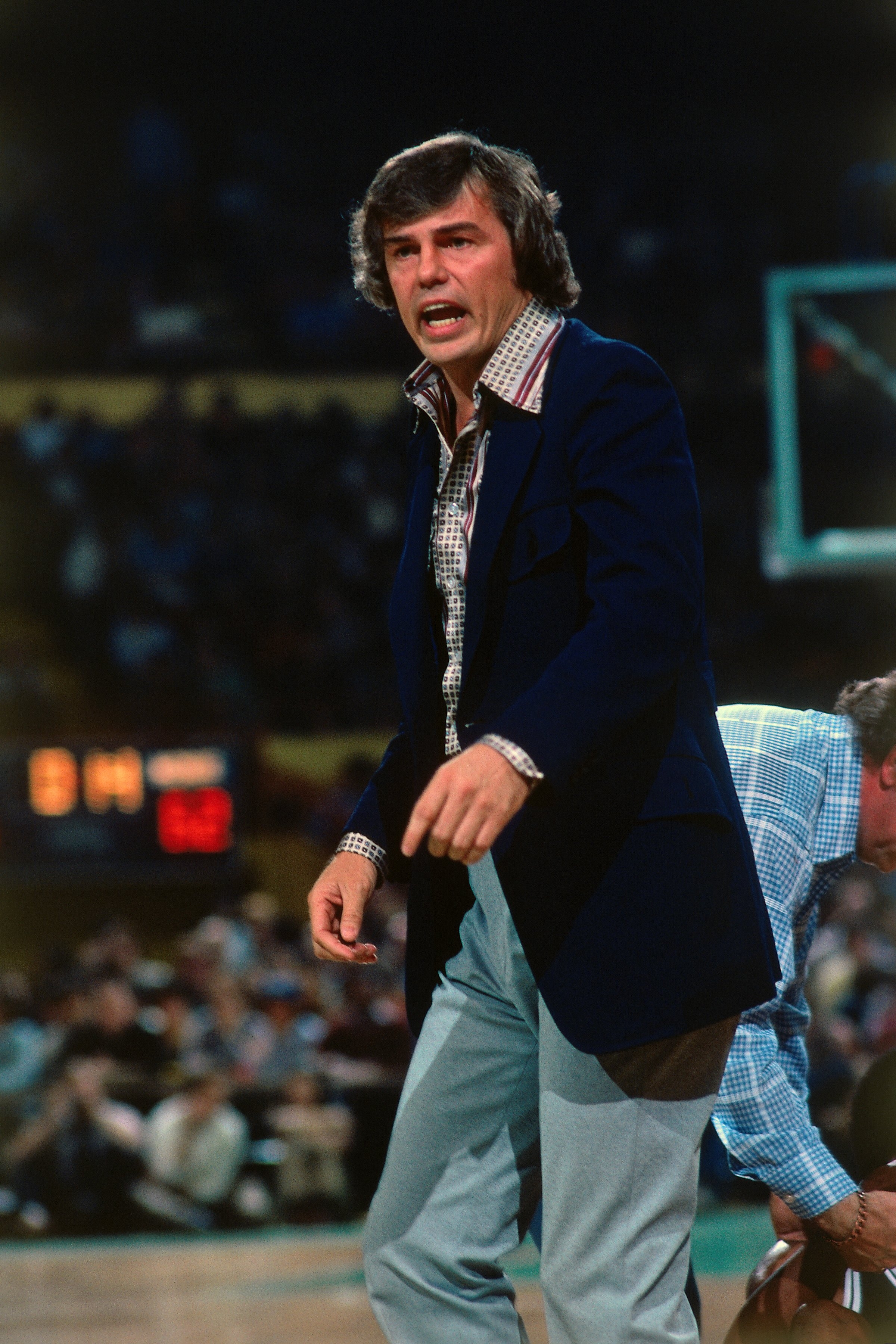
Class of 2015
Doug Moe
Class of 2015
Doug Moe
San Antonio resident Doug Moe served as head coach for the San Antonio Spurs from 1976-1980, leading the Spurs to the conference finals in 1979. Moe ranks third in the Spurs all-time record for number of wins. As head coach for the Denver Nuggets, Moe was named NBA Coach of the Year in 1987-88.
Moe was a two-time All American at the University of North Carolina and an ABA All-Star three times, with the Oakland Oaks, Carolina Cougars and Virginia Squires, in an injury-shortened five-year professional playing career. He then moved to coaching, starting his career with the Carolina Cougars in the ABA as an assistant coach to his former teammate, Larry Brown from 1972-74. He then followed Brown to the Nuggets from 1974-76. During those two seasons, the Nuggets were 125-43 (.744). They advanced to the ABA Finals in 1976 but lost to the New York Nets in six games. After the ABA–NBA merger in 1976, he served as a head coach for the San Antonio Spurs for four seasons. While there, the Spurs were 144-102 (.585), making the playoffs all three years he coached.
After the 1979-80 season, Moe left San Antonio and returned to the Nuggets. As head coach for Denver from 1980-90, he compiled a 432-357 (.548) record, leading the team to the post season nine straight years (two Midwest division titles) and advancing to the Western Conference Finals in 1985. His overall NBA head coaching ledger stands at 628–529 (.543) and his wins are the 26th-most in NBA history.
Class of 2015
Gary DeLaune
Class of 2015
Gary DeLaune
Sports broadcaster Gary DeLaune’s career spanned five decades, with a unique broadcast style that both informs and entertains. He is a 55-year veteran high school play-by-play announcer in Texas and has been involved with college and professional sports teams since 1961, when he served as a broadcaster for the American Football League Dallas Texans for two seasons and as a member of the Dallas Cowboys broadcast team for three seasons (1964-66).
DeLaune was one of the first announcers for the American Basketball Association in 1967-68. From 1968 through `71 he was the voice of the Houston Astrodome. He began his Texas radio and television broadcast career in 1960, first in Dallas and Houston before coming to KENS-TV in San Antonio, where he worked for 28 years as a reporter, producer and sports anchor. In 1973, DeLaune was the first San Antonio sportscaster to become a member of the Spurs basketball broadcast team. DeLaune’s other firsts include: first announcer to broadcast a UTSA basketball game, where he was the voice of the Roadrunners for five years; and first San Antonio sportscaster to broadcast the state basketball and football championship games from Austin in the same season.
DeLaune was the voice of the University of the Incarnate Word basketball for seven seasons and Southwest Texas State football and basketball in 1992. He was named to the Lone Star Basketball Coaches Hall of Fame in 2006 and inducted into the Texas Radio Hall of Fame in 2007.
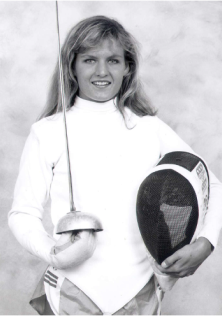
Class of 2015
Lori Norwood
Class of 2015
Lori Norwood
In 1983 after spending a year at the University of Texas, where she ran cross country, Lori Norwood moved to San Antonio to become a full time pentathlete. In 1984, she made her first world championship team. She remains the only American woman to win a world championship in the sport of Modern Pentathlon.
Between 1983 and 1991, Norwood competed in seven U.S. National Championships, six San Antonio Cup Invitationals, numerous international events and five World Championships. She won five international competitions in 1989, highlighted by her World Championship title and leading the USA team to a second-place finish at that competition. In 1990, she placed second at the World Championships, won the Seattle Goodwill Games and the U.S. Nationals, and repeated as champion of the San Antonio Cup.
Norwood’s seven National Championship appearances produced one win and three second place results, and she won the individual title at the 1989 U.S. Olympic Festival in Oklahoma City. She was a finalist for the AAU James E. Sullivan Award in 1989 and 1990 as the nation’s finest amateur athlete and was named the Women’s Sports Foundation’s Amateur Athlete of the Year in 1990. She was the San Antonio Express-News Female Athlete of the year in 1989 and is a member of the San Antonio Women’s Hall of Fame. Since retiring, she has picked up a successful career in sculpting.
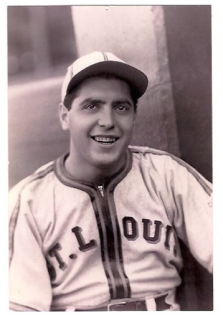
Class of 2015
Al LaMacchia
Class of 2015
Al LaMacchia
Al LaMacchia was a professional baseball player with the San Antonio Missions, a major league pitcher and a professional baseball scout for more than 56 years.
LaMacchia spent three seasons pitching for the San Antonio Missions, setting a Texas league record in 1942, which still stands, when he pitched a nine-inning game in 1:07. He pitched in 16 games in the major leagues for the St. Louis Browns and Washington Senators from 1943-46.
Following his playing career, LaMacchia became one of the most recognized scouts in baseball. He shunned the use of computers, radar guns and stopwatches as scouting tools, preferring to trust his eyes. His six decades as a scout were spent working for Philadelphia, Atlanta, Toronto, Tampa Bay and Los Angeles. He joined the Toronto Blue Jays in 1977 and was named vice president in 1985. During his 20 years with the Blue Jays, he helped build the World Series championship teams of 1992 and 1993. Among the notable players LaMacchia signed during his career were Dale Murphy and Cito Gaston. He was responsible for drafting David Wells, George Bell, Dave Stieb, and Jeff Kent and convinced the Dodgers to trade for Andre Ethier. He was named Midwest Region Scout of the Year in 2001. LaMacchia passed way in 2010 at his San Antonio home at the age of 89.
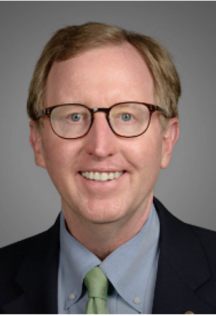
Class of 2015
Pat Frost
Class of 2015
Pat Frost
Pat Frost, president of Frost Bank, has long been one of the community’s strongest sports leaders and advocates. His impact is felt throughout San Antonio Sports, the Valero Alamo Bowl, the San Antonio Livestock Exhibition, the University of Texas, the Spurs Foundation and UTSA.
Far from being a figurehead, Frost has worked tirelessly behind the scenes with sports’ most prominent rights holders and national governing bodies to elevate the Alamo City as a true sports destination. Frost was chairman of the local organizing committee for the 2004 and 2008 NCAA Men’s Final Four and has been chair of the San Antonio Local Organizing Committee, a 501 (c) (3) nonprofit organization, since 2000. Frost’s role with San Antonio Sports dates back to 1987, including serving as chair from 1997-2000. He played a leading role in the planning and financing of Nelson Wolff Municipal Baseball Stadium and led successful bids for the 2002 NCAA Women’s Final Four and NCAA Men’s Final Four.
Frost has been involved with the Spurs Foundation since 1988. His extensive community involvement also includes being on the executive committee of the San Antonio Livestock Exposition and the board of trustees of the United Way of San Antonio and World Affairs Council, trustee of the San Antonio Medical Foundation and chairman of the audit committee of the UT Health Science Center.
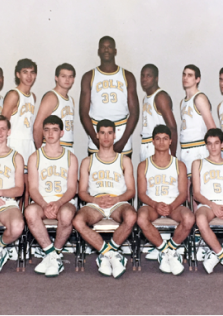
Class of 2016
1989 Cole HS Basketball Members
Class of 2016
1989 Cole HS Basketball Members
The 1989 San Antonio Cole High School, led by Shaquille O’Neal, was one of the most dominant teams Texas basketball has ever seen. They finished the year undefeated, going 36-0.
O’Neal was the team’s powerhouse, averaging an outstanding 36 points, 26 rebounds, and eight blocks. The Cole team swept through the UIL 3A State playoffs, beating Hearne handily, 69-56. They then capped off the season in a big way, beating Clarksville 66-60 behind O’Neal’s 26 points. O’Neal attributes this state championship as the real kickstart for his hoop dreams.
The team was coached by Dave Madura and Herb Moore. The members of the team were Darren Mathey, Dan Sandburg, Rob Dunn, Sean Jackson, Joe Cauallero, John Sherner, Kyle Henson, Mike Mennito, Chris Jennings, Tre Halliburton, Eric Baker, Tony Richardson, Andy Armando, Shaquille O’Neal, Dwayne Cyrus, Jeff Petress, Doug Sandburg
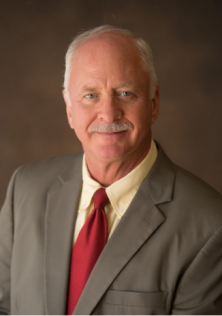
Class of 2016
George Block
Class of 2016
George Block
George Block served the Northside Independent School District (NISD) as a swim coach and athletic administrator for 35 years, during which time he developed swimmers who excelled at the high school, collegiate, Olympic and world levels.
Block became Director of Aquatics for NISD in 1977 and Assistant Director of Athletics in 1993. He retired in 2009 and the district honored him by re-naming its pool the George Block Aquatics Center. During his tenure at Northside, Block also served as head swim coach of the U.S. Modern Pentathlon team and served USA Swimming in many official roles. He developed eight Olympians from four countries in three different sports; swimming, triathlon and pentathlon. His elite swimmers qualified for Olympic Trials from 1984 through 2000 and his high school swimmers earned 52 UIL State gold medals, more than 285 All-American designations, and numerous national and junior championship victories.
Block is a founder of the San Antonio Sports Foundation (now San Antonio Sports) and has served the nonprofit by chairing numerous committees and projects, and as San Antonio Sports chairman in 2012-13. He has been inducted into the American Swimming Coaches Association’s Hall of Fame and received the Rings of Gold individual award from the United States Olympic Committee in 2012.
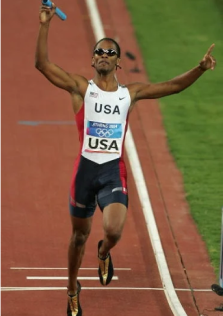
Class of 2016
Darold Williamson
Class of 2016
Darold Williamson
San Antonio native Darold Williamson was an elite level 400-meter runner who won gold medals at Olympic, world, collegiate and amateur track and field competitions.
Williamson graduated from Business Careers High School on the campus of Holmes High School where he distinguished himself in 1999 as the second leg of the Huskies’ 4×400 meter relay team that won the Texas State Championship title. He set five Holmes school records in relay and dash events and, in his senior year, won state titles in the 200 and 400-meter races.
Continuing his track career at Baylor University he won four NCAA track titles, 13 All-American honors and 13 Big 12 Conference championships, both team and individual. In the 2004 Olympic Games in Athens, Williamson anchored the USA’s 4×400-meter relay to the gold medal. He also earned gold medals at the 2005 and 2007 World Track & Field Championships, running the third leg of the 4×400-meter relays. His personal best times are 20.91 for 200 meters and 44.27 for 400 meters.
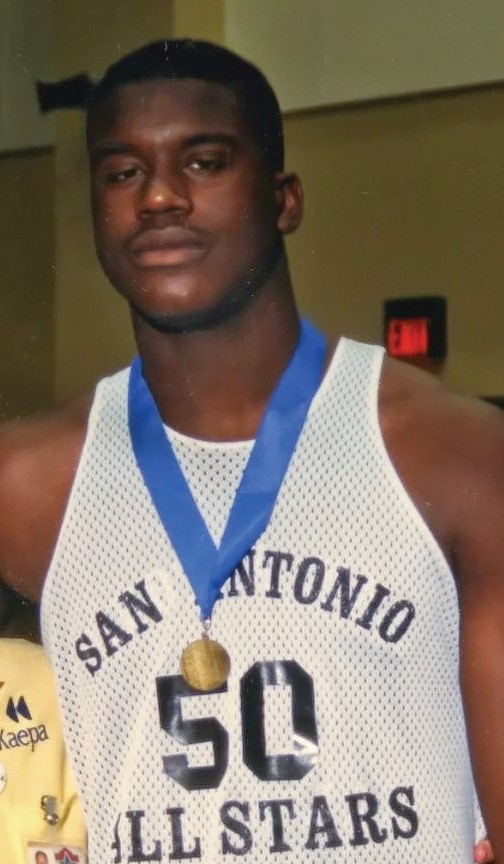
Class of 2016
Shaquille O'Neal
Class of 2016
Shaquille O'Neal
NBA and Olympic champion Shaquille O’Neal led his San Antonio Cole High School team to a state championship in 1989. During his two years, the team went 68-1, and his 791 rebounds in ’89 remains a state record. That year, he was selected to play in the McDonald’s All-American Game. In 2012, he was named as one of the top 35 high schoolers to ever play in that game. His senior year, at the 1989 AAU Junior Olympics, he led the San Antonio All-Stars to a national championship.
After playing for the LSU Tigers in college, O’Neal became the first overall pick in the 1992 NBA draft to the Orlando Magic. He quickly became a force in the league, winning rookie of the year and leading the Magic to the finals in just his third year. In 1996, he signed with the Los Angeles Lakers, teaming up with the late Kobe Bryant to become arguably the best 1-2 punch in NBA history. There, they won 3 championships, and O’Neal won his lone MVP in 2000. In 2004, he was traded to the Miami Heat, where he and Dwyane Wade won one championship in 2006. After short stints in Phoenix, Cleveland, and Boston, O’Neal retired after a legendary 19-year career.
O’Neal is widely regarded as one of the most physically dominant players in the history of the NBA. His laundry list of awards and accomplishments in the league is too many to recount. He has been inducted into the Naismith Memorial Basketball Hall of Fame, FIBA Hall of Fame, and College Basketball Hall of Fame. He remains a significant personality in and around the league.
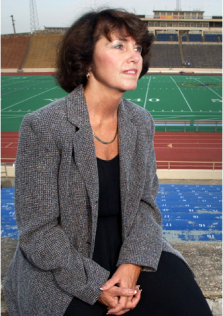
Class of 2017
Dr. Susan Blackwood
Class of 2017
Dr. Susan Blackwood
Dr. Susan Blackwood became executive director of the San Antonio Sports Foundation in 1996. For the next 17 years she led the organization, creating monumental change for the Foundation and the community around her.
Blackwood’s expansion of San Antonio Sports’ outreach to youth programs was particularly notable. In 2012, she initiated the SPARK program, creating school parks for local elementary and middle schools. As of 2024, San Antonio Sports has worked to give 39 schools their own park. Blackwood also created the Fit Family Challenge, Go! Kids Challenge and Kids Rock youth programs. During her tenure, San Antonio hosted four NCAA Men’s and Women’s Final Fours, two NCAA Division I Women’s Volleyball Championships and the inaugural Rock ‘n’ Roll San Antonio Marathon. She also provided San Antonio Sports leadership for the Bexar County Venue Project that resulted in 13 new athletic facilities across the county.
When Blackwood retired from the position in 2013, San Antonio Sports’ annual budget had grown from $125,000 to $3.4 million. She helped produce over $425 million in direct visitor spending on sport tourism in San Antonio. Even when she retired, she continued to help her community, heading up a $15 million legacy funding campaign for the Foundation that would support kids’ programs for many years to come. Blackwood is currently an assistant professor at the University of Texas at San Antonio.
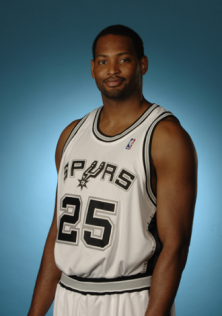
Class of 2017
Robert Horry
Class of 2017
Robert Horry
Robert Horry earned the nickname “Big Shot Bob” for his many notorious clutch shots in the playoffs. Possibly none more notorious than his shot with time expiring against the Sacramento Kings in Game Four of the Western Conference Finals in 2002. Down 2-1, Horry’s shot gave the Los Angeles Lakers the spark they needed to eventually win the NBA Finals that year. After that year, he signed with the Spurs, allowing San Antonio to bear witness to the same clutch factor that Lakers fans had enjoyed years prior.
In game 5 of the NBA Finals in 2005, Horry hit yet another three-pointer with six seconds remaining to lift the Spurs over the Pistons in a series they would eventually win in seven games. He wasn’t just known for hitting big shots in big moments though. Over the course of his 16-year career, he won a total of seven championships with three different teams. Only nine players in league history have seven or more championships, and Horry is one of only two who have won rings with three different teams, as his first two championships came in 1994 and 1995 with the Houston Rockets.
Horry won another ring in San Antonio in 2007, when they swept LeBron James’ Cleveland Cavaliers. In 2008, he retired as a Spur, marking the end of one of the winningest careers in basketball history in terms of championships.
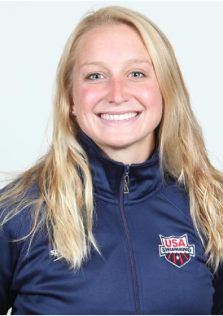
Class of 2017
Annie Chandler Grevers
Class of 2017
Annie Chandler Grevers
Annie Chandler Grevers is the most decorated female swimmer in San Antonio history. At Churchill High School, she won gold in the 100-yard breaststroke three times and was a part of two state-champion relay teams. In 2005, she set the state record in the 100m breaststroke, which still stands to this day. Her junior year, her anchor leg in the 400-yard freestyle secured a close second place finish for the relay and a team state title for Churchill.
After graduating from Churchill in 2006, Grevers took her talents to the University of Arizona, where she joined an already star-powered Wildcats team. Already in her freshman year, she made an immediate impact. At the NCAA meet, she won gold and silver as a part of the medley relays and earned an individual silver in the 100-yard breaststroke. Her sophomore year, she returned to help both relay teams win gold, winning an individual medal in the process. Her success helped the Wildcats win the NCAA team championship as well. Grevers remained a strong force for the rest of her collegiate career. Her senior year, as team captain, she won the anticipated 100-yard breaststroke in a since-broken NCAA record. Grevers was named PAC-10 Woman of the Year in 2011 and graduated a 10-time All-American. In 2020, she was named to the Arizona Athletics Hall of Fame.
Grevers competed at U.S. Nationals twice, in 2007 and 2010, earning a relay gold medal and individual silver medal in ‘10. In 2011, at the Pan American Games, she won two individual and relay gold medals. She was also team captain at the World University Games, where she earned an individual gold medal and a relay silver medal. Grevers qualified for the U.S. Olympic Trials in 2008 and 2012, where she competed well. She retired from competitive swimming in 2012.
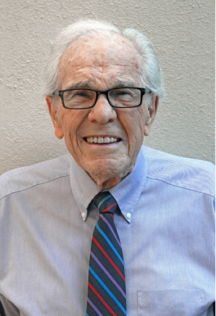
Class of 2017
Leo Rose
Class of 2017
Leo Rose
After moving to San Antonio at a young age from Minneapolis, Leo Rose attended Jefferson High School, where he was a star on the softball and basketball teams. He was offered a basketball scholarship from St. Mary’s University but turned it down to provide for his family. While working two jobs, at a grocery store and a paper warehouse, Rose made time for night school and to play competitive softball and basketball in city leagues, where he was named to the All-City team six years in a row. During that time, he was named Outstanding Jewish Athlete of San Antonio.
Rose volunteered for the Army Air Corps in 1941, where he and his crew were awarded the Distinguished Flying Cross and the Air Medal for their valor. Upon his return to San Antonio, Rose co-founded Lachman-Rose, which became the largest toy distributor in the Southwest. He was a part of this business until 1978, when he retired to make time for his community. His contributions to the committee included significant financial and temporal aid to the Jewish and overall San Antonio community. In 1973, Rose was one of the 35 local businessmen who secured a lend-lease deal with the owners of the Dallas Chapparals to move the team to San Antonio. The team’s name was changed to the San Antonio Spurs, and they were welcomed by the city with open arms. After one year, the ownership group decided to buy the team outright, and the city of San Antonio changed forever. Rose also created the San Antonio Racquets, a World Team Tennis club that won two championships.
Rose’s awards, achievements, and contributions to his community and city are too many to count. With his passing in 2020 at the age of 99, he leaves behind a legacy in San Antonio that will not soon be forgotten and made the city better than when he arrived.
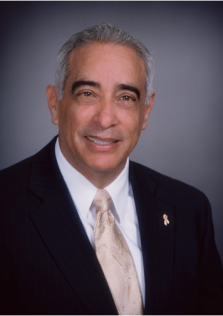
Class of 2017
Dr. Sylvester Perez
Class of 2017
Dr. Sylvester Perez
Dr. Sylvester Perez graduated from Harlandale High School in 1967. He chose to attend and play baseball for Wharton Junior College, before dropping out after just one semester. Perez did not allow this setback to derail him however, as he chose to enroll in St. Philip’s College, a historically black college in San Antonio. The next year, his commitment paid off, as he earned himself a baseball scholarship to New Mexico Highlands University. There, he shined, being named an NAIA All-American and setting a home run record that stood for almost 30 years. He also later earned his doctorate in Educational Administration from Texas A&M University.
After graduating from NMHU in 1972, Perez began coaching baseball at a junior high school in Lubbock. In 1974, he was hired as head baseball coach at Taos High School in New Mexico. His permanent return to Texas came in 1974 when he took the same job at his alma mater, Harlandale. Before retiring as a coach in 1985, Perez coached McArthur, Madison, and Judson to district championships. Over his 10-year career, he held a record of 183-95.
In 1985, Perez turned to school administration, where he enjoyed a long, successful career. All before earning his doctorate in Educational Administration from Texas A&M in 1995, he was a superintendent, teacher, coach, athletic director, principle, and assistant principle. In 2012, after the superintendent of San Antonio ISD resigned Perez was brought on in an interim role, before taking up the post officially until 2015 when he retired to care for his parents. In 2016, he came out of retirement as interim superintendent of Edgewood ISD, where he had a very short stint before retiring a second time.
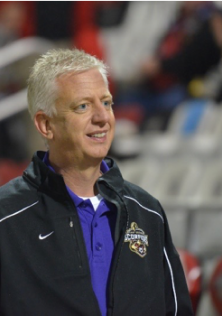
Class of 2018
Gordon Hartman
Class of 2018
Gordon Hartman
Native San Antonian Gordon Hartman has spent most of his career giving back to his community. At just 19, he formed his own home building business, and four years later a land development company. In 1983, he founded Gordon Hartman Homes, building housing for low-to-moderate income families. For the next 22 years, he grew his business into the most successful of its kind in the city.
In 2005, Hartman sold his company in order to form the Gordon Hartman Family Foundation with his wife, Maggie, serving children and adults with special needs. He was inspired by his daughter, Morgan, who was born with cognitive and physical special needs. In 2010, he established Soccer for a Cause to raise money to expand programs and services for those with special needs, as well as open an ultra-accessible theme park called Morgan’s Wonderland in honor of his daughter. Soccer for a Cause led to the establishment of the NASL San Antonio Scorpions, as well as the construction of Toyota Field. That same year, he also opened STAR Soccer Complex, a 75-acre venue used by San Antonio FC, among others.
Since the opening of Morgan’s Wonderland, Hartman has continued to raise money and help those with special needs. He has since opened Morgan’s Inspiration Island, an ultra-accessible waterpark, and Morgan’s Wonderland Camp, an ultra-accessible year-round camp, among other philanthropic endeavors. Hartman’s efforts to assist the special needs and greater San Antonio community have been extraordinarily impactful.
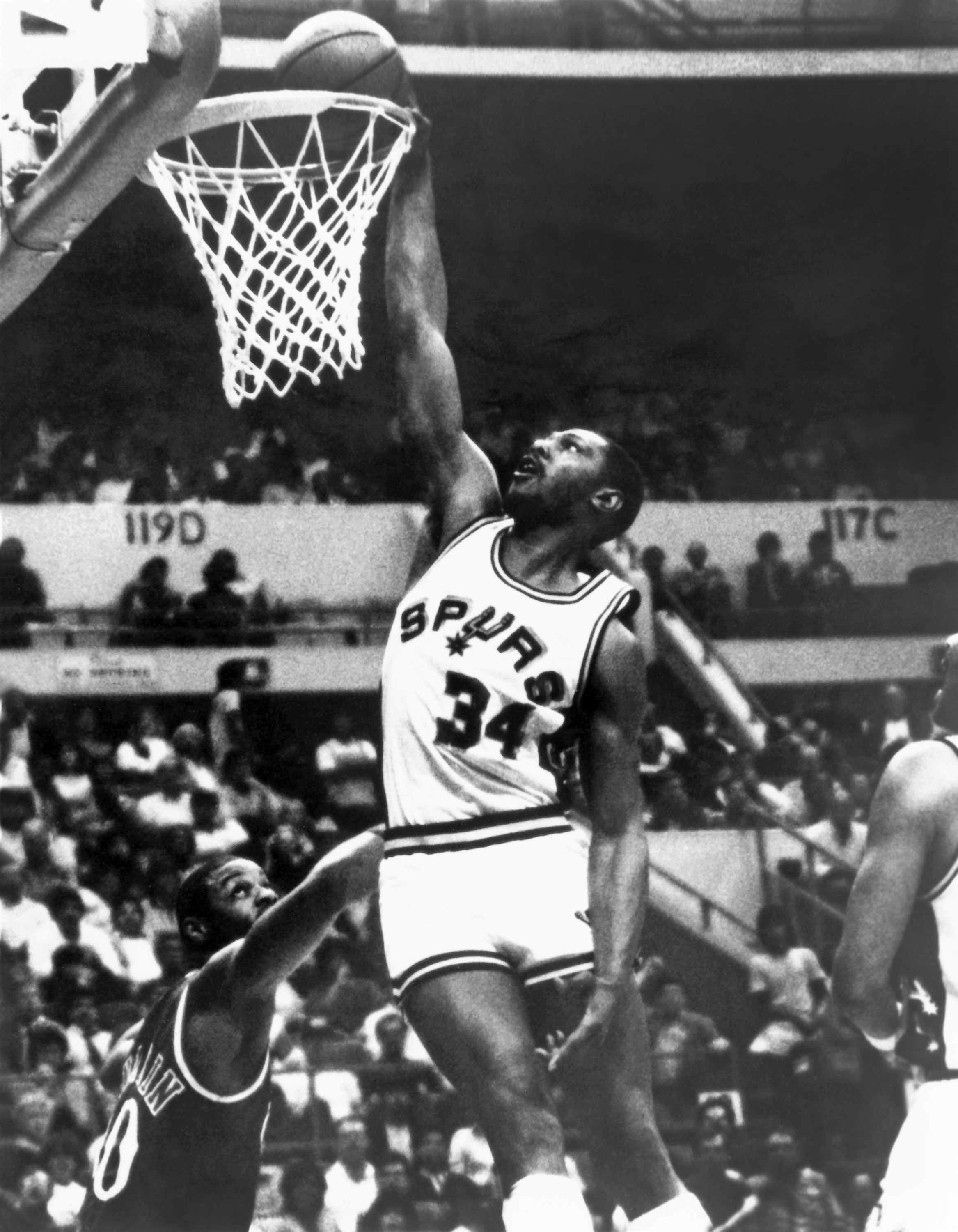
Class of 2018
Mike Mitchell
Class of 2018
Mike Mitchell
Mike Mitchell was a standout at Auburn University before he ever got to the NBA. He was an All-SEC selection all four years and was a Second Team All-American his senior year. He remains Auburn’s second all-time leading scorer and first in total rebounds. In 2013, his number 30 jersey was retired by the Tigers.
Drafted 15th overall by the Cleveland Cavaliers in 1978, Mitchell became an All-Star in just his third season, averaging almost 25 points per game. The following year, he was traded to San Antonio, where he made an immediate impact. In just his second season with the Spurs, he helped lead them to the Western Conference Finals, in which he averaged 25 points and 10 rebounds, falling in six games to the Los Angeles Lakers. In seasons, where he started more than 20 games for the Spurs, Mitchell averaged under 20 points only once, when he averaged 19.9. He remains seventh on the Spurs’ all-time leading scorer list with just under 10,000 points.
Over his 10 years in the NBA, Mitchell averaged just under 20 points a game, and had a resounding impact on Spurs basketball, especially in the playoffs. After retiring, he worked as a counselor for at-risk youth, running after-school programs at the local juvenile detention center. In 2011, Mitchell passed away from cancer at the age of 55.
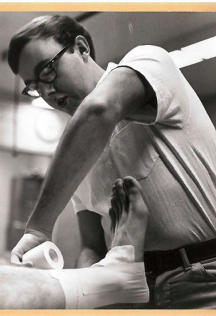
Class of 2018
Bill Hanson
Class of 2018
Bill Hanson
Bill Hanson’s 42-year career in sports was sparked in 1961 when a coach from his high school in Vermont asked him to keep score for baseball games. Later convinced to study athletic training, Hanson’s life-long involvement in sports blossomed. After continuing with athletic training in college, he took his experience into the Army. He was stationed at Fort Sam Houston, where he underwent basic medical training. He was then assigned to the U.S. Modern Pentathlon Training Center as the center’s athletic trainer. In the following year, he excelled, eventually becoming the executive director of the U.S. Modern Pentathlon Association.
Hanson went on to become a co-founder of the San Antonio Sports Foundation, where he gave the organization faith that every time an event unfolded, he was on top of every detail. His long career includes being sports manager of the Modern Pentathlon at the 1984 Olympic Games and assistant competition director at the 1996 Olympic Games. He directed sports operations for the 1989 AAU Jr. Olympic Games, was senior vice president of operations at the 1993 U.S. Olympic Festival, assisted in the organization of the Pan American Games, the Goodwill Games and numerous NCAA, NGB, Big 12 Conference and local youth competitions and events created by San Antonio Sports.
Hanson literally wrote the book on sports event management, the A to Z Guide to Organizing a Sports Event, an industry recognized textbook. For 22 years, he was known as San Antonio Sports’ “get-it-done-guy”, before retiring as the associate executive director of Event Operations in 2013.
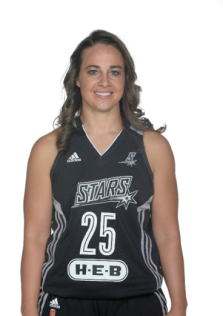
Class of 2018
Becky Hammon
Class of 2018
Becky Hammon
Before she became a historic coach in the NBA and a hugely successful head coach in the WNBA, Becky Hammon was an elite player. At Colorado State, she was outstanding. She was a three time All-American and was named the Colorado Sportswoman of the Year in 1998. Her senior year, she became the WAC’s all-time scorer for both men and women. She remains at the top of almost all the all-time lists for the Rams. She is also top 40 in points all-time in the NCAA. In 2004, Hammon was inducted into the Colorado State Sports Hall of Fame. The following year, she had her number 25 jersey retired by the school.
In the WNBA, Hammon’s success only furthered. In 1999, she signed with the New York Liberty, where she spent the next 8 seasons, three of which as a WNBA All-Star and in one of which she made the All-WNBA Second Team. In 2007, she was traded to the San Antonio Stars, where she earned the nickname “Big Shot Becky”. In her first year with the Stars, she led the league in assists. Over her 8 seasons in San Antonio, she made the All-Star team three times, made the All-First Team twice and the All-Second team once. Her number 25 was retired by the Stars in 2016. Hammon retired from the league in 2014.
Shortly after retiring as a player, Hammon was hired by the San Antonio Spurs as an assistant coach, becoming the first woman to ever fill that role full-time. That year, she was named ESPNW’s Woman of the Year. She spent 8 years on the Spurs’ coaching staff, becoming the first woman head coach of the Summer League in 2015, which she won, the first woman to coach in the NBA All-Star Game in 2016 and the first woman acting head coach when Greg Popovich was ejected from a game in 2017. In 2021, she was hired as head coach of the Las Vegas Aces, where she has won two out of two WNBA Championships, the first head coach to do so in 20 years. In 2023, she was inducted into the Naismith Memorial Basketball Hall of Fame for her contributions as a player and coach.
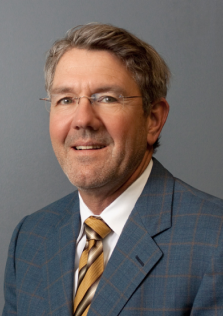
Class of 2019
David R. Schmidt, MD
Class of 2019
David R. Schmidt, MD
David R. Schmidt came from humble beginnings, working on his family ranch in Harper, Texas. His dreams of working in medicine began in high school, when he played six-man football for Harper High School. After graduating, he attended the University of Texas Health Science Center at San Antonio, where he completed his residency in orthopedic surgery. He then completed fellowships in knee surgery and sports medicine in Sydney, Australia and Auckland, New Zealand. Upon his return to San Antonio in the mid-1980s, he joined the practice of Dr. Jack Henry, who had served as the Spurs’ team doctor for 17 years. In 1993, Schmidt was named the team doctor for the Spurs, where he found immediate success.
Schmidt worked as a physician for the 1993 U.S. Olympic Festival, the 1995 World University Games, and the 1996 Olympic Games in Atlanta. Schmidt is president of the NBA Physicians Association and was the NBA Physician of the Year in 2004. He also serves as the team physician for the University of Texas at San Antonio, Trinity University athletes, and numerous San Antonio-area high schools.
Schmidt has spent his nearly four decades in practice giving back to the community. He has helped thousands of people across South Texas through surgeries, rehabilitation, and volunteer work. In 2004, he opened Sports Medicine Associates of San Antonio, serving athletes and schools throughout the city. He requires each one of the doctors in his practice to donate their time once a week during high school football season to caring for athletes from the sidelines. He also oversees an outreach program hiring athletic trainers to cover high school football games in much of South Texas.
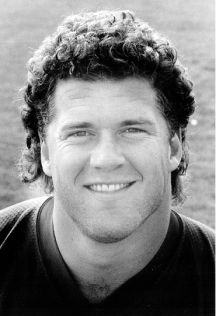
Class of 2019
Bruce Collie
Class of 2019
Bruce Collie
Bruce Collie moved to San Antonio when he was three from West Germany, where he was born. He attended LEE high school, where he became a standout lineman. His senior year, he led the Volunteers to their last district championship.
After graduating from LEE in 1980, Collie went on to play offensive guard at the University of Texas at Arlington. Over his career, he was a three-time All-Southland Conference selection, guided UTA to an SLC championship and earned Honorable Mention All-American recognition as a sophomore and junior. His senior year, he was named an Associated Press First Team All-American and a Kodak All-American. In 2002, he was inducted into the UT Arlington’s Hall of Honor. He was also a candidate for induction into the National Football Foundation’s 2024 Hall of Fame class.
Collie was selected by the San Francisco 49ers in the 1985 NFL Draft, where he spent four seasons. He was a member of the back-to-back Super Bowl Champion teams in 1989 and 1990, the latter of which he started in. He then spent two seasons with the Philadelphia Eagles before announcing his retirement in 1992. After football, Collie returned to Texas to live with his wife and kids in Wimberley.
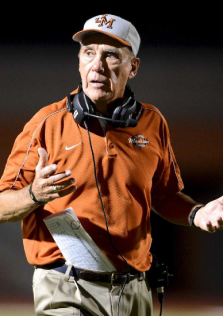
Class of 2019
Jim Streety
Class of 2019
Jim Streety
Jim Streety is the winningest coach in Greater San Antonio high school football history. He coached high school for 40 years, first with New Braunfels High School and then at Madison High School.
Streety began his coaching career at San Marcos Junior High School, before becoming assistant coach of football, basketball and track at New Braunfels in 1970. In 1974, his nearly five-decade long head coaching career began, as he was named head coach of the Unicorns. At New Braunfels, he was 149-46-2 in 17 years. At Madison, he was 194-85-1 in 23 years. His teams made the state playoffs 27 years and made the state semifinals seven times. Streety’s 343 wins ranks him sixth among Texas high school football coaches all-time. His only losing season came in his first season with New Braunfels. In 2014, he retired from coaching to become the New Braunfels ISD Athletic Director. In 2023, he announced his retirement, concluding an illustrious 57-year career in public education and athletics.
Streety was inducted into the Texas High School Coached Association Hall of Honor in 1999, the Texas High School Football Hall of Fame in 2018 and the Greater New Braunfels Chamber of Commerce Hall of Honor in 2020. He was given the Tom Landry Award in 2003 and the Living Legend Award by the Braunfels Foundation Trust in 2021.
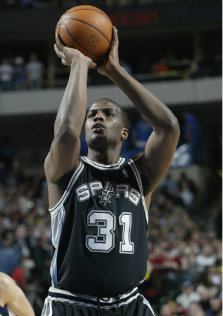
Class of 2019
Malik Rose
Class of 2019
Malik Rose
Before entering the NBA, Malik Rose was the best men’s basketball player to ever don a Drexel University jersey. He won the America East Conference Player of the Year twice and was a UPI third-team All-American in his senior year. That same year, he led the Dragons to their lone NCAA Tournament win in school, history, a double digit upset of the University of Memphis. Rose had 22 points and 19 rebounds in that game. After graduating, his number 00 was retired by the school, and in 2011 the team that upset Memphis was inducted into the Drexel Athletics Hall of Fame.
After being drafted in 1996 by the Charlotte Hornets, Rose became a free agent, where he was picked up by the Spurs. An undersized Power Forward at only 6’7’’, he quickly gained popularity among Spurs fans for his display of intangibles and skill on the court. In 1999, he was a key backup in the franchise’s first NBA Championship, and again when they won their second in 2003. In 2005, Rose was traded to the New York Knicks, where he spent four seasons before being traded to the Oklahoma City Thunder, where he spent one season and finished his career.
After leaving the NBA, Rose spent a few years as an analyst for different teams before entering operations management in 2015. In 2018, he was named G-League Executive of the Year. In 2022, he became Head of Basketball Operations for the G-League. He has remained active in the San Antonio community with his charity work and owns a San Antonio staple restaurant called “Malik’s Philly’s Phamous”.
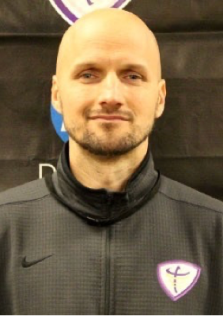
Class of 2020
Stan Bonewitz Jr.
Class of 2020
Stan Bonewitz Jr.
Stan Bonewitz Jr. was one of the greatest scorers in San Antonio high school basketball history. Touted as an “outstanding” three-point shooter by ESPN, he made a name for himself first at East Central High School before moving to Texas Tech University.
Bonewitz’s success in basketball really began his junior season for the Hornets, coached by his father, Stan Bonewitz. The next two years would be some of the best high school basketball San Antonio has ever seen. In 1994, he led the team to the state semifinals before losing to Plano East. The following year, the Hornets went on a tear of the state. The team finished the year 35-0 behind Bonewitz’s 32.1 points per game. In the state championship, he scored 36 points against Dallas Carter.
After graduating, Bonewitz moved north to Texas Tech, displaying his scoring prowess for a new team. Averaging over 12 points per game and shooting .438 percent from the three over his last three years in Lubbock, he was a reliable marksman who could always produce points on the board. He left the Red Raiders as only the second player all time to score 1,000 points and have 400 assists. In 2004, Bonewitz, continuing his dad’s coaching legacy, became the head coach of Concordia University. Along with head coach, he also holds the title of associate director of athletics for the Tornadoes.
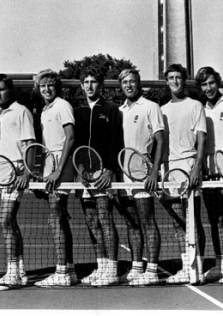
Class of 2020
1972 Trinity University Men's Tennis Team
Class of 2020
1972 Trinity University Men's Tennis Team
The 1972 Trinity University Men’s Tennis team was one of the most dominant teams in collegiate tennis history. In 30 years of the program’s standing, they had never won a national championship. That all changed in ‘72 when the team finished with a record of 36-0, winning the team title in a record 36 points.
The team knew they had something special when the University of Southern California flew out to play them. Rarely leaving their home court, much less coming all the way to Texas, this was an unprecedented move by USC that set up what the Associated Press would refer to as “The Superbowl of College Tennis”. The crowd of students for the match was so packed that rooftops became filled with spectators. The Tigers would go on to win 6-3, sending the Trojans packing. That year they would also beat the University of California at Los Angeles, something the program hadn’t done in 13 years.
Later that year, the Trinity team went into the championships game in Athens, Georgia as heavy favorites, eventually winning the team title and dethroning USC and UCLA as champions for 13 years running. Members of the team included Dick Stockton, who won the NCAA singles title, beating teammate Brian Gottfried in the championship match. Gottfried and Paul Gerken were the runners-up in the NCAA doubles title. Bob McKinly reached the singles quarterfinals. Other team members included John Burrmann, Howard Butt, Bill McGowan and Pancho Walthall. The team’s head coach was Clarence May, and the assistant coach was John Newman.
Class of 2020
General Robert McDermott
Class of 2020
General Robert McDermott
Brigadier General Robert McDermott served in the United States Air Force from 1943-1968. During that time, he became the first permanent Dean of the U.S. Air Force Academy, where he became known as the “Father of Modern Military Education.” He later served as Chairman and CEO of USAA in San Antonio, where he became an original owner of the San Antonio Spurs.
McDermott served as combat pilot and operations officer of a fighter-bomber group in the European Theater during World War II. While serving, he earned such decorations as the Bronze Star, the Air Medal with five oak leaf clusters, both the Army and Air Force Distinguished Service Medal and the Legion of Merit. In 1957 he became the first permanent professor of the U.S. Air Force Academy, and the first permanent Dean of the Faculty in 1959. During his time at the position, he was a recognized leader in higher education and a pioneer in military education.
After retiring from the military in 1968, McDermott moved to San Antonio, where he became CEO of USAA. In 1993, he formed a group of 22 investors to buy the Spurs and keep the team in San Antonio. As chairman in 1994, he hired Greg Popovich as general manager and president of basketball operations, who would later become head coach. In 2006, McDermott passed away at the age of 86.
Class of 2020
Lynn Hickey
Class of 2020
Lynn Hickey
Lynn Hickey’s leadership at the helm of the University of Texas at San Antonio’s athletics department spurred the program to heights it had never reached. In her 18-year tenure at UTSA, she added three new sports, moved conferences twice, and boomed in total budget, among other accomplishments.
Before arriving in San Antonio, Hickey was a star athlete and a successful coach. In high school, she led Welch High School to a 76-5 record over her last three years. She went on to play at Ouachita Baptist University and was the second-leading scorer for the U.S. National Team in 1973. After graduating, she became an assistant coach at Oklahoma University for a stint before becoming head coach at Kansas State University. In five years with the Wildcats, she led them to a 125-39 record and an Elite Eight Appearance. In 1984, she assumed the double role of head coach and assistant athletic director at Texas A&M University. After 10 years of coaching the Aggies, which included a Sweet Sixteen appearance, she became a full-time administrator at the school, where she spent the next five years as senior associate athletics director.
In 1999, Hickey was hired as UTSA’s athletic director. The hiring made her the only female Division 1 athletic director in Texas. Upon her arrival, the school’s athletics program was only 15 years old, was a member of the Southland Conference, and had 14 sports. Over the next 18 years, Hickey worked to add women’s golf and soccer, as well as the addition of football in 2009. In 2013, all sports made the switch to Conference USA. UTSA was the host of numerous NCAA Championship events during her time, including five men’s and women’s Final Fours. Upon leaving the position in 2017, the school’s athletics budget had risen from 1 to 28 million. In 2018, Hickey was hired as the athletic director at Eastern Washington.
Class of 2020
Mike Ayala
Class of 2020
Mike Ayala
San Antonio native Mike Ayala, nicknamed “El Ciclon”, compiled a 45-6 record over his professional career, including 23 knockouts. He is the oldest of the fighting Ayala brothers, Tony Ayala Jr., Sammy and Paulie, and considered the best all-around boxer of the four.
As an amateur, Ayala won National Golden Gloves Championships in 1973 and 1975. In 1974, he won the 1974 National AAU Bantamweight Championship. As a professional, he was the North American Boxing Federation super bantamweight and featherweight champions.
In 1979, Ayala fought Danny Lopez for the World Featherweight Title in a 15-round TKO loss dubbed “Fight of the Year” by Ring Magazine. Ayala retired in 1991 after a final win against Lee Cargle in San Antonio. He is credited with helping the Jesse James Leija Gym become one of the nation’s top boxing facilities. Ayala has since returned to his hometown of San Antonio.
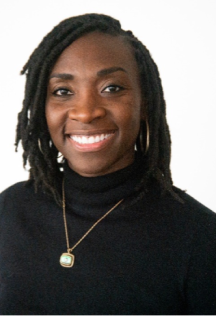
Class of 2022
Sophia Young-Malcom
Class of 2022
Sophia Young-Malcom
Sophia Young-Malcolm led the 2005 Baylor Bears to their first women’s basketball national championship, beginning what would become a storied program. She later joined the San Antonio Silver Stars, where she didn’t lose a step.
At Baylor, Young-Malcolm was elite. Over her four years she was an All-American twice. She is one of only four women in NCAA history to record 2,000 points, 1,000 rebounds, 300 steals and 300 assists. She still ranks fourth all-time in scoring, fifth in field goal percentage and second in rebounds for the Bears.
In 2006, Young-Malcolm was drafted fourth overall by the San Antonio Silver Stars. She made an immediate impact, starting in all 34 games her first season and being named to the WNBA All-Rookie team. Over her nine-year career in San Antonio, she never played less than 33 games. She was a three-time Western Conference All-Star in 2006, 2007 and 2009. She was named to the WNBA All-Second team three times in 2007, 2009 and 2012. She made the WNBA All-First team once in 2008. She tallied 4,300 career points and 1,807 rebounds for the Silver Stars, helping her to be named to the team’s All-Decade team. She also played overseas in the Euroleague and Eurocup. In 2016, Young-Malcolm was inducted into the Baylor University Athletics Hall of Fame. In 2021, she was inducted into the Texas Sports Hall of Fame. In 2021, she became Assistant AD for Player Development at Baylor, and added assistant coach to her role in 2023.
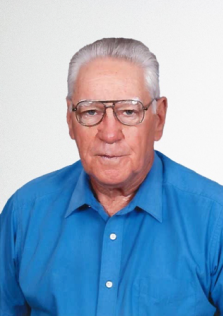
Class of 2022
George Pasterchick
Class of 2022
George Pasterchick
George Pasterchick came to San Antonio in the 1950’s as a combat medic, playing football for the Brooke Army Medical Center. He then went on to play football for Trinity University and Texas Lutheran University.
Shortly after, Pasterchick took up scouting for several NFL teams as a side job before taking up a post as head coach and general manager of the semi-pro San Antonio Toros in 1967. Under his coaching, the Toros were dominant, displaying a record of 109-7. In 1971, he moved to high school coaching, becoming head coach at St. Gerard High School. He spent 34 years with the Royals, including 32 as head coach and athletic director, where he became a beloved figure throughout the school and the city of San Antonio for the lives he touched. His teams won eight district titles and the TCIL championship in 1985.
In 2006, Pasterchick retired from St. Gerard. The next season he was back however, unable to stay away from the field, as an assistant coach at the Texas Military Institute. In 2011, he retired for good. Over his 44 years as a coach, he was a staple in the San Antonio football community. He was also known for his large role in the city’s annual high school football all-star game, of which he was a fixture for 30 years. Pasterchick passed away in 2012 at the age of 82.
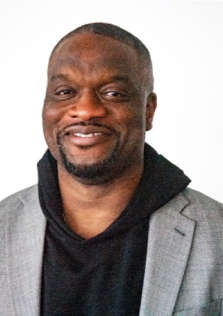
Class of 2022
Ndukwe Dike "N.D." Kalu
Class of 2022
Ndukwe Dike "N.D." Kalu
Ndukwe Dike “N.D.” Kalu was a two-sport athlete at Marshall High School, and a dominant force at Rice University before he began his long career in the NFL as a defensive end.
At Marshall, Kalu found success not just in football, but also in track & field. He still holds the Rams’ high jump record at 7 ft. After graduating high school in 1993, he took his talents to Rice, where he was a power coming off the edge. He left the school as their all-time sacks leader, and still ranks third in that category.
In 1997, Kalu was drafted in the fifth round by the Philadelphia Eagles. He spent 12 seasons in the league, spending time with the Philadelphia Eagles, the Washington Redskins and the Eagles again before finishing up his career with the Houston Texans in 2008. He recorded 31 sacks and 193 tackles over his career, including four forced fumbles, an interception and a touchdown. After football, Kalu currently hosts his own sports radio talk show based in Houston called “In The Trenches”. In 2006, Kalu created “Kalu 4 Kids”, an organization to help provide low-income students with the basic supplies they need to get an education.

Class of 2022
Natalie Nalepa
Class of 2022
Natalie Nalepa
Natalie Nalepa was Baylor University’s first female track star. Her performances on the oval and the grass have made her one of the best runners to ever come out of San Antonio.
Nalepa first made a name for herself at Madison High School. In 1987, she won the 3200m UIL 5A State championship handily. In 1989, she became a member of Baylor University’s first female track program. The freshness of the program had no effect on Nalepa’s success. Coming into college as a half-miler and miler, her versatility grew tremendously over the next four years. In just her sophomore year, she finished top 10 at NCAA cross country nationals. She would finish in the top five the next year. In 1991, she won five individual Southwest Conference titles, in the indoor mile and 3,000 meters, as well as the outdoor 1,500 meters, 3,000 meters, and 5,000 meters. When her career with the Bears was over, she was a five time All-American in track and cross country. She was Baylor’s first three sport All-American in indoor track, outdoor track and cross country.
Nalepa continued to run after leaving Baylor. Despite battling injuries and even surgery, she was able to find success. In 1997, in her first race back from surgery on her heel, she set a USATF certified course record at the Austin Statesman Capital 10k. In 2000, she finished 11th in the 10,000 meters at the U.S. Olympic Trials. In 1995, she was named the Texas Track & Field Athlete of the Year. In 2002, she was inducted into the Baylor University Athletics Hall of Fame. In 2017, she was inducted into the Southwest Conference Hall of Fame.
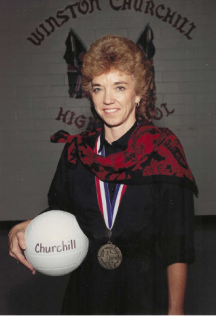
Class of 2023
Wanda Bingham
Class of 2023
Wanda Bingham
Wanda Bingham, a Uvalde native, coached her Churchill High School volleyball teams to 22 seasons of dominance. Winning multiple state championships and enjoying one of the longest win streaks in state history were just the beginning of her highlights as a coach.
Bingham played basketball at Uvalde High School, only able to play district volleyball as it was then more of a club sport. She attended Southwest Junior Texas College before completing her schooling at Southwest Texas State College. While a knee injury ended her basketball career, she continued to play intramural volleyball. ‘
In 1973, she was hired straight out of college to lead the Chargers’ volleyball team. Over her next 22 years, she was outstanding. In 1978, she won her first state title. Between 1984 and 1986, she won 69 matches in a row, which is second all-time in Texas. This streak included an undefeated 38-0 1985 season capped off by her second state championship. Over her career, her teams were 605-148, a winning percentage of over 80%. Her teams made the state playoffs nine times, and in four of those made the championship match. Bingham was named Nemo Herrera Coach of the Year twice, in 1982 and 1983.
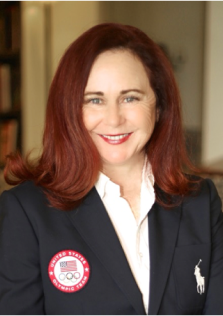
Class of 2023
Rose Monday
Class of 2023
Rose Monday
Rose Monday was an elite middle-distance track athlete before becoming coach of the University of Texas at San Antonio. Her success coaching the Roadrunners helped make her a three-time Olympic coach among other notable coaching roles.
Before coaching, Monday excelled on the track herself. At Cal State Northridge, she was a member of three national championship relay teams and was an indoor national champion in the 800m in 1985. She qualified for the Olympic Trials in 1984, 1988 and 1992. She won gold in the 800m at the World Masters Championship in 2001. Monday arrived in San Antonio in 2000 while training for the World Masters Championship. While there, she was offered the women’s distance track and cross-country coaching job at UTSA. After her first year, she was given leadership over the men’s team as well. In 2004, she earned her first world team leadership role, being selected as assistant coach for the World Indoor Championship team in Budapest. Over her seven years with the Roadrunners, she was largely responsible for revitalizing the program.
In 2007, Monday moved to coaching post-collegiate athletes full-time. She has been selected for the World Junior Games and World University Games, among others. In 2012, she received her first Olympic coaching bid as assistant women’s coach for USA Track and Field in London. In 2016, she returned in the same position for the Olympic games in Rio. In 2020, she was named as the head coach for women’s track and field for the Olympic Games in Tokyo.
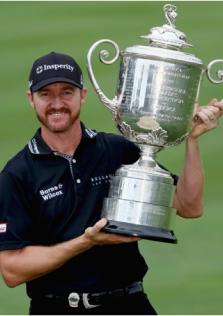
Class of 2023
Jimmy Walker
Class of 2023
Jimmy Walker
Jimmy Walker attended Canyon High School and Baylor University before a successful career on the PGA tour.
Walker turned professional in 2001 at the age of 22, first playing on the Nationwide Tour full-time in 2003 and 2004. He ended the 2004 season as the Tour’s top money winner and Player of the Year, earning his PGA Tour card for the first time. In 2007, he returned to the Nationwide Tour, winning his third title in the National Mining Association Pete Dye Classic.
In 2013, Walker really came alive, winning his first PGA Tour event at the Frys.com Open. In 2014, he earned his second win PGA Tour win at the Sony Open in Hawaii. Shortly after, he continued his success, winning the AT&T Pebble Beach National Pro-Am. This was his third victory of the 2014 season in just eight starts. That year, he finished tied for eight at the Masters Tournament, tied for ninth at the U.S. Open and tied for seventh at the PGA Championship. His performance earned him his first invitation to the 2014 Ryder Cup team. The following season, Walker defended his Sony Open in Hawaii title with a nine-stroke victory. He also won the Valero Texas Open that season in San Antonio, which helped him finish in the top ten in money winnings for the second year in a row. Walker won his first major championship when he captured the 2016 PGA Championship by one stroke over defending champ Jason Day. That year, he was also a member of the winning Ryder Cup team.
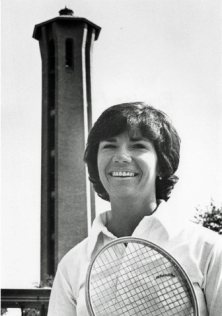
Class of 2023
Emilie Burrer Foster
Class of 2023
Emilie Burrer Foster
Emilie Burrer Foster was one of the greatest tennis players in Texas history at Trinity University and as a professional player. She went on to also become a storied coach for multiple college programs.
Foster was elite even in high school. In 1965, she was the Texas High School Singles Champion and was named the Texas Tennis Player of the Year, of which she was the first female recipient. She first attended Lubbock Christian University, where she reached the semifinals in national collegiate doubles. After transferring to Trinity University in 1967, Foster became a national powerhouse. She is the only player ever to win back-to-back singles and doubles championships, which she did in 1968 and 1969. She also led the Tigers to national team titles in both years. In 1969, she made the U.S. Open Singles Round of 16 and was a quarterfinalist in Doubles.
In 1970, Foster became a graduate assistant for the Arizona State University tennis team before taking a job as coach of Texas Tech University’s club team. In her eight years with the Red Raiders, she turned the team from club to varsity status. In 1978, she returned to her alma mater to become coach at Trinity University. During her tenure, she coached the women’s tennis team to the NCAA Division I finals twice, third in the nation three times, and top five finishes three times. She was the NCAA DI Coach of the Year in tennis in 1983 and coached 12 NCAA DI tennis All-Americans and one NCAA DI national champion doubles team. She coached the Tigers to a 259-94 record. Since leaving competitive tennis, she has been inducted into the Lubbock Christian Hall of Honor, the National Collegiate Tennis Hall of Fame, the Trinity University Athletic Hall of Fame, the Texas Tennis Museum Hall of Fame and the SAISD Sports Hall of Fame.
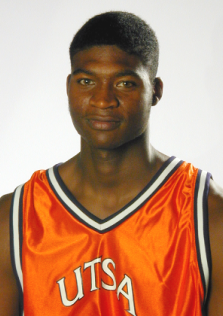
Class of 2023
Devin Brown
Class of 2023
Devin Brown
Devin Brown was outstanding at the University of Texas at San Antonio before becoming an NBA champion in the same city.
Even before attending UTSA, Brown was a staple in the San Antonio basketball scene. At West Campus High School, he became the all-time leader in scoring in greater San Antonio basketball history. After graduating, he stayed home to play for the Roadrunners. Brown made an immediate impact, being named Southland Conference Rookie of the Year in 1999. He also earned second team All-Southland honors that year. Over the next three years, he never missed a first team All-Southland bid. In 2001, he became the first player in school history to record a triple double. A prolific scorer, Brown graduated as the all-time leading scorer in UTSA history, and still stands as third on that list. After graduating, he became the first player in school history to have his number, 23, retired. Brown was inducted into UTSA’s inaugural Athletics Hall of Fame class in 2023.
Brown went undrafted in the NBA, but was drafted by the CBA, the USBL, and second overall by the D-League. He chose to begin his professional career in the USBL with the Kansas Cagerz, where he was named Rookie of the Year. He also spent time with the Fayetteville Patriots in the D-League his rookie year, winning the league’s Most Valuable Player and Rookie of the Year awards. This performance earned him time with the Denver Nuggets before signing with the San Antonio Spurs in 2003. In his second year with the team, Brown played a key role in winning the franchise their third NBA championship in 2005. After that season, he signed with the Utah Jazz as a free agent. Brown spent time with the Golden State Warriors, New Orleans Hornets, Cleveland Cavaliers, Chicago Bulls and Asseco Prokom before retiring from the game in 2011.
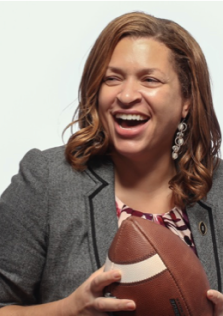
Class of 2024
Andrea Williams
Class of 2024
Andrea Williams
Andrea Williams is a success story for women in sports, both as an athlete and as an administrator and executive. She was a standout basketball and volleyball athlete at Winston Churchill High School and Texas A&M University. At Churchill, Williams was named 1992 San Antonio Athlete of the Year and still holds the school’s girl’s basketball scoring record. A four-year letter winner in volleyball and two-year letter winner in basketball at A&M, she was the first Aggie to letter in both sports in the same season.
Williams’ career in college athletics includes two years on the NCAA staff as the director of Women’s Basketball Championships and ten years as associate commissioner for the Big Ten Conference. She became commissioner for the Big Sky Conference in 2016 and in 2018 was named chief operating officer for the College Football Playoff. She moved into professional basketball in 2021 as chief experience officer for the Utah Jazz.
Williams honors include a 2014 SportsBusiness Journal “Game Changers: Women in Sports Business” award, the Shadow League Award for Leadership in 2017, the 2018 San Antonio Express-News “Sportswoman of the Year” and a 2020 Dallas Business Journal’s Women in Business award recipient.
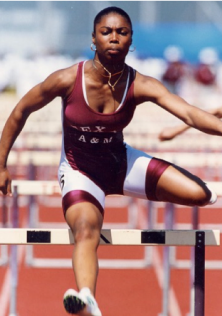
Class of 2024
Anjanette Kirkland
Class of 2024
Anjanette Kirkland
Anjanette Kirkland was a world, national, state and city track champion in the hurdles event. She set a San Antonio city record at Holmes High School, became an All-American at Texas A&M University and ran track professionally for nine seasons.
Kirkland won gold at the 2001 World Indoor Championships in the 60-meter hurdles and later that year won the world outdoor title in the 100-meter hurdles, defeating Olympian Gail Devers while clocking 12.42 seconds. Kirkland was an eight-time All-American and completed her collegiate career as the most decorated female student-athlete in Texas A&M history. She won three consecutive Southwest Conference titles in the 55-meter hurdles from 1994-96 and two straight conference titles in the 100-meter hurdles from 1994-95. Kirkland owns the SWC all-time best in the 55-meter hurdles, the SWC meet record and ran the fastest 100-meter hurdles in SWC history, a wind-aided 12.89 in 1995. In 1997 at the inaugural Big 12 Championships, she won both the 100 and 400-meter hurdles.
At Holmes, Kirkland also competed in the 400-meter, long jump and relays. In 1992, she won the state championship in the 100-meter hurdles. Running the 300-meter hurdles, she placed second at state in 1991 and 1992. She broke the Texas Relays 100-meter hurdles record in her senior year.
Kirkland is in five Halls of Fame, including the Texas A&M Hall of Fame and Southwest Conference Hall of Fame.
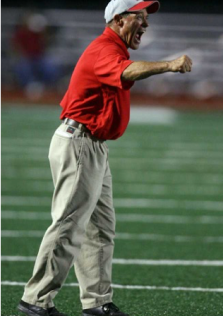
Class of 2024
Jim Rackley
Class of 2024
Jim Rackley
Jim Rackley coached high school football for 42 seasons. Known for his animated, high-energy style, he spent 27 seasons at Judson High School including the last 11 as head coach. He retired with a 137-71-1 record, coached in nine state title games and was a five-time state champion, one as head coach.
Rackley’s Judson teams won the state championship in 2002 and were state finalists in 2005 and 2007. His record includes five district championships. Rackley was an assistant coach at Judson for eight seasons before becoming head coach at Southwest High School in 1988. He returned to Judson in 1993 and succeeded D.W. Rutledge as head coach in 2001.
Rackley was passionate about helping young men become responsible adults. As he often stated, “football is just a tool to build good men.” Two of his players have played in the National Football League. Rackley received the Tom Landry Award in 2011, an honor that is given annually to a coach who has made a significant contribution to athletes and the game of football in Texas. He has served as president of the Texas High School Coaches Association and was inducted into its Hall of Honor in 2019. He is the third Judson head coach to be selected into the San Antonio Sports Hall of Fame.
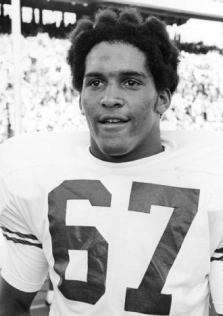
Class of 2024
Julius Whittier
Class of 2024
Julius Whittier
Julius Whittier was an historically significant figure as the first Black football scholarship recipient and letterman at the University of Texas (UT). In his three varsity seasons, the Longhorns won the 1970 National Championship and three Southwest Conference Championships under Hall of Fame coach Darrell Royal.
Whittier was recruited by UT from Highlands High School where he was team captain in 1968. At UT, he earned three letters as an offensive lineman and tight end and helped the Longhorns post an overall record of 28-5 in his three seasons. He is widely recognized for paving the way for Black athletes at the University of Texas.
Whittier graduated from UT with a bachelor’s degree in philosophy, a master’s degree from the LBJ School of Public Affairs (encouraged by President Lyndon Baines Johnson), and a law degree. He had a distinguished career as a prosecutor and criminal defense lawyer. Whittier was inducted into the Texas Athletics Hall of Honor in 2013, the San Antonio Independent School District Athletic Hall of Fame in 2018 and was recognized for his trailblazing success and contributions at UT, with a 12.5-foot bronze statue of him that stands near the north end of Darrell K. Royal Stadium.
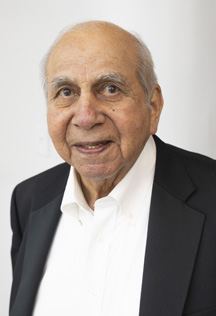
Class of 2025
Dr. Victor Rodriguez
Class of 2025
Dr. Victor Rodriguez
Dr. Victor Rodriguez is a pioneering educator, athlete and administrator who helped shape the San Antonio Independent School District and opened doors for generations of Hispanic students and athletes.
As a track star at Edna High School, Rodriguez set a new UIL district mile record and was a state champion in 1947. He earned a track scholarship to Victoria Junior College where he became a multi-time national champion. In 1953, he became the first Hispanic to receive an athletic scholarship from North Texas State College (now the University of North Texas), earning multiple titles at national competitions.
Rodriguez developed his athletic endurance as the bell ringer for the church in Edna, when his teacher assigned him the task in the third grade as his “personal civic responsibility.” For nine years he rose early and jogged two miles to town, dodging dogs along the way, to ring the bell before Mass at 5:30 a.m.
Earning a master’s degree in education and a Ph.D., Rodriguez coached cross country, track and football at Cooper Junior High School and at Lanier and Highlands High Schools. At Lanier from 1962-67, his teams were city cross country and track championships four out of five years. In 1968, his Highlands track team was runner-up at the UIL state track meet.
In 1982, he was named the first Hispanic superintendent of San Antonio ISD. Rodriguez was also the first Hispanic chairman of the Texas University Interscholastic League. He is in both the UNT Athletic Hall of Fame (2006) and the SAISD Athletic Hall of Fame (2015) and is a member of the Hispanic Sports Hall of Fame.
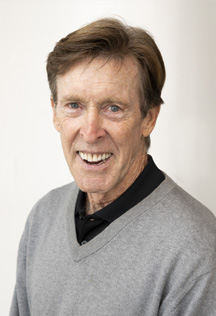
Class of 2025
Tim Derk (The Original Spurs Coyote)
Class of 2025
Tim Derk (The Original Spurs Coyote)
Tim Derk created and performed as the NBA Spurs Coyote for 21 years. His run as “Entertainus Carnivorous” began in 1983 during an era when sports mascots were still a rarity. Over his career, he entertained fans at more than 1,110 Spurs games and made more than 5,000 public appearances.
Derk based the Coyote character on physical comedy while incorporating stunts such as dunking through fire, hanging from the arena ceiling, and shooting three-pointers atop a six-foot unicycle–showcasing his all-around athletic ability. He often joked that “everything is harder with a tail,” a playful not to the challenges of performing in costume. Despite being created on a shoe-string budget, the costume design has remained largely unchanged for over four decades. The character’s oversized green eyes remain a fan favorite.
A stroke in 2004 brought Derk’s performing days to an end, but not his legacy. Just six months later, he was named Manager of Mascot Development by Spurs Sports & Entertainment. He retired in 2017 after 34 years and has five NBA Championship rings.
During his time as Coyote, Derk was credited with helping invent the t-shirt cannon. He later chronicled his experiences behind the mask and his journey as a stroke survivor in a book titled Hi Mom, Send Sheep.
The Coyote character was inducted into the Mascot Hall of Fame in 2007 and Derk was later honored with an NBA Lifetime Achievement Award, recognizing his decades of dedication, creativity and contributions, both on and off the court.
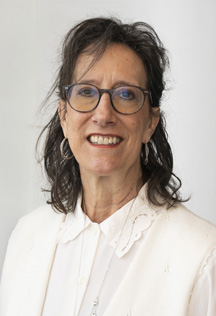
Class of 2025
Sharon Neugebauer-Shepard
Class of 2025
Sharon Neugebauer-Shepard
Sharon Neugebauer-Shepard is one of only four athletes in University of Texas history to be named All-America in two sports: track & field and volleyball.
Neugebauer-Shepard starred on the Longhorns’ 1981 AIAW national championship volleyball squad and on the 1982 national champion outdoor track team. She was a member of the 1981 and 1982 championship 3,200m relay teams and received All-America honors. She led the Longhorns to four Southwest Conference (SWC) titles and to the 1984 NCAA Championship regional final (Elite 8) and to regional semi-finals in 1982 and 1983. Neugebauer-Shepard was named the 1982 SWC Conference Player of the Year and led the conference in hitting percentage (.406), block solos, block assists, and kills. She earned All-SWC First Team honors in 1982,1983 and 1984. Neugebauer-Shepard served as captain her senior year and earned an All-America mention. She still holds several Texas volleyball records: career solo blocks (279) and season solo blocks (241). She has more than 1,000 career kills on record.
At Thomas Jefferson High School, Neugebauer-Shepard led the Mustang team to a 33-2 season record and runner-up finish at the UIL 4-A State Volleyball Championship in 1979. She earned All-District and All-City honors in basketball and cross country during her career, as well as All-State honors in volleyball and track & field. Her 800-meter run record (2.11.0) held for 20 years. Neugebauer-Shepard was honored as Top Senior Athlete at Jefferson and received the prestigious Tommy Nobis Award.
She was inducted into the University of Texas Women’s Athletics Hall of Honor in 2005.
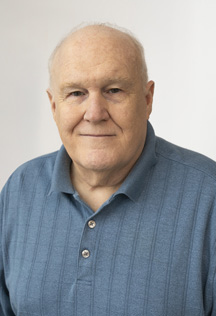
Class of 2025
Charles "Charlie" Boggess
Class of 2025
Charles "Charlie" Boggess
Charles (Charlie) N. Boggess, Jr. is the winningest high school basketball coach in San Antonio history.
A San Antonio native, Charlie Boggess grew up in gyms as the oldest son of Charles “Chuck” Boggess, one of San Antonio’s top high school boys basketball coaches at Harlandale. In 1978, Boggess became the Alamo Heights High School head basketball coach, kickstarting a historic 37-year career. Over the course of his tenure with the Mules, Boggess achieved a 785-309 record. He led Alamo Heights to the UIL Class 5A state tournament semifinals in 1988 and finals 1991. He captured nine district titles, two co-district titles and one tri-district title along with two regional championships, posting 25 straight 20-or-more wins in 29 out of 33 seasons with Alamo Heights.
In 2011, Boggess became the head coach at Antonian Prep and averaged 28 wins per season in four years with the Apaches. He guided Antonian to four state playoff appearances, including three district titles and a TAPPS state tournament appearance in 2012 that ended in the semifinals. He retired in 2015 with 915 total wins, making him the winningest coach in San Antonio history.
Boggess was inducted into the Texas High School Basketball Hall of Fame in 2017 and was named one of the top 100 basketball coaches in UIL Texas history.
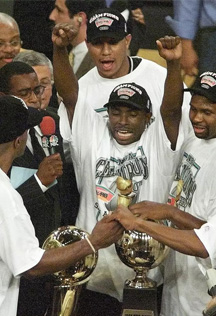
Class of 2025
1999 NBA Champion Spurs Team
Class of 2025
1999 NBA Champion Spurs Team
The 1999 San Antonio Spurs was the franchise’s first team to reach the NBA Finals and win a championship. The team was also the first former ABA team to capture an NBA title.
The 1999 team had a remarkable 15-2 post-season record, wrapping up a lockout shortened season with a 37-13 record, winning 31 of their last 36 games. The Spurs had only reached the Western Conference Finals four times in the previous 22 seasons.
Their defense was a force to be reckoned with during the ‘99 season. They stormed through the playoffs, defeating a Lakers team that included Shaquille O’Neal and Kobe Bryant and eventually triumphed over the New York Knicks 4-1 in the Finals. Tim Duncan was the Finals MVP, averaging 27.4 points and 14 rebounds per game during the series.
The 1999 team was coached by Gregg Popovich with Hank Egan, Paul Pressey and Mike Budenholzer as assistant coaches.
Led by the Twin Towers, David Robinson and Tim Duncan, the team also included Sean Elliott, Avery Johnson, Mario Elie, Malik Rose, Antonio Daniels, Andrew Gaze, Jaren Jackson, Steve Kerr, Jerome Kersey, Gerard King, Will Perdue and Brandon Williams.